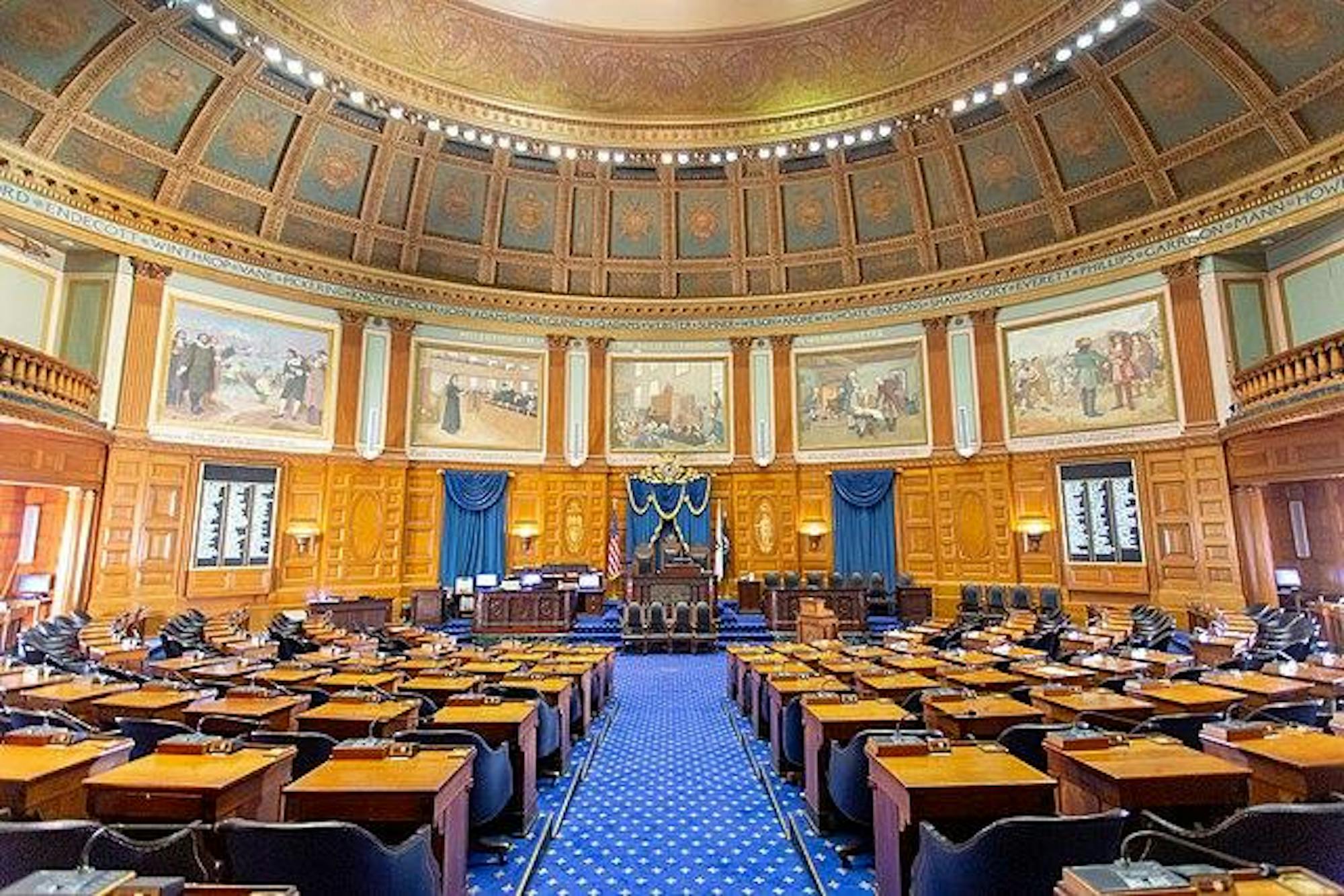
The Massachusetts House of Representatives approved updates to Medford’s linkage exaction program, which enables the city to charge developers fees to offset the cost of public infrastructure improvements, sending the bill to the State Senate.
“With these updates, we’ll be better positioned to meet our funding needs and continue providing the vital services and community resources our residents rely on,” Mayor Breanna Lungo-Koehn wrote in a statement to the Daily.
The changes were introduced to the state legislature via home rule petition, which, in Massachusetts, is a request from a city to the state legislature for passage of a special law granting the city authority to act beyond their typical local powers.
Medford has designed linkage revenue to be funneled into four categories: police and fire, water and sewer, roads and parks. The current linkage fee schedule charges developers a fee per unit in residential projects, per room in hotels and per 1,000 square feet gross floor area in commercial buildings. Industrial projects and office buildings are also charged linkage fees.
The petition outlines two major changes to the linkage program, which has not been modified since its adoption in 1990. First, it would increase the number of years between reviews of exaction levels from three to 10. Although reviews every three years were required in the original 1990 special act, they have never been conducted by Medford.
Second, it would adjust fees over time based on the Consumer Price Index, tying them to inflation and raising them incrementally from the 1990s levels. Medford City Councilor Matt Leming explained that because Medford has not been completing reviews of the fees every three years, the linkage revenue the city is getting right now is unduly low.
“The linkage amounts that we have right now are the exact same ones that we had in 1990 and they are between one-half and one-third as valuable, due to the effects of inflation, today as they were back then,” Lemming said. “We’re charging way too little right now.”
Leming said reviews of the fees are important because they determine how much the city should be charging developers.
“If you ended up charging developers too little, which we do now, then you don’t have enough money to actually update the infrastructure,” he said. “If you end up charging them too much, then developers will just never do anything, because it’s too expensive.”
Leming added that reviews, conducted with the help of outside firms, are additionally vital so developers will not have cause to challenge the fees in court and get them thrown out.
The city is also exploring the possibility of adding affordable housing as a fifth linkage fee revenue bucket to finance the Affordable Housing Trust, which was created in 2023. A 2024 City Council resolution supporting this idea says that “there is a need for long-term, sustainable revenue streams to fund this Trust.”
The linkage program, particularly after updated fees are calculated, allows the city to receive increased revenue and keep the government working amid budget concerns that led to a tax override being passed last November by residents for Medford schools. Although linkage does not fund schools, increased revenue for other city services could dispel fears over the city’s lack of funds.
“Linkage fees are extremely helpful to our core community services and open spaces,” Lungo-Koehn wrote. “As the City works to update these fees and create a new revenue stream for affordable housing, this home rule petition represents a critical step forward.”
State Rep. Paul Donato, who represents Medford and sponsored the Home Rule Petition in the State Senate, said updates to the linkage program were an opportunity for the city to shield itself from changes at the federal level.
“I was passionate about the fact that the linkage program will allow additional funds at a time when we need as many funds as we can because of what’s going on at the federal government,” Donato said.
Leming said previous progress on updating linkage fees likely stalled due to a lack of willingness to go through the state legislature. However, he pushed discussions forward out of a desire to improve a program that has long been stagnant.
“This is basically a municipal tool that has been allowed to have just been collecting dust for many years,” he said. “It is pretty important because it’ll allow us to get more money to fix up our roads, for our police and fire departments. I’m trying to use it as a mechanism to fund affordable housing, which we really need more of in the city.”
A third and final reading of the Home Rule Petition was passed by the House of Representatives on Sept. 22 and was read in the Senate on Sept. 25.