‘Don’t Say Gay’: The rise in state anti-LGBTQ legislation
By Reya Kumar | March 9Content warning: This article mentions suicide.
Content warning: This article mentions suicide.
Since the late 2000s, Russia has adopted a decidedly aggressive tone in its foreign policy. Eager to prevent NATO from expanding around his borders, Vladimir Putin used the relatively low-stakes annexation of Crimeato show the world he would not be afraid to pursue new strategic interests for his country. Back then, the West reacted in a lukewarm fashion. Sanctions only mildly hurt the Russian economy as they did not effectively target the specific industries or the oligarchs that funded Putin’s endeavors.
Walking in the streets of Tufts’ Medford campus, you may hear undergraduate students chattering about the latest IR midterm, frat party stories and housing lotteries. But have you run into any graduate students in your daily socials, club meetings and pickup sports? About 49% of the student population at Tufts consists of graduate students, with about 30% studying on Medford campus through the Graduate School of Arts and Sciences, School of Engineering and the Fletcher School. However, the undergraduate population at Tufts rarely interacts with this significant portion of the campus community outside of class, whether it be in club meetings, at sporting events or at social gatherings. My peers and I often wondered what graduate students might be doing after their classes if not participating in the activities most undergrads associate with the traditional Tufts experience. There, instead, seems to exist an unrecognized problem brewing in the undercurrents among graduate student life — their lack of an on-campus presence in major academic organizations and culture clubs.
The Tufts COVID-19 Dashboard has become a site frequently visited by students. For many, guessing how many COVID-19 cases there are on campus in a given week is almost like a game. Two weeks ago, the dashboard displayed skyrocketing numbers that had students wondering whether we would be sent back home.
Three Harvard graduate students last month filed a criminal complaint against the prestigious Boston-area university, claiming it mishandled sexual misconduct accusations brought forth against the long-standing anthropology professor John Comaroff.
Content warning: This article mentions eating disorders.
Student-run publications have always been a vital part of campus life at Tufts. However, these publications have evolved in many ways. Looking back at issues from student publications from the 20th century, it is clear that Tufts and its publications have become more thoughtful and inclusive.
History has been particularly unfair to Iraq. The country has repeatedly tried to gain prestige and claim the foothold it deserves within the Arab world and the Middle East. But any prolonged stability or progress for Iraq seems to have been constantly barred. Nevertheless, the country might be finally ready to act and become truly independent again.
If you open LinkedIn and enter the keywords “2023 summer,” you will find yourself with 6,438 job postings, as of mid-February 2022, regarding intern positions for Summer 2023. If you proceed to filter down openings by the following industries — “financial services,” “accounting” and “business consulting and services” — the number drops down to 3000. Financial services opportunities comprise many of the positions hiring for interns with a start date in 1 ½ years, and their deadlines are approaching fast.
When the decision for colleges and universities to go test-optional spread rapidly through the country like a wildfire due to the COVID-19 pandemic, the SAT started to lose its relevance. Harvard University decided to go test-optional until 2026 to limit the weight of standardized tests in the admission process due to their biased nature, which disproportionately disadvantages students of color and those from low-income families. In 2020, universities in the University of California system decided to steer away from the SAT and ACT permanently for similar reasons.
Russia is growing increasingly belligerent. With the United States busy confronting China’s growing influence in Asia, Vladimir Putin is now trying to send a message by threatening Ukraine to show the West that they shouldn’t discount his powerful country. It was then only a matter of time for an adage to return: “The enemy of my enemy is my friend.” This saying holds in the context of Sino-Russian relations.
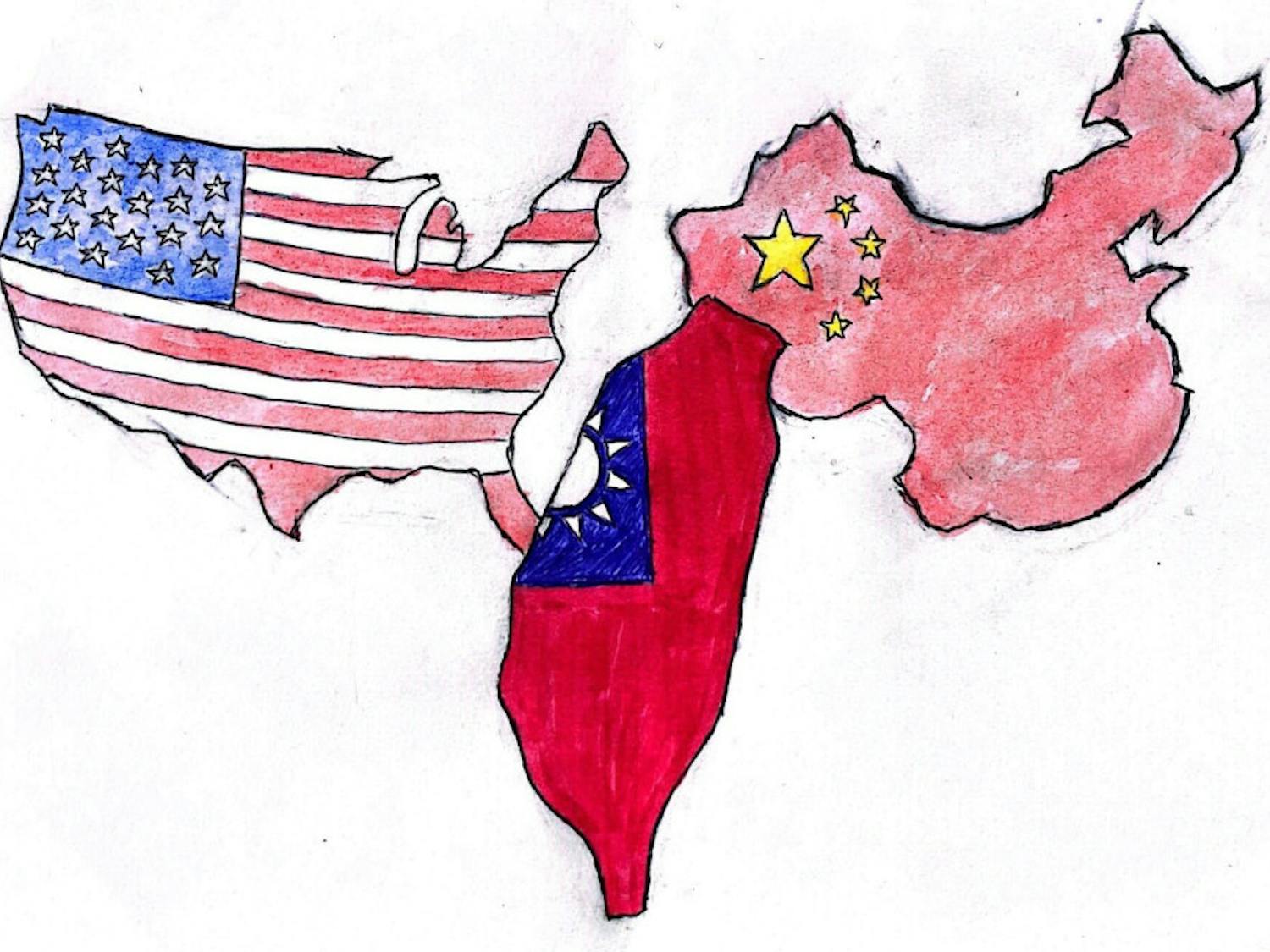
The esteemed 2022 Winter Olympics are being hosted in China: a nation known for its strong military power, authoritarian-like command over its vast population and confrontational stance towards the West. The People's Republic, under General Secretary Xi Jinping's authority, has maintained tense relations with the United States over economic trade, technology production, its violent persecution of the region of Hong Kong and its threats towards Taiwan.
On Jan. 20, 2021, Joe Biden was sworn in as President of the United States with an approval rating in the mid-50s. Now, a year later, his approval rating rests firmly in the low-40s, which is lower than any president — other than Donald Trump — at this point in their first term. Despite many of Biden’s successes in his first year, the drop in approval likely arises from the fact that he has been slow to act on some campaign promises and suffered from circumstances out of his control.
From celebrities appearing in cryptocurrency commercials to the repetitive, self-proclaimed investing gurus on TikTok, cryptocurrency has grounded itself in social media and pop culture. However, its swift growth on the internet has exposed many of the dangers of the business. While investing money is smart, and a new realm like cryptocurrency is encouraging for people looking to make money, the lack of understanding that most people have of cryptocurrency is frightening. Cardify, a market research platform, conducted various studies on the state of cryptocurrency in recent years and found thatover 83% of investors reported having only a moderate to low understanding of what they were investing in. As people are bombarded with information about cryptocurrency online, many feel pressure to get involved without any knowledge of the business, for fear of missing out. This trend of rash decision making, especially with something as volatile as cryptocurrency, has the potential to lead to significant loss.
n Jan. 19, British Prime Minister, Boris Johnson, announced that many of the more stringent measures Britain had taken to curb the spread of COVID-19 early on in the pandemic would officially end on Jan. 26. Since the end of January, those in Britain are no longer required to wear masks indoors or show NHS COVID Passes to enter public venues, and the government no longer advises people to work remotely. Additionally, the government announced that they intend to end the legal requirement for those who test positive for COVID-19 to self-isolate. The current regulations are set to expire on March 24, after which they will not be renewed. Along with this announcement, Johnson continued to encourage British citizens, among whom 65% of eligible people are fully vaccinated and boosted, to practice cautious behavior like handwashing and ventilating rooms, and he urged those who remain unvaccinated to step forward and receive their vaccines.
Although January wildfires are a rare occurrence in California, the Big Sur region has recently faced another devastating fire.
The fall and dismantling of the Soviet Union humiliated the newly created Russian Federation and left it in grave economic trouble. The countries that emerged from this process chose diverging paths when it came to relations with Russia. 11 of the 15 ex-USSR countries joined the Commonwealth of Independent States (CIS), essentially vowing to collaborate and align with Russian politics. Most importantly for Russia, this union was a political successor to the Cold War-era collective defense treaty known as the Warsaw Pact. The ex-superpower hoped this would prevent its young neighbors from joining NATO and bringing American weaponry to their doorstep.
Dining workers and custodial staff keep our campus running, supporting students, educators and administrators alike. Without them, we would not be able to function as an educational institution. Amidst the height of the COVID-19 pandemic, during which operations were expanded and immense uncertainty loomed over our campus, they continued to work tirelessly, risking their own health in the process. Tufts custodial and dining staff are integral members of our community and we must do more to support them.
Content warning: This article mentions sexual abuse and self-harm.
For undergraduate students, the process of applying to internships can be a daunting one, further complicated by the advantages and networks that only some have access to. Depending on the industry, the timelines for submitting an application can vary greatly, with some summer internships in fields like finance starting as early as the fall.Staying on top of these recruitment and application deadlines is important if you want to stand out among the numerous other applicants. However, those with the right connections are often the ones who can navigate the process most easily, successfully taking hold of the many internship opportunities.