
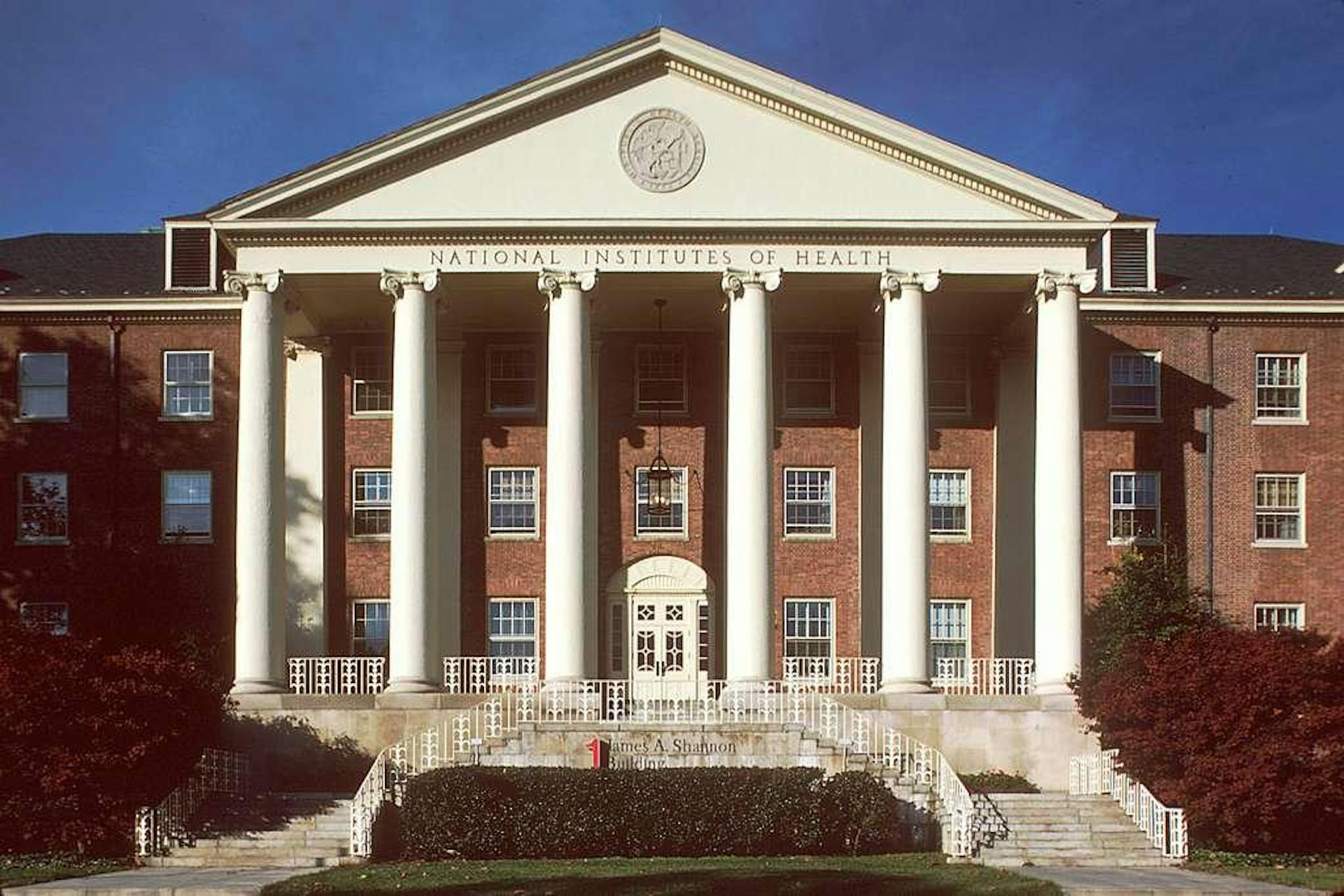
In the first 100 days of his presidency, President Donald Trump cut numerous federal jobs and proposed major slashes to budgets across government departments. Some of the departments among the hardest hit are those that fund and support research at universities across the country. Notable standouts include the Department of Health and Human Services, which houses the National Institutes of Health, as well as the National Oceanic and Atmospheric Administration. Additionally, the Trump administration has hit university research by placing restrictions on federal grant funding for university medical research.
These government funding cuts and their massive implications on universities raise the question: How interconnected are university research and government funding? To answer this, it’s important to understand the historical context.
Federal funding for research has been steadily on the rise for decades — with the NIH being the most funded agency — representing a larger trend of medical and health research receiving massive amounts of federal government funding.
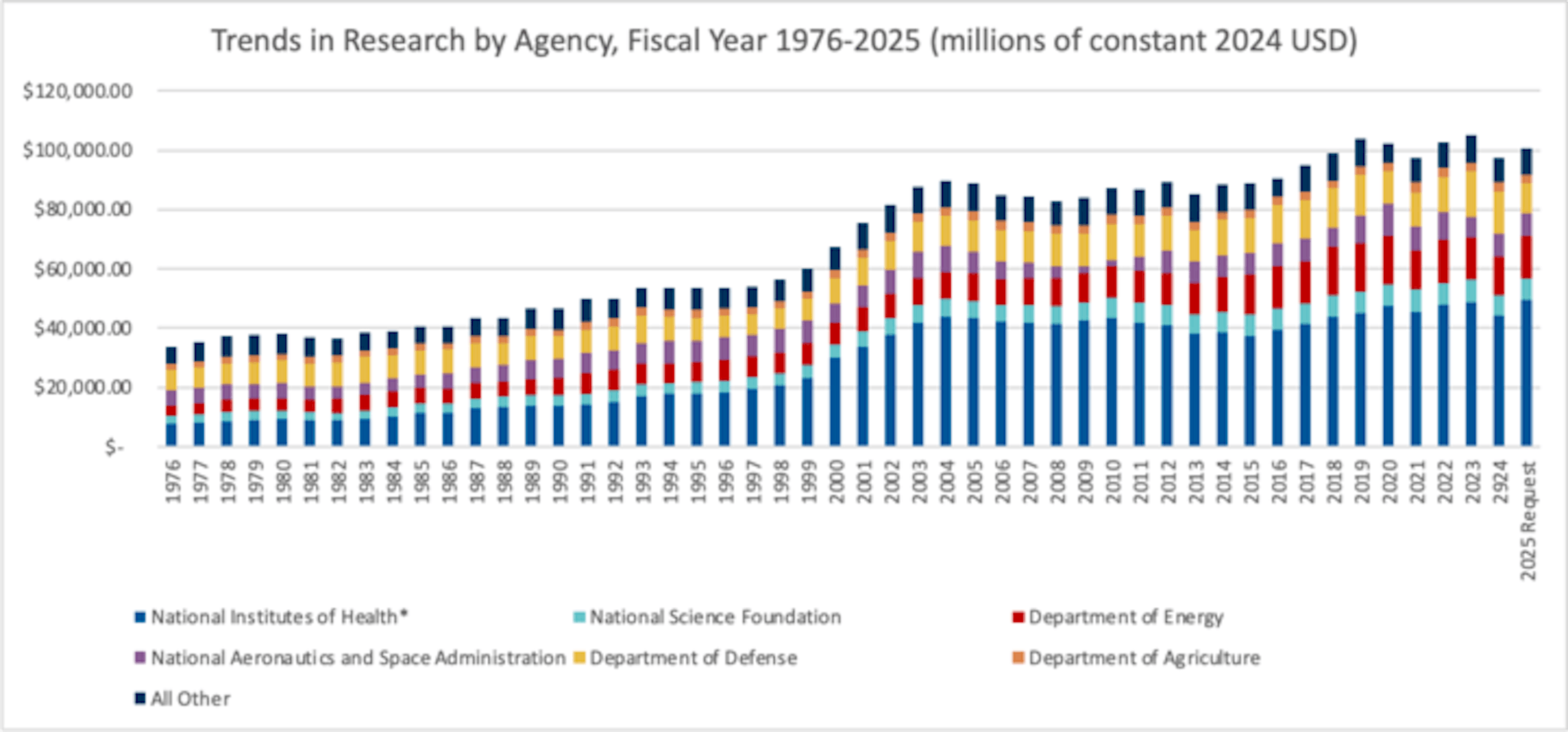
HHS has historically been the governmental department with the largest federal research funding obligation for basic research, meaning it provides the largest percentage of federal funding for basic research. In 2023, the research funding obligation of HHS was 49.1% of total federal research funding, with the Department of Energy coming in second with 13.5%.
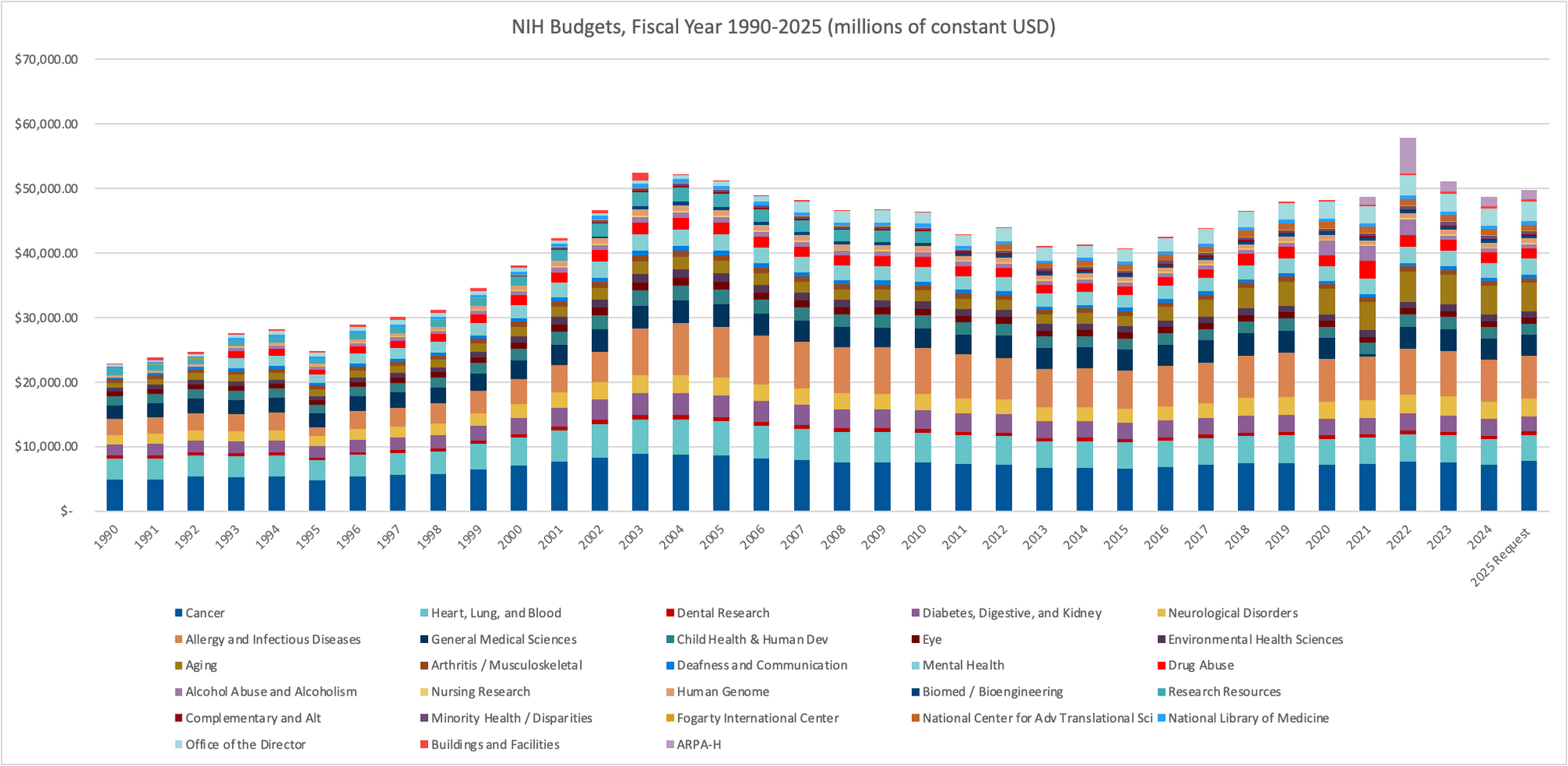
Looking specifically into where HHS and NIH funding goes, the largest subcategories are projects researching cancer and those researching allergies and infectious diseases.
So what do cuts to these research budgets mean for Tufts? In the fiscal year 2024, Tufts was awarded almost $86 million by the NIH alone, with over $13 million awarded to the Medford/Somerville campus and over $72 million awarded to the Boston campus. This budget rose to $115.2 million in 2025.
Without this funding, Tufts would face difficulties running as a research institution, and its loss would be massively detrimental to the university. Because of this, Tufts, along with 12 other impacted universities, filed a lawsuit against the NIH and HHS in February.
Tufts is not alone in this struggle for funding. Boston is feeling this threat as a city made up of universities and research institutions that brands itself as a hub for research and innovation.
“It’s the densest concentration of academic talent in the world,” Lawrence Bacow, former president of both Harvard and Tufts, said in an interview with The New York Times. “Universities and teaching hospitals are to Boston what cars are to Detroit, what energy is to Houston or finance is to New York.”
Boston was built on the economic influx that came from education and research institutions. Today, it is home to many higher education facilities and multiple research hospitals, all of which are threatened by research funding cuts.
In response to the Trump administration’s order, Massachusetts, along with 15 other states, filed suit against the administration in April for its “unlawful attempt to disrupt grant funding issued by the National Institutes of Health.”
This suit comes out of the same push as Tufts’ February lawsuit and shows a commitment by research institutions to fight for their funding and the essential services they provide to the American public.
What exactly will happen with research funding is still unclear due to the multiple lawsuits filed and ever-evolving orders from the Trump administration. What we can be sure of, however, is that this semester will be remembered as a significant moment in institutional memory due to the consequences of these cuts.



