
In 1980, 15-year-old Brooke Shields appeared in a series of print and television ads for Calvin Klein. In one particularly memorable commercial, she delivered the brand’s provocative line: “You want to know what comes between me and my Calvins? Nothing.” The ad sparked widespread outrage — largely because of Shields’ age — with numerous networks refusing to air it.
And yet, reflecting back on the ad in 2021, Shields told Vogue, “I feel like the controversy backfired. The campaign was extremely successful.” After all, sex sells.
Sex-focused marketing is nothing new. In 1994, the Wonderbra billboard featured Eva Herzigová in a push-up bra, captioned “Hello Boys,” and was blamed for distracting drivers and causing car accidents. Tom Ford’s 2007 fragrance ad showing a woman’s torso with a perfume bottle squeezed between her legs was so explicit that it was banned in several countries. Each of these campaigns generated outrage, but each also generated enormous attention. The formula was consistent: Sex drew complaints, complaints fueled visibility and visibility fueled sales. Marketers have long known that human psychology responds to sexualized imagery, making it one of the most reliable ways to grab attention, whether on billboards, television or now across social media.
But that was years ago — surely things have evolved since then, right?
Well, in May, Sydney Sweeney collaborated with Dr. Squatch to create and sell a soap made with her bath water, called “Sydney’s Bathwater Bliss.” In the ad promoting the soap, she is submerged in a soapy bathwater and stares at the camera seductively: “Hello you dirty little boys,” she starts out. “Are you interested in my body… wash?” Despite the outrage surrounding the product, according to the company, the product sold out within seconds.
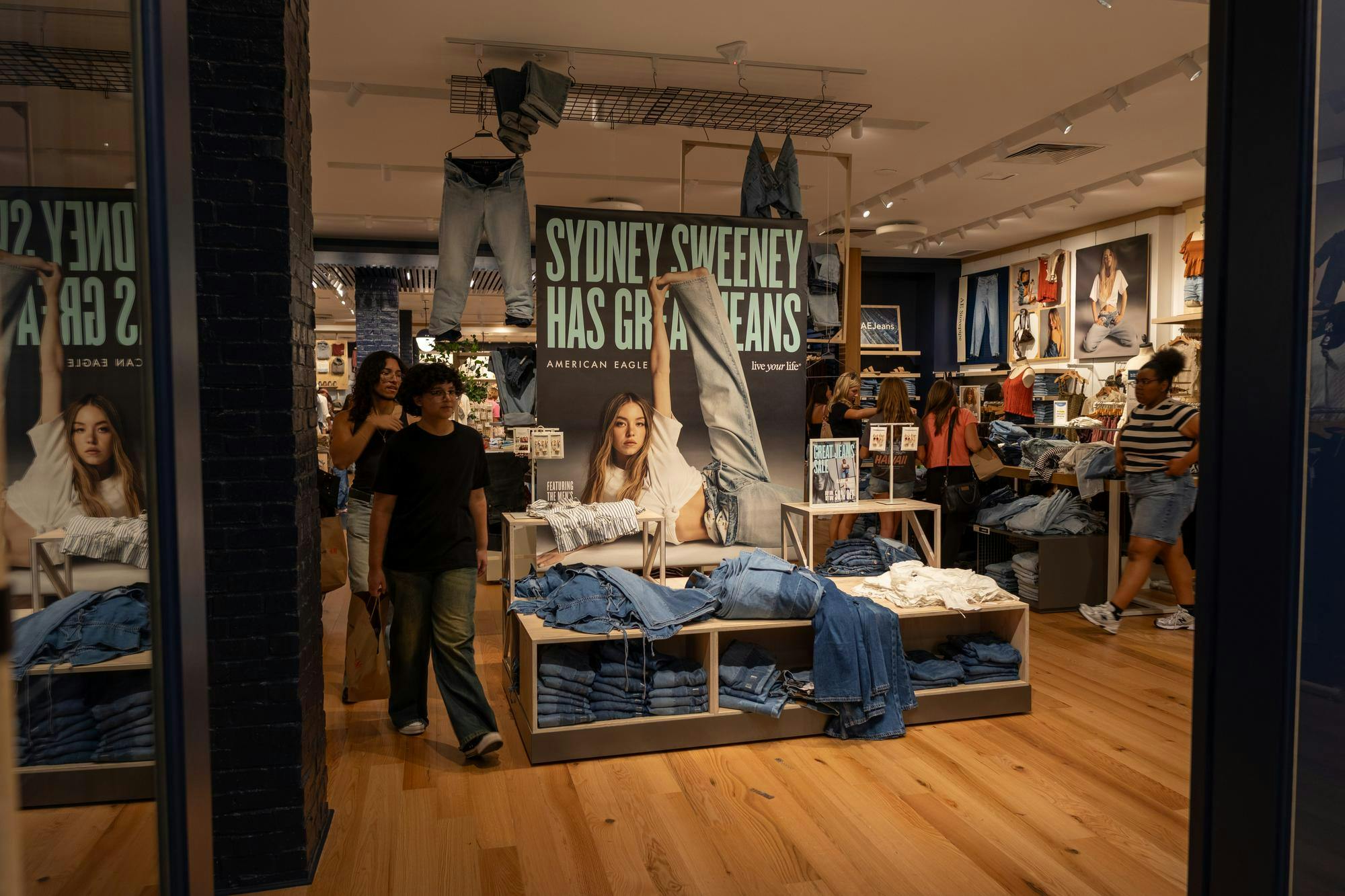
Sweeney’s partnership with American Eagle back in July seemingly followed the same script. In the campaign, Sweeney says “Genes are passed down from parents to offspring, often determining traits like hair color, personality and even eye color. My jeans are blue.” The campaign’s creative direction has sparked backlash from multiple angles. Some critics argue the ads flirt with promoting eugenics — a discredited ideology tied to white supremacy that claims society can be improved by eliminating ‘undesirable’ traits — at an especially trying time when President Donald Trump’s Administration has pushed hard against diversity efforts in the federal government and has targeted immigrants.
Others see the controversy as yet another example of a culture fixated on sexualizing women. Many have also taken issue with the overtly sexual tone of the ads, particularly given that American Eagle has framed the campaign as a vehicle for raising awareness about domestic violence through a butterfly motif, a cause close to Sweeney’s heart. The company has pledged to donate 100% of revenue from the “The Sydney Jean” sales to Crisis Text Line, a nonprofit that provides mental health support.
And yet, despite the copious amounts of controversy, both ads generated revenue. Nearly a million people entered the Sydney’s Bathwater Bliss giveaway within five days, and just a month later, Unilever purchased the brand for a reported $1.5 billion. Following the announcement of her American Eagle collaboration, the company’s stock jumped 19% in premarket trading.
The persistence of this strategy is visible outside of pure advertising as well. Sabrina Carpenter’s recent rebrand demonstrates the same logic. Carpenter is not new to the music industry — the former Disney star released five albums between 2015 and 2022. But in 2024, her sixth album, “Short n’ Sweet,” catapulted her into superstardom, debuting at No. 1 on the Billboard 200 and going platinum within months. The album leaned into a more adult persona, balancing catchy pop hooks with flirtatious lyrics, signaling a decisive break from her Disney-era image.
On her Short n’ Sweet tour, Carpenter acted out a new sex position every show while performing “Juno,” a song already explicit in its references. On an earlier tour, she improvised sexually charged outros to “Nonsense” at every stop, with the crowd waiting to hear how far she would push the innuendo. Her performances were elaborate and theatrical, blending choreographed routines, costume changes and audience interaction that amplified the playful sexuality she has made central to her brand.
Poppie Platt, a Telegraph critic, dismissed these performances as inappropriate given Carpenter’s large base of younger fans. But Carpenter herself brushed off the outrage in a Rolling Stone cover story, noting the irony: “It’s always so funny to me when people complain. They’re like, ‘All she does is sing about this.’ But those are the songs that you’ve made popular. Clearly you love sex. You’re obsessed with it.”
She later added that her shows contain “so many more moments than the ‘Juno’ positions, but those are the ones you post every night and comment on. I can’t control that.”
Her follow-up, “Man’s Best Friend,” released on Friday, leaned into controversy before anyone even heard a note. The album cover shows Carpenter on her knees while a suited man grips a fistful of her hair. Glasgow Women’s Aid, an organization supporting survivors of domestic violence, condemned the cover as “regressive,” claiming it leaned on “tired tropes that reduce women to pets, props, and possessions and promote an element of violence and control.” Platt described the artwork as an “over-sexed, degrading new album cover” and called the marketing strategy “troubling,” likening it to the TikTok “trad-wife” trend that glamorizes female submission and traditional gender roles.
Some argued that perhaps the sexually charged artwork was a clever inversion, positioning Carpenter as the one in control of the gaze. But the music itself did not quite live up to that promise.
In a three-star review, The Times’ Victoria Segal described “Man’s Best Friend” as “negligee-thin, surprisingly vanilla.” She wrote that, after the uproar over the album artwork, it “would have been amazing” if the record “was in fact so subversive that it crushed the male gaze for ever, somehow positioning Carpenter as an avenging angel, a cute pocket-sized gorgon turning men to stone. Unfortunately, nothing here justifies that cover image.”
Carpenter herself couldn’t deny it: “The album is not for any pearl clutchers,” she told CBS News. “This is just fun — and that’s all it has to be.”
Despite the copious amounts of controversy, Carpenter’s music sells — far more than her Disney-era work ever did. “Short n’ Sweet” cemented her transition from teen idol to pop star, and “Man’s Best Friend,” no matter how polarizing, ensured she remained a household name.
In the end, both Sweeney and Carpenter are tapping into a decades-old formula that still works. From Shields in her Calvins, to Wonderbra billboards stopping traffic, sex has always had the power to shock, spark conversation and, ultimately, sell. Sweeney’s bathwater soap sold out entirely. American Eagle’s campaign boosted its value by $200 million. Carpenter’s risqué album art and choreography may draw think-pieces about regressive imagery, but they also helped push her to her first Billboard No. 1. Are the critiques suggesting this type of media perpetuates harmful stereotypes against women or uplifts white supremacy valid? There is an argument to be made here. However, such commentary only contributes to these campaigns’ visibility, proving that the strategy thrives in the digital age as well.
Until outrage stops translating into revenue, sex will keep selling. The only thing that has changed is the conversation.



