Jim Jarmusch has built a prolific career on observing the smallest details. “It’s a lot more exhausting to be looking at Cate Blanchett’s eyelid or Tom Waits’ gestures than to have 15 zombies come out of a grave,” the beat-poet-turned-director remarked at a press conference after his film “Father Mother Sister Brother” unexpectedly won the Golden Lion, the highest prize at the Venice International Film Festival.
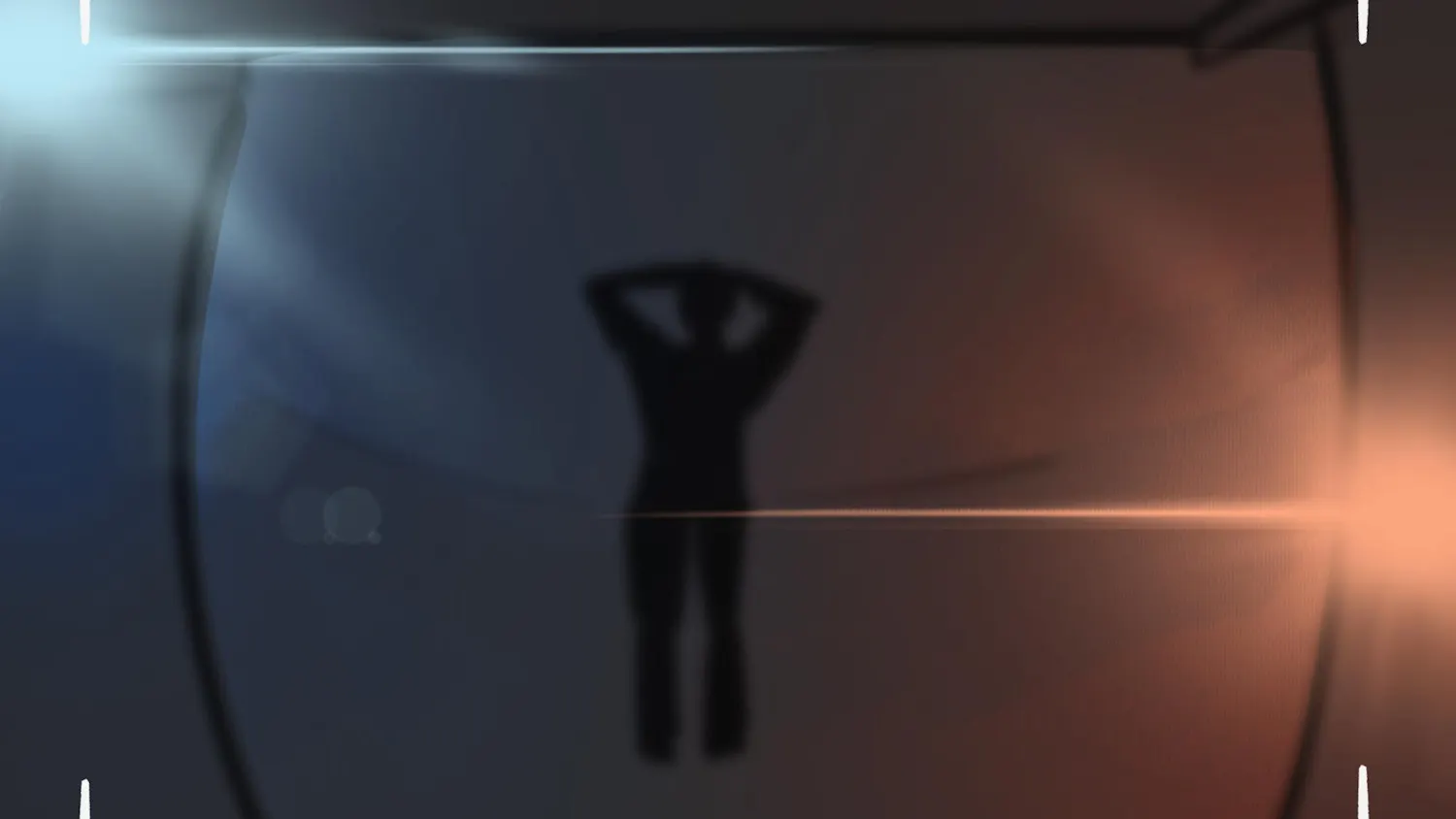
In “Father Mother Sister Brother,” Jarmusch channels this eye for minutiae into a quiet story full of emotional reticence. Similar in structure to his triumphant 1989 feature “Mystery Train,” Jarmusch’s latest work consists of three separate yet thematically connected sections. All three are linked by various pictorial and conversational motifs (slow-motion shots of skateboarders, hot drinks and the phrase “Bob’s your uncle” — among many others). Between each vignette, a sequence of flashing lights and atmospheric music serves well not only as the film’s connective tissue but as a representation of its pointedly contemplative mood.
The drama’s first section, “Father,” finds Jeff (Adam Driver, also the star of Jarmuschs’ “Paterson” and “The Dead Don’t Die”) driving with his sister Emily (Mayim Bialik) through a snow-covered Northeast countryside. The early conversation is marked by awkwardness, a quality that persists as they arrive at their dreaded destination: the house of their father (Waits).
Once at their father’s abode, the family’s conversation is marked by pauses and misunderstandings. Though Driver’s character is more supportive of their father’s unemployed isolation — to Emily’s dismay, he pays for home renovations and drops off a gift basket with items like pasta sauce and mezcal — it’s clear that any familial harmony that may have existed is long gone. While most of the credit for this section’s success goes to Waits’ simultaneously gloomy and hysterical performance, it is additionally bolstered by the combination of Jarmusch’s directing and Frederick Elmes’ cinematography. Jarmusch rarely allows his three characters to come close to each other, and Elmes’ camera choices do well to emphasize their physical and emotional partitioning.
Where the siblings in “Father” are essentially two sides of the same coin, the pair in “Mother” are anything but. Jarmusch pits Cate Blanchett as the uptight and put-together Timothea against Vicky Krieps as Lilith, a clothing reseller with rebellious pink hair. To their credit, Blanchett and Krieps are mostly believable as the daughters of Charlotte Rampling’s character, whom they refer to only as ‘mother.’ Despite an interesting parallel between the two sisters, this section lacks its predecessor’s thematic accomplishments and largely plays as a drier and less incisive version of “Father.” Although it’s the least compelling of the triptych, this segment’s quiet profundity lingers just enough to feel somewhat valuable to the film overall.
After two vignettes of families grown apart, “Sister Brother” presents a set of twins (Luka Sabbat’s Billy and Indya Moore’s Skye) who are so similar that they could be one person. Not that they lack individuality — their distinct fashion choices do well enough to highlight their differences — but they still use what they call the “twin factor” to explain the uncanny sense of always being in sync.
The twins’ third of the film also opens with a driving sequence: Billy commandeering a vintage red convertible through the streets of Paris. Their objective is one last visit to their childhood apartment after their parents — described posthumously as enigmatic daredevils — passed away in a plane crash. In classically Jarmuschian juxtaposition, the section of the film marked by loss of family is likewise its most hopeful. Sabbat and Moore do well to show the loss’ somber impact, and in what is perhaps the quietest of the three tales, silence is not a marker of awkwardness and separation but rather a comforting reminder of the possibility of coexistence. Cinematographer Yorick Le Saux, who took over from Elmes for the film’s European segments, paints the scene beautifully in contrast to its stiff, disconnected predecessors; whether the twins are backlit by Parisian sunlight or laying together on the apartment floor, every moment carries a touching synergy.
When the credits roll to Annika Henderson’s cover of “These Days” (she also worked with Jarmusch on the score), audiences may walk away with various indescribable emotions. The story is hardly satisfying — it’s built on uneasy silences — but there’s a sly wisdom in its restraint. Takeaways may range from ‘human interaction is doomed’ to simply ‘I should call my mom,’ but the film may not call for interpretation at all. Rather, it is a project that succeeds because of Jarmusch’s sensitivity to the detail of human interaction.
“Father Mother Sister Brother” premiered at the Venice International Film Festival. It is set to be released in the United States via Mubi on Dec. 24.