“Let them eat cake.”
Historians doubt Marie Antoinette ever uttered those famous words. In the original French phrase — “Qu’ils mangent de la brioche” — “la brioche” doesn’t translate directly to “cake” as we know it today, but rather to brioche, a rich, eggy bread. Still, the meaning remains the same: When told that peasants had no bread, the queen supposedly suggested they eat a more luxurious kind. Whether she actually said it matters less than the sentiment it expresses — a willful blindness to inequality while indulging in luxury.
This tension between food and politics resurfaced recently on TikTok. @elizabetheatsnyc, a food creator with over 1 million followers, posted a video back in June, dining at an Israeli restaurant. She made a joke, saying, “Let’s try Israeli food before we all nuke each other into space.” Known for filming herself trying different restaurants, she faced backlash soon after that video. Many viewers questioned how she could spotlight Israeli cuisine, one saying she was “supporting a country committing mass war crimes. I don’t support any business or person that supports ethnic cleansing of an entire group of people.”
In response, Elizabeth posted another video from Ayat, a Palestinian restaurant in Brooklyn. “While there’s a devastating human rights crisis in Gaza, this is simply a channel for food, and not a space for global news,” she said. In other words, she drew a line between food content and politics. But, can food be apolitical?
On one level, this boundary seems reasonable. Not everyone wants their dining experiences to become political debates. However, that kind of thinking assumes food can exist in a vacuum — it can’t. Food as a whole is inherently political.
Food has long been a tool of diplomacy — a form of “soft power” used by countries to win hearts and minds through the stomach. Cultural diplomacy, a subset of public diplomacy, leverages cuisine to promote cross-cultural understanding and improve international relations.
Why do you think there is often some sort of Thai restaurant in every city you go to? In 2002, the Thai government launched the Global Thai Program, a diplomatic initiative that attempted to boost the number of Thai restaurants worldwide. At the start of the program, there were about 5,500 Thai restaurants globally. By 2011, that number had nearly doubled.
And why is bubble tea so popular? In 2010, Taiwan’s Ministry of Economic Affairs launched a culinary diplomacy campaign titled “All in Good Taste: Savor the Flavors of Taiwan,” which promoted Taiwanese cuisine globally. This included bubble tea, oyster omelettes and Taiwanese night markets.
These programs show how governments use laws, funding and policy to shape which cuisines gain visibility and which foods become easily accessible. Food access and cultural prominence are not random; they are the results of deliberate political choices.
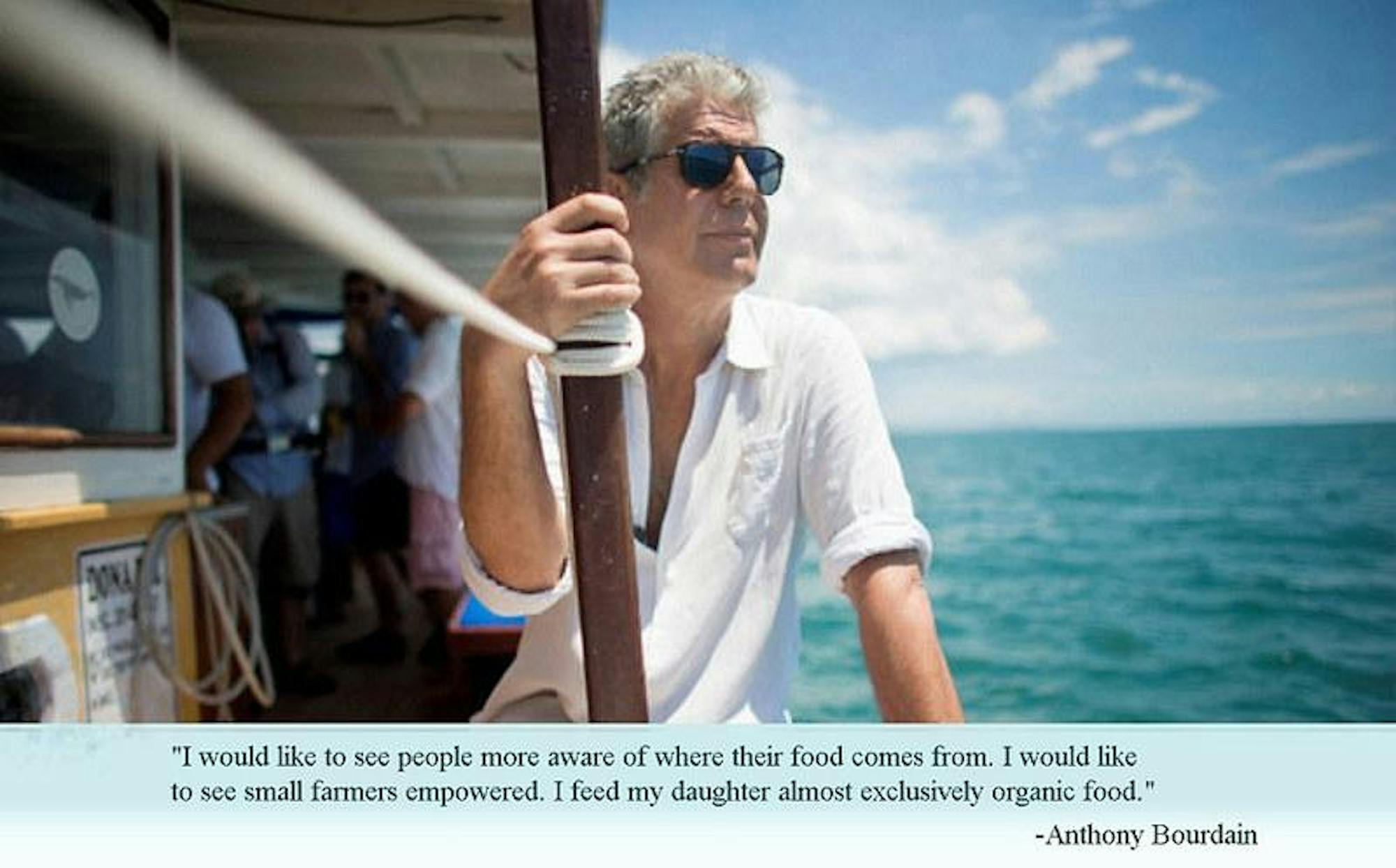
Food’s political nature isn’t just about diplomacy, however — it’s also about control and power at home. Anthony Bourdain, the late American celebrity chef, once recalled how Egyptian government-affiliated fixers tried to stop him from filming a segment on ful, a common Egyptian dish made from fava beans. Officials feared showing it would reveal the harsh realities of ordinary life. In a Facebook post, Bourdain drives this point home:
“There is nothing more political than food. The things that we eat are the direct reflection of our histories...reflections of long, often painful histories.”
This fear wasn’t unfounded. Egypt’s history is marked by “bread riots,” protests sparked by government cuts to subsidies on basic food items. In 1977, for example, violent protests erupted after the president cut public subsidies for flour, cooking oil and other staples, resulting in many injuries, deaths and jailings.
A lesser-known facet of the Arab–Israeli conflict involves competing claims over national cuisines. Falafel, for instance, is claimed by both Israel and several Arab nations as part of their national identity. As Alexander Lee writes in History Today, “ownership of this most distinctively Levantine dish is inexorably bound up with issues of legitimacy and national identity. By claiming falafel for themselves, they are each, in a sense, claiming the land itself.”
In this context, the food we eat — and the food we see on social media — is shaped by governments, histories and geopolitics. Food can be weaponized against lower-income communities or celebrated as a tool of nationalism. It can be integral to a nation’s identity. It reflects social hierarchies and political realities. Separating food from these forces is, at best, naive — and at worst, intentionally misleading.
When content creators say “it’s just food,” they echo a modern version of “let them eat cake” — a willful ignorance of the larger forces that shape what ends up on our plates. Behind every dish is a story of power, culture and history. To pretend otherwise is not neutrality — it’s erasure.