
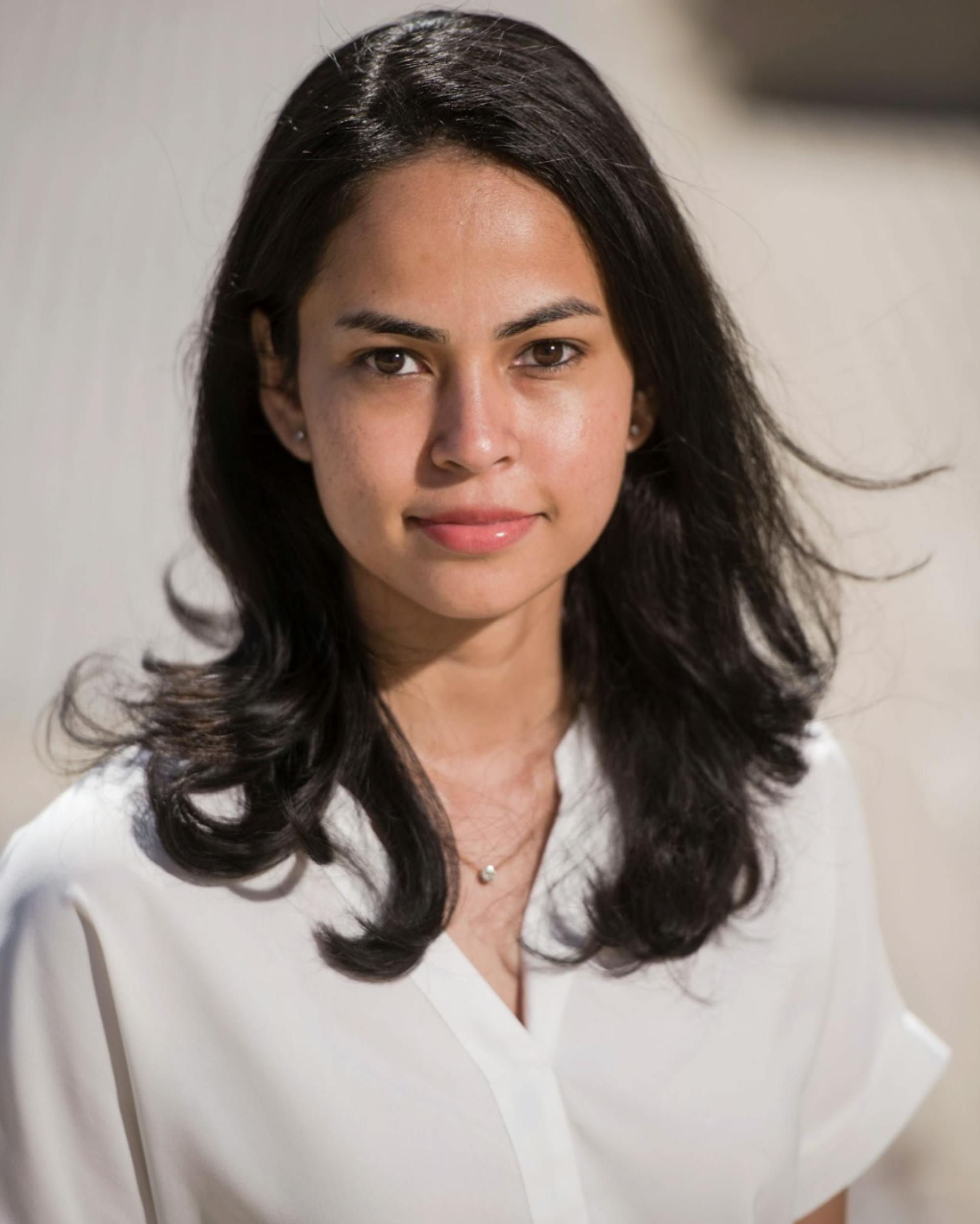
This installment of “Dissertation Diaries” highlights Udathari Kumarasinghe, a fifth-year Ph.D. candidate in the Department of Physics and Astronomy at Tufts University. Before Tufts, Kumarasinghe completed a Bachelor of Science in Physics at the University of Peradeniya in Sri Lanka.
Following completion of her undergraduate degree, Kumarasinghe knew she wanted to continue pursuing her passion for experimental physics. “I wanted to do … the Ph.D. program to just keep doing science,” she said.
Kumarasinghe was initially accepted into the lab of Cristian Staii at Tufts for her doctoral program, where she worked on experimental physics research. A year into her program, she began collaborating with David Kaplan’s laboratory, which focuses on biomedical engineering- and biophysics-related projects.
Biophysics is an interdisciplinary field that applies the research of physics to life sciences research, typically cellular processes. Now growing in importance due to the recent boom in biotechnological research, biophysics research is often used to develop new technologies for medical applications.
While this differed from her undergraduate focus, biophysics is a field that Kumarasinghe found struck a fine balance between learning new techniques and continuing with experimental science.
One of the emerging technologies in biophysics is cell therapy — the technique in which modified human cells are used to treat diseases.
Recent advances in research have demonstrated immense promise in the field. In a 2024 study, a Shanghai-based research group reported on their successful treatment of a man with Type 2 diabetes using insulin-producing islets derived from his own cells. Similarly, in a 2024 Nature "News" article, a woman with Type 1 diabetes was treated using her own stem cells, becoming able to regulate her own insulin.
“These pioneering studies demonstrate the potential of stem cells as a treatment for diabetes,” Dinesh Kumar and Rajni Tanwar, associate professors at the School of Pharmacy in Desh Bhagat University, wrote in a letter describing this research.
One issue in cell therapy is protecting the cells during transplantation, as cells will undergo immense mechanical stress, where internal forces are generated inside the cell due to external actions.
“They want to keep them alive and functional even after transplantation,” Kumarasinghe said. But how does one protect a fragile structure such as the cell?
Kumarasinghe first encountered the idea of encapsulation during her time in Kaplan’s lab, as it was something that provided a promising solution to the transplantation quandary in the cell therapy community.
Encapsulation, or in this case the surrounding of cells with a layer of synthetic biomaterial, is a technique being explored to remediate the issue of cell damage. Kumarasinghe sought to delve deeper into this topic for her thesis, applying her knowledge of experimental science to develop a unique medium and method for encapsulation.
Using a technique called electrostatic layer-by-layer deposition, Kumarasinghe can artificially build a layer of the silk ionomer around the cell. The negative charge of the cell allows for the binding of a layer of positively charged silk ionomer, and in turn, a layer of negatively charged silk ionomer can be added on top of that. She can keep repeating this method until she has successfully encapsulated the cell, effectively providing a layer of protection to the cells from mechanical stress.
She can even test the success of her encapsulation with a variety of techniques, such as injecting the cells through screens to apply shear stress. According to Encyclopedia Britannica, shear stress is a “force tending to cause deformation of a material by slippage along a plane or planes parallel to the imposed stress.” These tests have demonstrated cell viability even after exposure to mechanical stress, indicative of a successful encapsulation.
In regard to cell therapy, Kumarasighe’s research holds promise in the protection of cells during transplantation. In order for cells to remain viable after transplantation, they must still be able to exchange molecules with the environment, such as insulin in the case of diabetes cells.
Therefore, a lot of Kumarasinghe’s recent work has centered around developing an encapsulation conducive to insulin exchange. An alternative to other encapsulation techniques, her silk ionomer membrane has potential concerning the successful transfer of insulin. Ultimately, it has the potential to be applied in cell therapy and biotechnological applications.
Despite her immense strides in the field of research during her program, Kumarasinghe still faced numerous setbacks.
“It’s a long way to go,” she reflects on the demands of pursuing a doctoral degree.
One of Kumarasinghe’s biggest challenges was adjusting to a new environment. “Being an international student, missing home is a big thing,” she said. Despite this obstacle, she ultimately found community in the people she collaborated with daily, whether it be in the physics or biomedical engineering departments.
When asked if she had any final advice for aspiring Ph.D. candidates, Kumarasinghe advised students to push through feelings of imposter syndrome, saying that she had to constantly remind herself, “You have it. … You got into this program because you’re qualified for it.”



