
A substantial increase in the H-1B fee, issued by President Donald Trump on Sept. 19, may significantly affect the ability of international students at Tufts to work in the United States after graduation. The new one-time fee of $100,000 upon submission of any new H-1B visa applications, not including those that already have F-1 visas, applies to all petitions filed after Sept. 21.
The H-1B is a nonimmigrant visa that allows U.S. employers to hire skilled foreign workers in specialty occupations. Previously, fees ranged from $2,000 to $5,000, depending on the size of the sponsoring company.
As of fall 2024, 1,912 international students were enrolled across Tufts’ four campuses.
Anna Garson, director of the Tufts International Center, wrote a statement to the Daily explaining that the new H-1B fee has led to increased uncertainty among international students.
“We have heard from students that they worry employers will be less likely to consider them for internships or [Optional Practical Training] employment after graduation due to potential limitations to longer-term sponsorship,” Garson wrote. “This was highlighted at the Tufts Career Fair, during which well over 100 international students stopped by the [International]-Center table to discuss their prospects and learn more about their non-sponsored employment options pertinent to their visa status.”
Garson also wrote that the International Center is doing what it can to support its students.
“We’re continuing to explore new ways to provide support and information,” Garson wrote. “Aside from providing students with information on their non-sponsored work authorization options post-graduation and current employees with regular updates, we’re also working with external immigration attorneys to offer informational sessions and meeting with other Tufts departments to explore collaborations and support structures moving forward.”
One international student shared that the new fee made them reconsider staying in the United States after graduation, even though they had been exploring visa options other than the H-1B. The student was granted anonymity due to safety concerns.
“It definitely made me think about countries other than the U.S. to stay in,” the student said. “There are other options for me to stay in the country, but H-1B, in theory, just lets you stay in the U.S. for longer and figure out what you want to do, so I would have wanted to be on that visa, if possible.”
The student also described how they weigh the promise of opportunity in the U.S. against the uncertainties they might face if they were to stay.
“When we are outside of the U.S., we get this idea that the U.S. is a land of opportunity, which it is. But the reality is, it’s very difficult to immigrate here and I was very grateful to study here … but I’m definitely looking at more options where I don’t have to worry about my status this often,” the student said.
They added that the Trump administration’s shifting immigration policies have created a constant state of uncertainty. As an example, they referred to Trump’s earlier campaign claim that he would grant green cards to all international students graduating from U.S. universities. Since returning to office, the president has demonstrated a sharp change in attitude, pursuing actions such as attempting to restrict foreign enrollment at Harvard University and detaining international students, including Tufts graduate student Rümeysa Öztürk.
“I just don’t feel like I would be happy constantly worrying about my status all the time, and I feel like I would rather go to either my country of origin or a country where [getting] permanent residency or a work visa is pretty straightforward, given that you have the qualifications needed,” the student said.
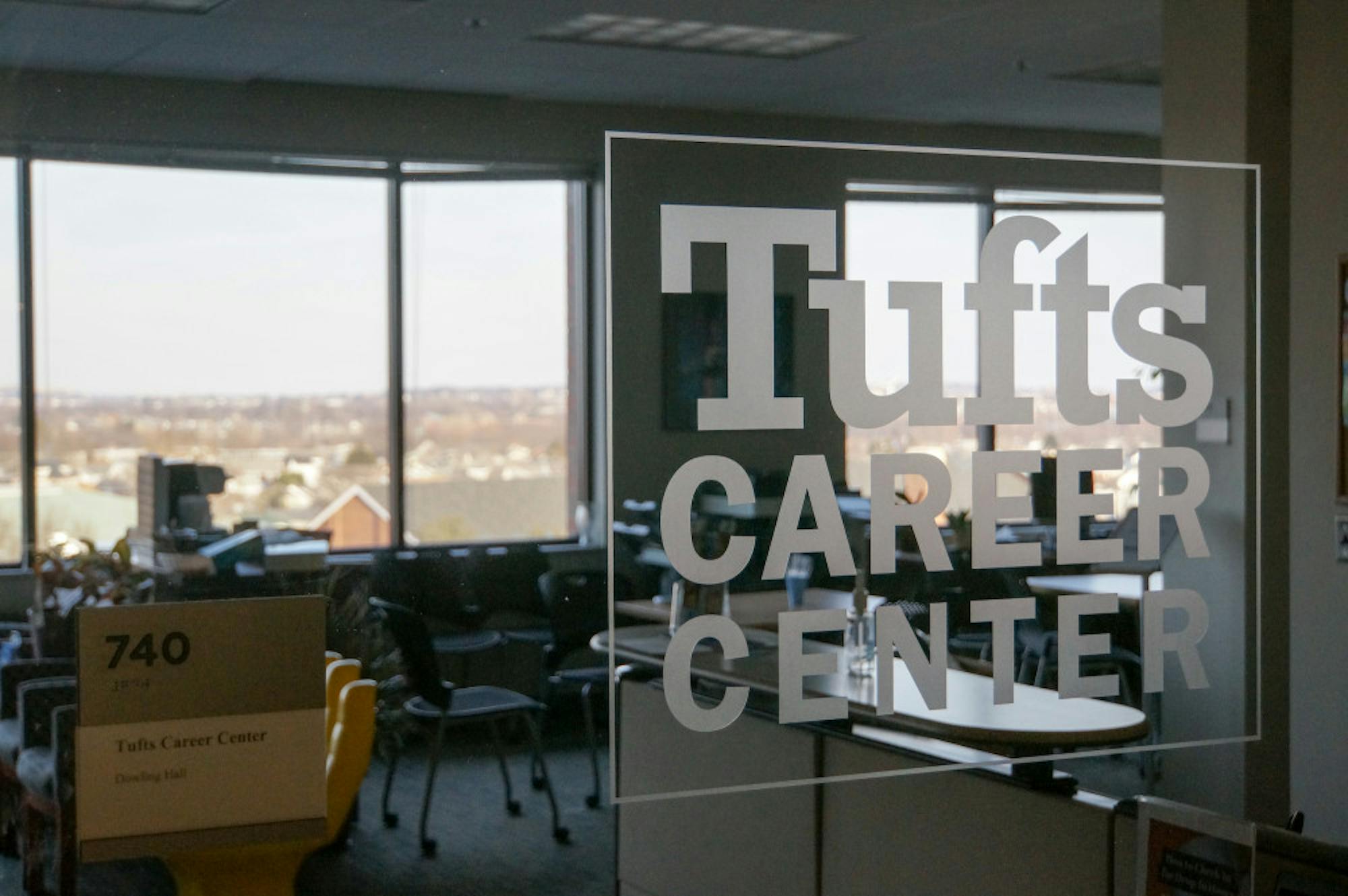
In a statement to the Daily, the Tufts Career Center wrote that it is working closely with the Tufts International Center to help students navigate the evolving immigration and workforce landscapes in the U.S.
“Our support takes many forms: one-on-one advising with expert career advisors, workshops for international students … and online tools for conducting research and locating opportunities, such as Interstride,” the Career Center wrote.
“In tumultuous times, we focus on what we can control. We help students understand key factors, explore options, and make informed decisions,” they wrote.
Correction: It was not originally included that students that already have F-1 visas applying for H-1B visas would not receive the $100,000 fee. Some respondents may have answered questions without that knowledge. This update was made on Oct. 21.



