
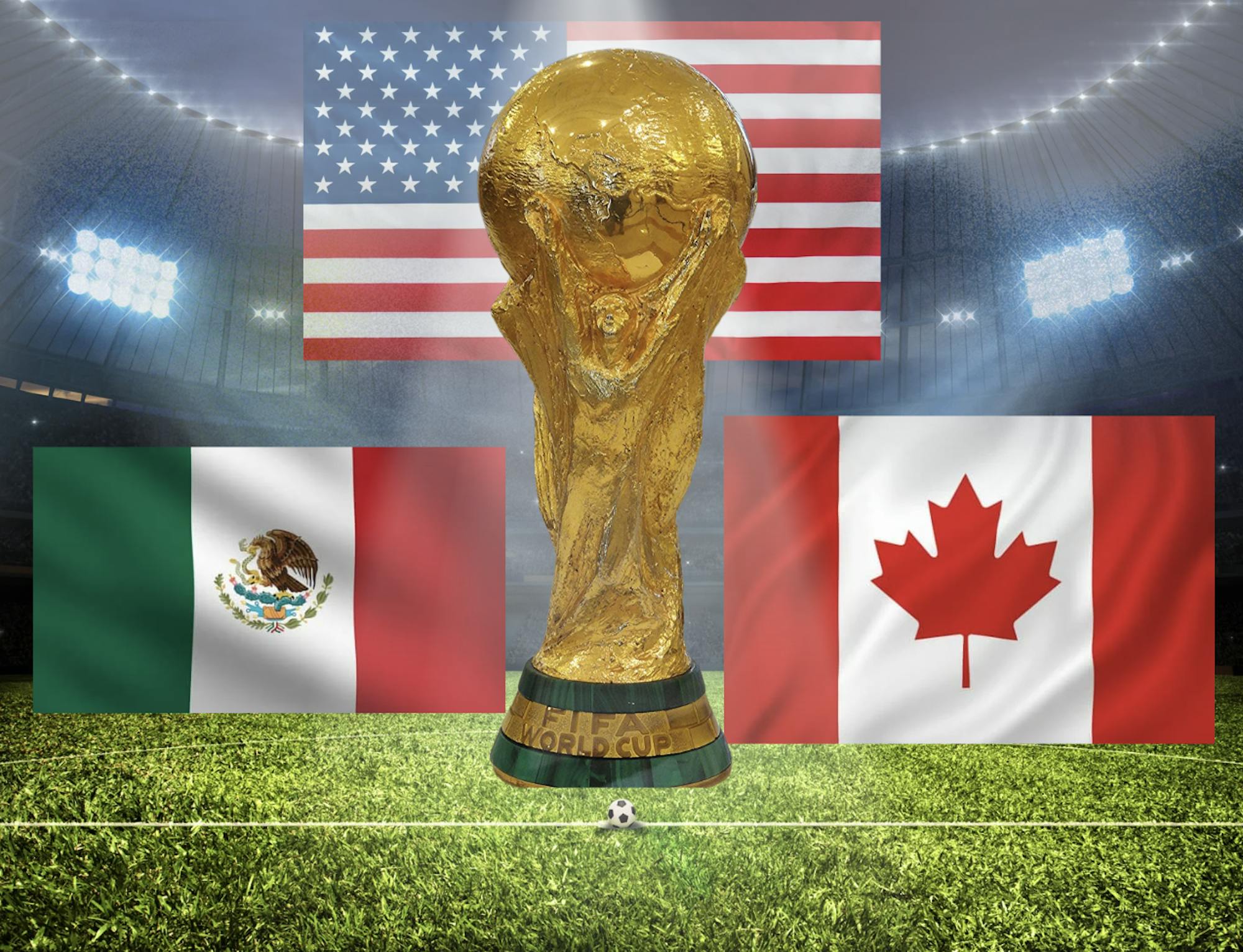
The New World Cup ball and mascots arrive
FIFA revealed the new World Cup soccer ball on Thursday. Named TRIONDA, it features three colored waves: green for Mexico, red for Canada and blue for the United States. For much of the World Cup’s history, World Cup balls have symbolized host nations.
FIFA also unveiled the tournament mascots: Maple the Moose, Zayu the Jaguar and Clutch the Bald Eagle. Mascots have been World Cup staples since 1966’s World Cup Willie. They’ve become crucial marketing tools, driving merchandise sales while engaging younger fans. It’s clear FIFA wants to portray the three host nations as united — but President Donald Trump’s foreign policy threatens that vision.
Trump threatens to move games, FIFA pushes back
Trump recently suggested he might strip World Cup games from host cities he deems unsafe. Speaking in the Oval Office last week, Trump addressed San Francisco and Seattle (both hosting games) as well as Chicago and Memphis. He concluded by warning, “If I think [a host city] isn’t safe, we’ll move it into a different city, absolutely.”
However, the federal government cannot unilaterally break World Cup agreements, which are signed directly between FIFA and the 11 U.S. host cities. Victor Montagliani, president of Concacaf and a FIFA vice president, dismissed Trump’s threat. “If I have to react every time a politician makes a statement, whether it’s a president, a senator, a congressman or even in my country and Mexico, then I wouldn’t be doing my job,” he said at Leaders Week London. “At the end of the day it’s FIFA’s tournament, FIFA makes those decisions.”
Montagliani’s response made FIFA's position clear: They won’t bow to Trump’s political whims. But this creates yet another tension point. Trump isn’t known for backing down when publicly contradicted, especially by international organizations. Will FIFA maintain this firm stance if Trump escalates — or will they eventually cave to political pressure from their most lucrative host nation?
Iranian delegation denied visas for World Cup draw
While FIFA pushes imagery of three nations united as one, reality tells a different story. The Iranian football federation claimed last week that its representatives had been denied visas ahead of the Dec. 5 draw at Washington D.C.’s Kennedy Center. The draw determines the group stage schedule and matchups, and every country sends a delegation including head coaches and staff to attend. Earlier this year, Trump issued a travel ban on all individuals from Iran, so the denials were not exactly surprising.
This raises serious questions about what comes next. Will other countries with tense relationships with the United States also be denied visas? More importantly, could Trump extend these bans to prevent entire teams from entering the country during the actual tournament? That would be unprecedented in World Cup history. But given Trump’s unpredictability, it’s not unrealistic. Perhaps FIFA should proactively schedule matches involving U.S. adversaries in Canada and Mexico instead to avoid potential disasters.
This matters because if tensions aren’t calmed before the tournament, they could spill into the stands through demonstrations and protests. FIFA has already offered many compromises to Trump, most notably letting him host the draw at the Kennedy Center. Will FIFA take a firmer stand with the administration, or simply let them do what they want? Is it even FIFA’s place to interfere in U.S. foreign policy? We’ll see in the coming weeks.



