
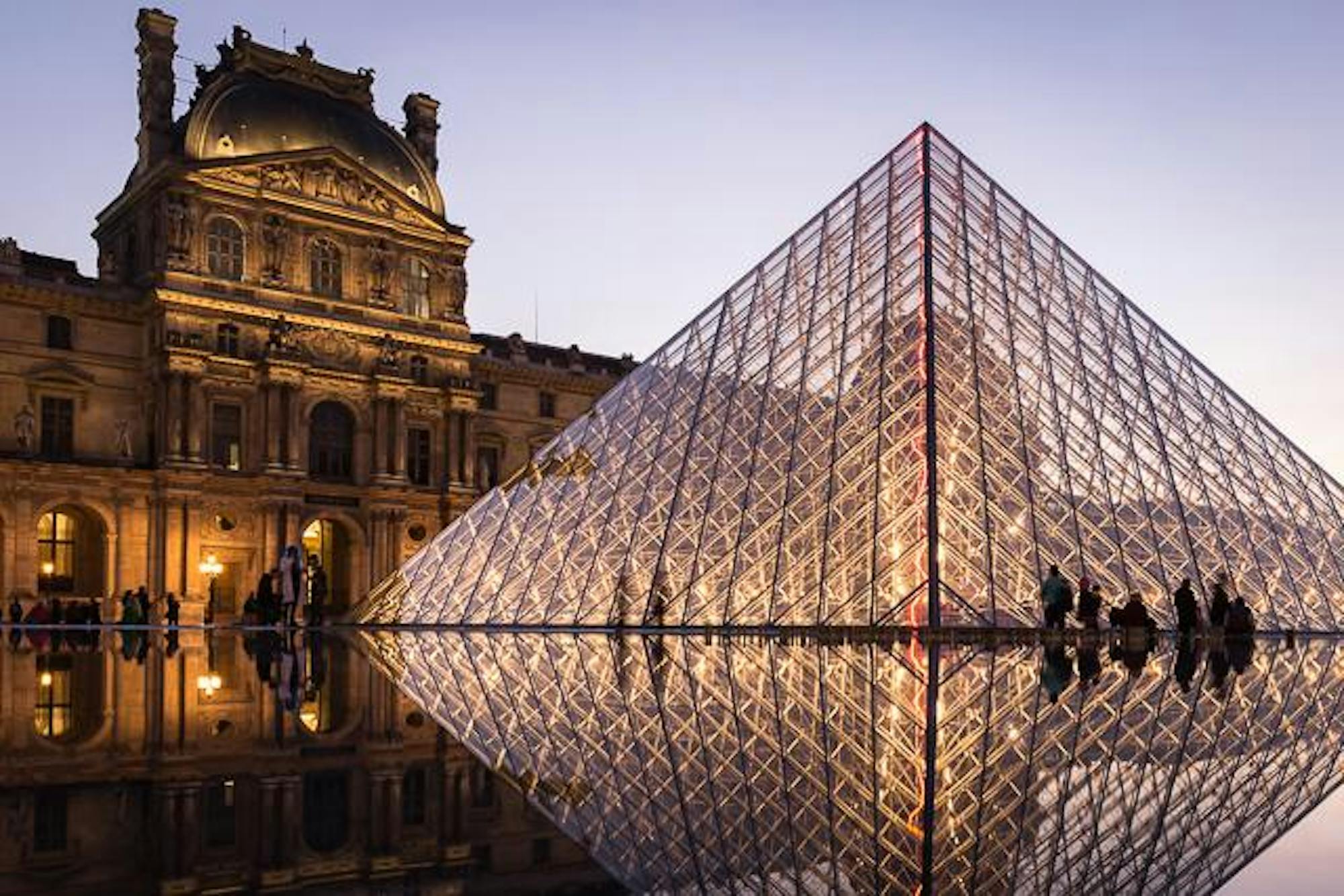
By the time visitors queued beneath the Louvre’s glass pyramid on Wednesday morning, the Apollo Gallery had already been struck. The museum had been open for about 30 minutes when a team of thieves in yellow construction vests scaled a ladder truck, used angle grinders to cut through a window at the south end of the gallery and vanished within four minutes, leaving behind gloves, tools and walkie-talkies — and, near the Seine, the dented emerald crown of Empress Eugénie. The theft — which took place mere steps away from the untouched “Mona Lisa” — netted a total of eight royal jewels worth an estimated $102 million.
Louvre Director Laurence des Cars called it a “terrible failure,” admitting before the French Senate that the museum’s security systems and staffing had fallen short. Her resignation was refused, but the damage — both material and symbolic — was harder to contain.
In many ways, the dramatic raid looked like a movie. But what it revealed is less cinematic and more consequential: the shape of museum crime is shifting.
Experts have long studied the psychology and logistics of art theft, often imagining the quiet, almost romantic scenario of a stolen painting hidden away for decades, only to be rediscovered by chance in a dusty basement. The new wave of heists looks nothing like that. Unlike Hollywood depictions, where art thieves supposedly covet masterpieces for their beauty, today’s crimes reveal a different motive: a shift toward raw material theft. The goal is no longer art as art — it is art as commodity.
Unlike famous paintings, which must remain intact to hold their value, jewels are easier to disappear. While a stolen Picasso or Mondrian would immediately draw suspicion if ever resurfaced, gemstones and precious metals can simply be taken apart — cut, melted and resold without a trace of their former life. Jewelry, unlike other forms of art, can vanish cleanly. Take it apart and it stops being a relic — it just becomes money.
This same logic drove the 2019 Green Vault robbery in Dresden, when thieves broke open display cases and stole 21 diamond-encrusted Saxon treasures valued at over $128 million. While some of the stolen items were eventually recovered, others were likely dismantled or destroyed to be sold for their raw materials. Similar patterns can be seen in other high-profile thefts: the 18-karat golden toilet taken from Blenheim Palace in 2019 may have been melted down; Yogi Berra’s World Series rings, stolen in 2014, were reportedly melted in a garage. In each case, the thieves targeted objects that could be easily converted into cash or raw materials, rather than pieces whose value lay primarily in history or cultural significance. The Louvre thieves appear to have used the same reasoning, focusing on items that could be quickly removed and repurposed.
The heist is not all that surprising — though museums may appear highly protected, they are not fortified like a bank or vault. Museums face a unique challenge: balancing accessibility and security. They must remain open to the public while protecting their exhibits, which means security measures can’t be as extreme as in a bank. Yes, the art needs protection, but it also has to be seen — and too many restrictions will only make a museum feel unwelcoming.
French authorities have arrested two suspects in connection with the heist. Paris prosecutor Laure Beccuau said one of the men was detained at Charles de Gaulle Airport while preparing to leave the country, and another was later taken into custody on suspicion of organized theft and criminal conspiracy. Officials are still working to recover the stolen jewels and locate the other perpetrators.
Unfortunately, even if the culprits are caught, the artifacts may never be seen again. And arguably, that is what is most devastating — not the disappearance of something beautiful or historic, but something that held a story. These weren’t random valuables; they were physical traces of the French Empire, crafted by artisans whose work once defined royal taste and national identity. Their loss erases part of that story forever.
For now, the Louvre remains open, though the Apollo Gallery is sealed off for investigation. Outside, tourists can take photos under the pyramid, the city glittering behind them. But the sense of awe has shifted slightly with the knowledge that the museum’s artifacts, no matter how famous, are not invincible.
The thieves took jewels, yes; but what they really stole was the illusion that some pieces of history are untouchable.



