
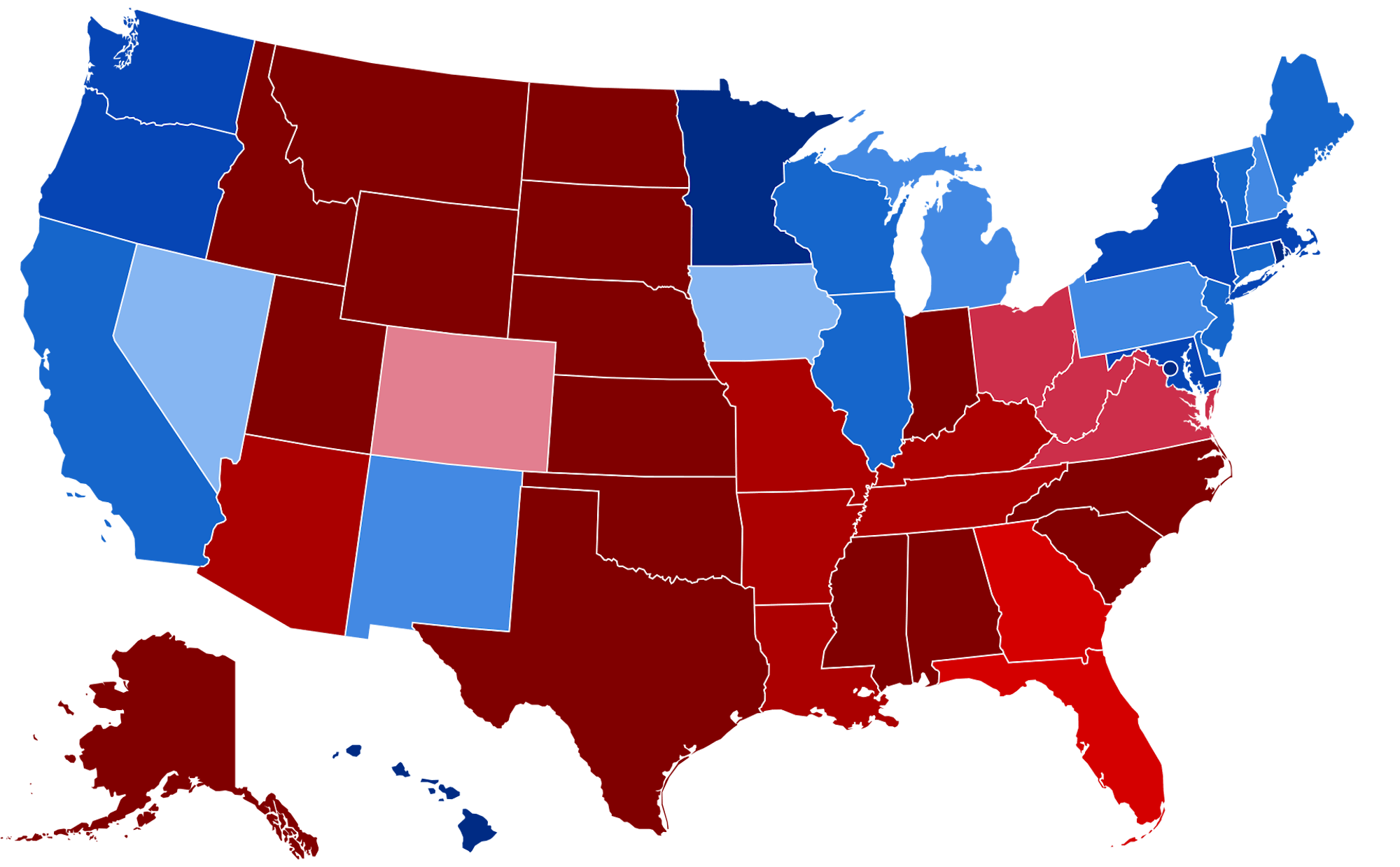
For nearly four decades, Texas has been a solidly red state. Texas has voted Republican in every presidential election since 1980, and there are many states just like it. For many years, a bright blue Texas on election night seemed forever out of reach for Democratic strategists. The result is a familiar national strategy where a few so-called swing states suck up all of the resources and publicity while much of the rest of the country is left abandoned by national Democrats. But, every so often, a race emerges that challenges this logic.
The recent Democratic primary in Texas allowed a previously little-known candidate, James Talarico, to place this debate back into the limelight. Texas can be the ultimate test case.
Talarico, a former public school teacher turned state house representative, has proven himself to be both a strong campaigner and a candidate capable of beating Jasmine Crockett, a major name within the Democratic establishment. His primary victory now positions him in a statewide race with the possibility of winning a Texas Senate seat for the Democrats, a first since 1993.
Polling consistently shows Talarico pulling ahead of his two Republican opponents, proving that, even in deep-red states, Democrats can emerge victorious. However, this is a story that has been heard before. The idea of a so-called ‘blue Texas’ driven by a state with rapid population growth and flourishing diversity in its cities has long been popular with Democrats. The most famous example was in 2018, when former congressman Beto O’Rourke mounted an unexpected competitive challenge against Republican senator Ted Cruz. It generated huge media attention and unprecedented fundraising, but still came 2.3% short of unseating Cruz.
While the dream seemed dead, Republicans continued to dominate both the state and national political positions while the much-anticipated Democratic surge failed to materialize. For many strategists, the lesson seemed clear: Texas remained too expensive and too difficult to flip. National Democrats relied heavily on Texas donors while remaining hesitant to ever put in investments from their deep pockets. Instead, we went back to focusing on the five or six swing states, a strategy that famously helped Kamala Harris lose all of them in the 2024 election. It also creates a political feedback loop. When national parties stop investing in large parts of the country they deem ‘already lost,’ local infrastructure is weakened. Local candidates struggle to gain traction or funding, outreach becomes harder and elections are lost. Creating a perception that a state is permanently out of reach becomes a self-fulfilling prophecy.
This was precisely the problem that Howard Dean, of the ‘Dean Scream’ fame, tried to address nearly two decades ago with his 50-state strategy. After the Democratic defeat in the 2004 presidential election, Dean argued that the party needed to rebuild its presence everywhere, rather than just continuously pumping more resources into swing states. The philosophy was straightforward: compete in every state, and win where victory seems unlikely.
The investment paid off. Overall, Democrats either improved or, at worst, suffered minor setbacks when Dean was in charge from 2005 to 2009. Post-2009, Democrats have continuously hemorrhaged electoral power in solidly red states, putting state legislatures, governorships and even federal seats into the hands of Republicans with little to no contest. This can no longer be allowed to happen.
Texas can be a blueprint for a long term strategy for the Democratic Party. Texas itself holds 40 electoral votes and two Senate seats, which are within reach. In Nebraska, independent candidate Dan Osborn lost by only 5% in a state that voted for Trump by 59.6%. Even with modest gains, Democrats can force Republicans onto the defensive and pour in resources to keep seats that were previously seen as solid red.
Now the question is whether Democrats will treat this moment as they did in 2018 with Beto O’Rourke. We cannot continue to rely on popular candidates in red states to run on their own resources and flounder in the dirt. The Democratic Party needs to once again vie for power in even the deepest of red states. Political realignment rarely happens overnight. It is built slowly through organization and years of persistent effort. Texas may not turn blue this election cycle, but if Democrats ever want to achieve their dreams, then they must be willing to invest in them long before they can see the color turn from red to blue.



