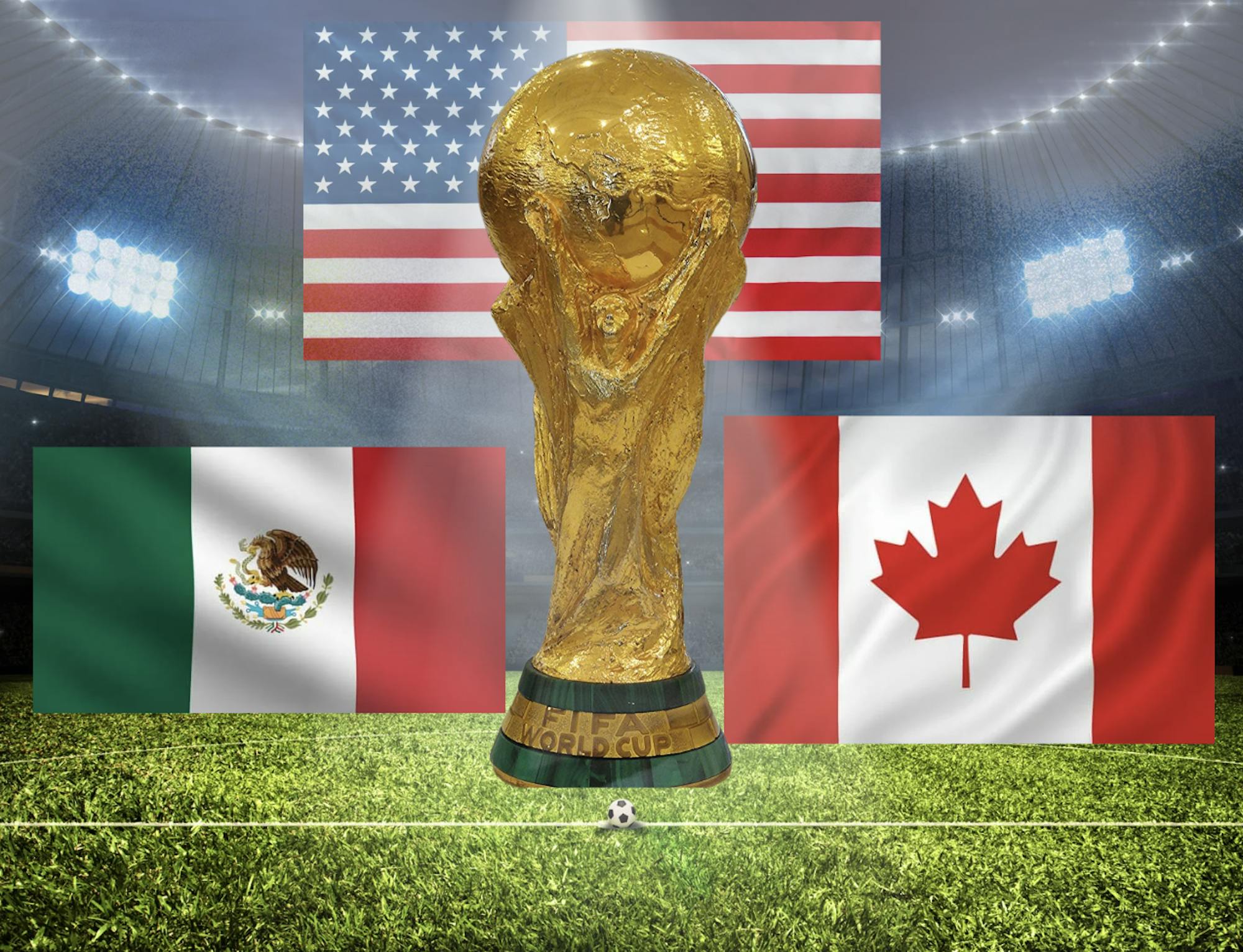
With less than 50 days until the World Cup begins, the tournament’s two most prominent host nations have each faced a shooting incident in the span of a week. This timing is difficult to ignore.
On April 20, a gunman opened fire at Teotihuacán, one of Mexico City’s most visited archaeological sites and a destination that had been deemed a key attraction for World Cup visitors. The attacker, Julio César Jasso Ramírez, killed a Canadian woman and wounded at least 13 others, most of them foreign tourists, before taking his own life after being shot in the leg by the National Guard. Investigators found handwritten notes in his backpack referencing the Columbine massacre, whose 27th anniversary fell on the day of the attack. He appeared to be targeting foreigners specifically.
This Saturday, a gunman, Cole Tomas Allen, attempted to storm the White House Correspondents’ Association Dinner in Washington, D.C., where President Donald Trump was attending his first such event as president. Allen was tackled by Secret Service agents before reaching the ballroom, having smuggled a shotgun, handgun and multiple knives into the hotel in disassembled form. A law enforcement officer was shot, and Trump was evacuated.
The two incidents are unrelated in motive and context, but together they have made security a dominant conversation around a tournament that was already navigating an unusually complicated political landscape.
Mexican President Claudia Sheinbaum called the Teotihuacán shooting “an isolated incident,” and her security secretary ordered an immediate strengthening of presence at archaeological sites and tourist destinations nationwide. Sheinbaum’s government had spent months projecting an image of safety ahead of the tournament, pointing to homicide rates being at their lowest levels in a decade. Mexican security analyst David Saucedo was less reassuring. The shooting, he said, revealed how overstretched public safety agencies are and suggested that concentrating resources in host cities may be leaving everywhere else more vulnerable.
In the United States, security analyst Massimiliano Montanari told Al Jazeera that Saturday’s shooting would have “no impact” on World Cup preparations, citing the country’s counterterrorism experience. That may be true in terms of stadium perimeters and official venues. It is less obviously true at the level of perception.
Millions of international fans are already navigating a tournament environment complicated by ICE’s confirmed presence at World Cup events and formal travel advisories issued last week by the ACLU, Amnesty International, the NAACP and over 120 civil society organizations. The advisories warned visitors of risks including arbitrary detention, racial profiling, invasive device searches and suppression of free speech. The White House called it “ridiculous scare tactics.” Geoff Freeman, president of the U.S. Travel Association, went further, accusing the groups of trying to “sabotage” the games to make a political point. FIFA, for its part, cited its human rights framework and said nothing else.
These attacks in two of the three host nations have serious implications for anyone planning to visit. Mexico cannot guarantee the safety of tourists in its own public spaces. The United States has a government unwilling to be held accountable for how it treats visitors and over 120 civil rights organizations telling the world to travel with a contingency plan. Canada, for now, is just watching.
On a lighter note, FIFA announced that it will increase prize money for competing nations after several European associations warned that they stood to lose money at the tournament despite a record $727 million prize pot. The higher operational costs of competing in North America, particularly the unpredictability of state by state taxation in the United States, had left some federations doing uncomfortable math. An improved package is expected to be approved at a FIFA Council meeting in Vancouver on April 28.