
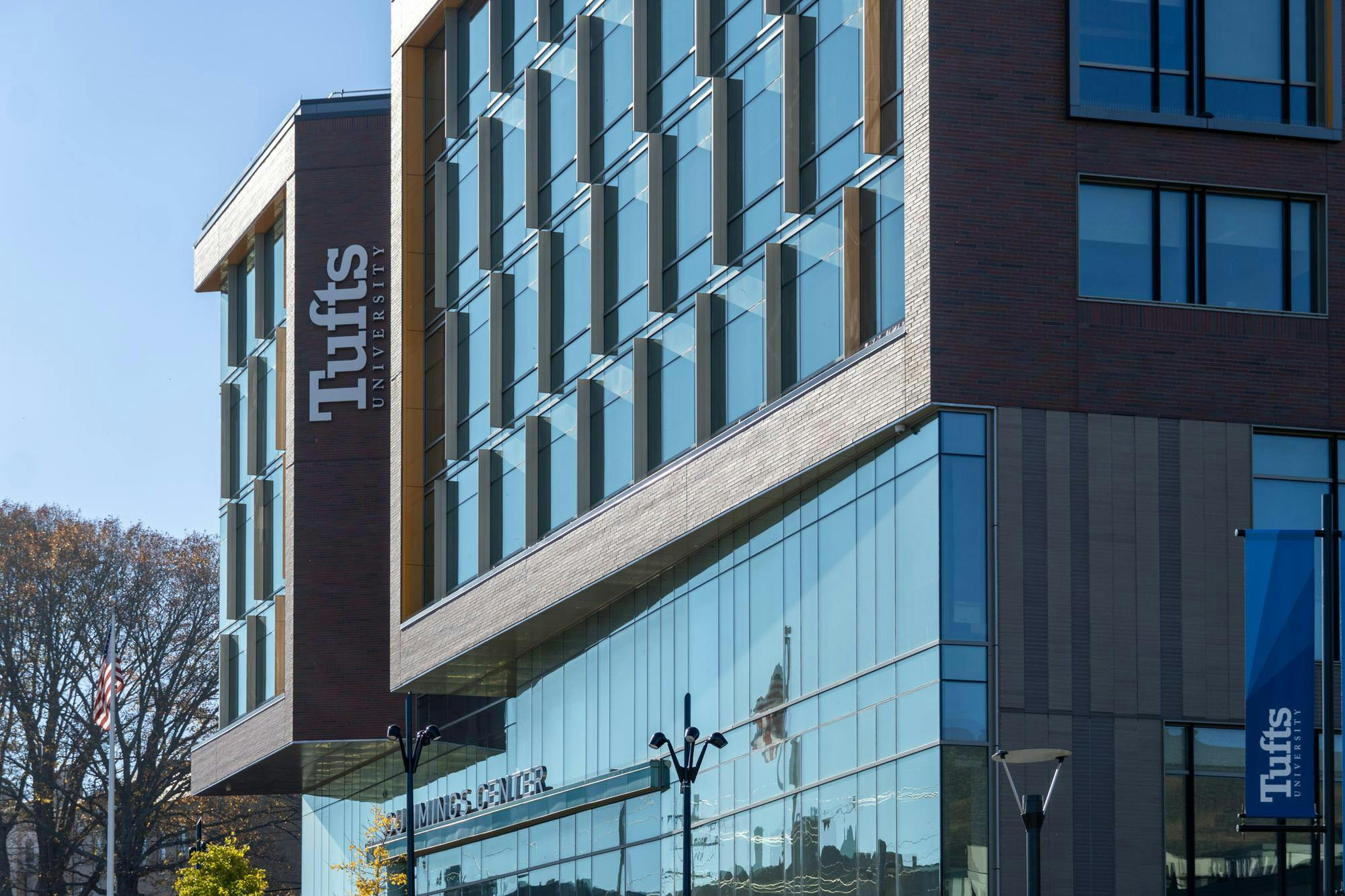
In an over four-hour-long meeting on Sunday, the Tufts Community Union Senate heard from Reverend Elyse Nelson Winger, the university chaplain, about a new institutional fund for religious holiday celebrations. The Senate also approved a resolution establishing a new community senator seat for religious and philosophical student organizations and passed sweeping changes to the Treasury Procedures Manual.
Winger opened the meeting by presenting a draft of the University Chaplaincy’s new Communal Life Observance and Holiday Celebration Fund, a $50,000 pilot program drawing from the university budget rather than the Student Activities Fee.
The fund is intended to cover community meals, facility reservations, guest speakers, decorations and promotional materials for recognized religious and philosophical student organizations, known as RPSOs, across all four Tufts campuses. The policy excludes groups that already receive external funding from accessing the new fund.
“This is new money that we have not had before, that is coming from the university budget that will be completely focused on providing that support,” Winger said. “This is not about cutting funding. This is just about shifting institutional responsibility.”
The fund will run on a two-week application window at the start of each semester, with fall funding decisions finalized by mid-September and spring decisions by Feb. 1. Winger clarified that the process is not competitive — any recognized RPSO whose observance fits the guidelines can expect funding.
Following Winger’s presentation, the Senate debated and voted on Resolution S.26-3, which calls for the creation of a permanent RPSO Community Senator seat. The resolution, submitted by members of the Interfaith Student Council and the Interfaith Ambassadors program, would require candidates to be an active member of either body and be elected by the full undergraduate student body through the TCU Elections Commission process.
Members of both groups spoke in favor of the resolution, emphasizing that RPSOs currently lack a direct channel into Senate deliberations, particularly around budget questions.
An ISC representative spoke on the importance of “being able to have someone here to both advocate for our needs” and “being able to have a voice” when the Senate is “talking about religious matters or matters that affect the chaplaincy.”
Administration and Policy Committee Chair Spencer Kluger, a sophomore, expressed concern over limiting who can run for the position to ISC members or Interfaith Ambassadors.
“I understand why that might be good in terms of ensuring that someone is capable of representing all the communities, but it does limit severely who could potentially run for those seats, whereas other community senators don’t face that same challenge,” he said. “It places a certain level of exclusivity on certain seats, which I don’t think is fair to everyone else.”
Class of 2029 Senator Elle Chassin advocated for the creation of the RPSO seat, citing a prior appeal for funding from the Tufts Buddhist Mindfulness Sangha.
“That whole situation made it really evident that we need someone on Senate to represent these groups and represent their needs, because it was so clear that no one else really had a good idea of what this group needed,” she said.
Chassin went on to express support for the membership requirement in either the Interfaith Ambassadors program or ISC as insurance against individual bias.
“My biggest concern was this individual being biased in some way and not being able to accurately represent all of the religious organizations and philosophical organizations that we have, but the stipulation that they need to be a part of the [Interfaith Ambassador program] or ISC really satisfies that concern for me, because I know that this would be a student or an individual that is committed to representing the interfaith community,” she said.
After a lengthy debate, with suggestions including moving the vote to a student body-wide referendum, the resolution ultimately passed 21-5-3. A drafted provision requiring the University Chaplaincy to approve the candidate was removed before the final vote.
The Senate then turned to a lengthy block of Treasury Procedures Manual amendments. Among the most significant changes, clubs will now be limited to one funded, off-campus travel opportunity per year, with an exception for groups whose mission statements center on competition or performance. A hard cap of 15 attendees will now apply to those competition and performance groups as well, closing a previous exception that allowed them to travel with larger parties. The change passed 20-8-1.
The Senate also voted to stop funding albums for a capella and performance groups going forward.



