
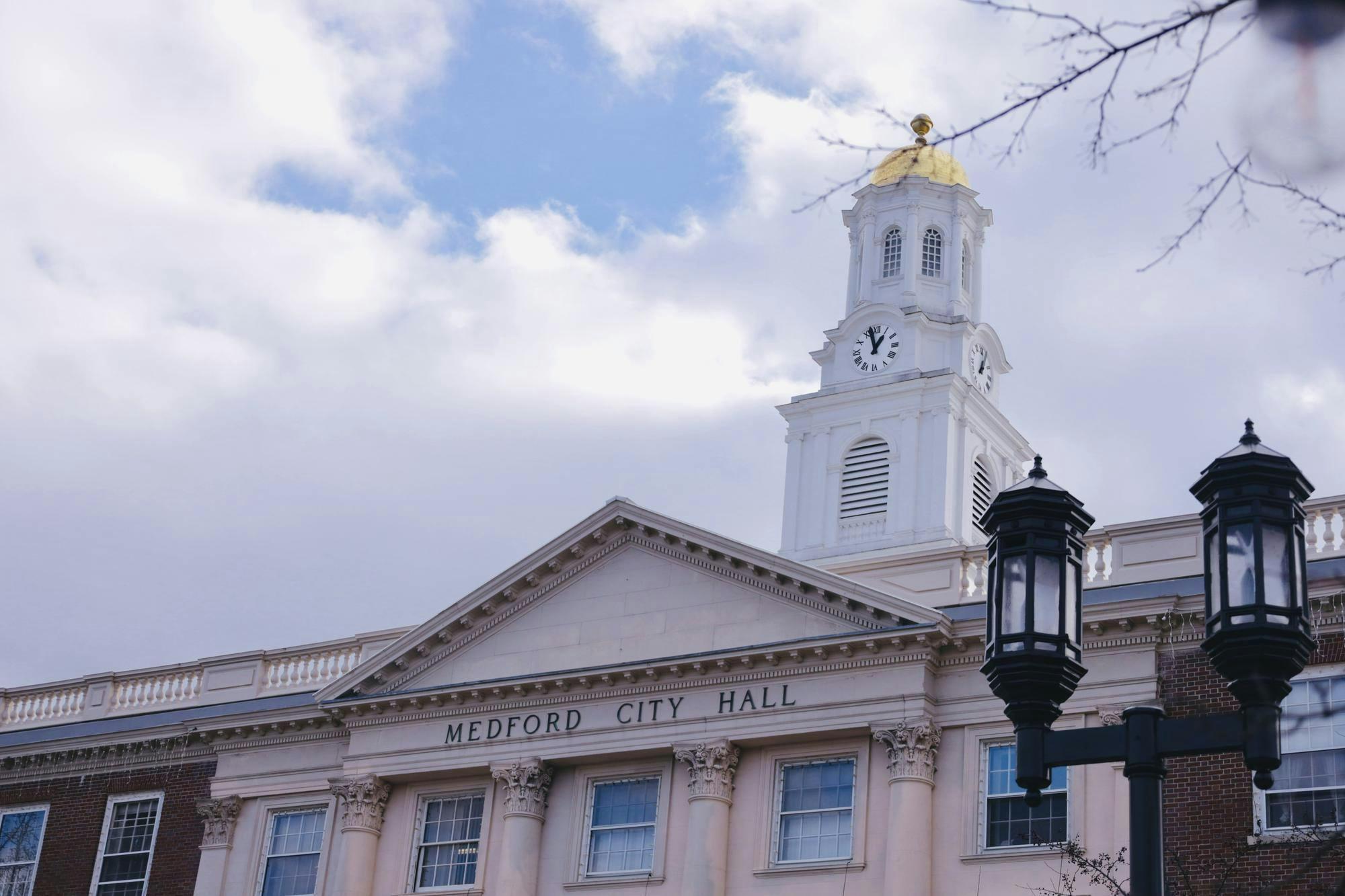
The Medford Office of Diversity, Equity and Inclusion received a nearly $90,000 grant from the Massachusetts Office on Disability to review the city’s compliance with the Americans with Disabilities Act, city officials announced on April 1.
The grant provides funding for updates to municipal “self-evaluation and transition plans,” which identify areas where disability access can be improved, according to the Massachusetts Office on Disability website.
“It’s a living document that will detail the ways in which Medford can continue to work towards the improvement of the city itself,” Nicholas Karinge, the Medford Office of DEI’s disability specialist, said. “There’s two documents — one that will evaluate the city and one that will show what we’re doing for the betterment of our accessibility.”
The plan will focus on a three-mile radius around City Hall, seeking to assess areas that can benefit from improvements, which may vary from curb cuts to ramps.
“You will need the infrastructure where there is a proper ramp or curb cut to get onto the sidewalk, or wherever you need to go,” Karinge said.
Steve Smirti, director of communications, noted that identifying comprehensive projects such as curb cuts and ramps will occur during the evaluation phase. However, specific action steps will be proposed in the transition plan and may take longer to be identified.
Medford has applied for this grant in the past, with Karinge noting the lengthy process required to create and submit an application to the Office on Disability. “The Office of DEI combined with the efforts of the Commission for Persons with Disabilities has tried to apply for the grant before, twice,” Karinge said. “It was not an easy thing to do.”
Applicants are required to create a project description, cost outline and timeline before applying via the Massachusetts Office on Disability website. Additionally, the program’s stated secondary preference for first-time applicants placed Medford at a disadvantage in the application process.
The city’s infrastructure has been inadequate for the needs of its residents in the past. Karinge highlighted how winter weather, in particular, raises accessibility concerns for residents trying to use sidewalks.
Smirti echoed Karinge’s sentiment of the importance of tackling insufficient infrastructure. “I have little kids, and navigating certain areas with a stroller … you can see where there are gaps,” Smirti said. “Understanding all those touch points for people and how to improve is really important.”
Karinge emphasized the need for accessibility infrastructure improvements, noting that people may underestimate the widespread impacts of accessible cities.
“I’ve heard it said that everyone at some point in their lifetime will have some type of a disability,” Karinge said. “If you break your foot, you are temporarily disabled, and you will need to benefit from the infrastructure that is in place in the city.”
One notable Medford project that Smirti and Karinge are hoping to replicate is the accessible renovation of McGlynn Elementary School’s playground in 2024. “We did a full renovation of the playground and made it all ADA accessible,” Smirti said.
Karinge, who attended McGlynn as an elementary school student, described the project’s impact.
“It’s made so that kids with disabilities and kids without disabilities can share the same thing together at the same time.”
“It’s for showing kids that there are things out there that are made for you,” Smirti said. “It encourages conversation and a better understanding of people’s experiences.”
Smirti and Karinge emphasized the far-reaching benefits that improvements to accessibility will bring for residents across Medford.
“[Accessibility] applies to a broad demographic of people. I mean, really every single person in the city,” Smirti said. “Accessibility throughout the city is obviously critically important. [We’re] really excited to get to do this work and to improve the city.”



