
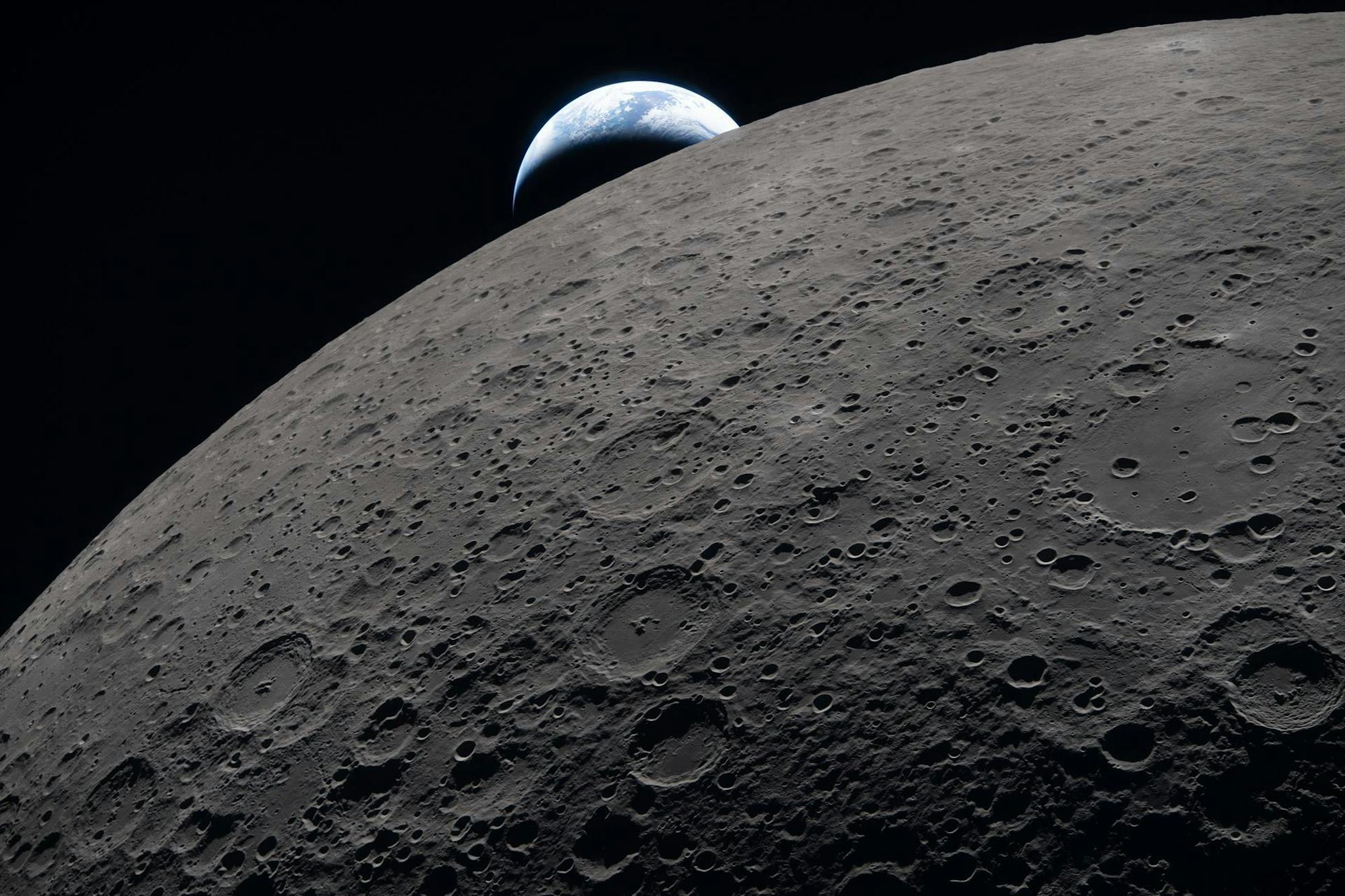
Like millions of space enthusiasts, I tuned in on Wednesday, April 1, to watch the Artemis II astronauts return to the moon on the spacecraft Integrity. The mission series, Artemis, is aptly named after the Greek goddess of the moon. Artemis is the twin sister of Apollo, reflecting how the mission will continue to build on what has already been accomplished by the Apollo series.
The crew’s 10-day mission is to break barriers in science and allow human beings to view never-before-seen parts of the moon, opening new doors for technology applications and lunar geology. I was ecstatic about humans returning to the moon for the first time in five decades as well as the scientific and historical milestones this mission will achieve. Surprisingly, Artemis II was not marked by excessive delays, which are common with spacecraft launches and NASA’s shuttle program.
The excitement and anticipation from those of us watching the launch together from the Nolop Fast Lab in the Tsungming Tu Complex was palpable as the crew performed their final checks and delivered their send off shortly before they launched. NASA astronauts Reid Wiseman, Victor Glover, Christiana Koch and Jeremy Hansen rapidly rose not only in altitude but in popularity as well, becoming international symbols of a new era of space exploration. The crew is heralding the promise of the Artemis Generation: the current era of students, scientists, engineers and explorers supporting NASA’s mission to return to the moon.
The crew consists of a commander, a pilot and two mission specialists who are in charge of testing Orion’s spacecraft systems with a human crew for the first time. The mission is also centered around testing how human beings respond physiologically and biologically to being in space and the effectiveness of the crew’s survival system suits. They will use a virtual astronaut tissue and analog response to see how human cells respond to extreme radiation and microgravity.
Mission control has also sent the crew a specific list of lunar surface features which the crew has extensively prepared to analyze to help scientists gain a better environmental analysis of the moon. One of these surface features the crew has observed includes a 600-mile-wide and 3.8 billion-year-old surface crater called the Orientale basin. Visual observations of the moon by experts will give scientists information that remote data sensing and imaging can’t provide.
This makes for the first human-led flight with a space launch system rocket and the first time a woman, a person of color and a Canadian have orbited the moon. The crew will fly in a figure-eight trajectory, traveling more than 248,000 miles from Earth while taking original lunar images of the far side of the moon. This also means that the crew surpassed the record set by Apollo 13 for the farthest distance human beings ever traveled from Earth. The crew had the privilege of witnessing astounding lunar phenomena such as “Earthset” and “Earthrise,” where Earth drops below and rises above the moon’s surface. The crew also got to name lunar craters that have never been seen before. One crater was named the Carroll crater after Wiseman’s late wife who passed away in 2020.
The crew began the journey back to Earth on Tuesday, April 7, about a week later.
Artemis II challenges future scientists to push the boundaries of human spaceflight so that its records are not held for long. Still, the data, images, audio and video the crew is sharing with the world will unquestionably change our perception of space and the moon. The crew has also made an effort to highlight the contributions from the rest of NASA, the Canadian Space Agency and others that have made the mission safe, successful and possible. Looking forward, in collaboration with SpaceX and Blue Origin, Artemis III and IV will test human docking and landing systems, returning to the moon’s surface.



