
For pastry chefs Richard Akers-Barrows and Maura Kilpatrick, baking is about imagination.
Both chefs were drawn to the kitchen from a young age. A middle school home-economics lesson inspired Akers-Barrows. “I was looking at the cookies bake in the oven, and [was] mesmerized,” he said. “It went from the dough that I created to a cookie. What else can I do?” This question led him to vocational high school, then to Johnson & Wales University and, now, to his current position as assistant pastry chef at The Langham, Boston. He is also rebranding his own online pastry business.
Kilpatrick started baking yeasted bread before she knew what yeast was. “I always was interested in baking, way beyond my experience,” she said. She realized she could bake professionally while working front-of-house in restaurants. “And then I was just like, all right, I’m gonna go back in the kitchen.”
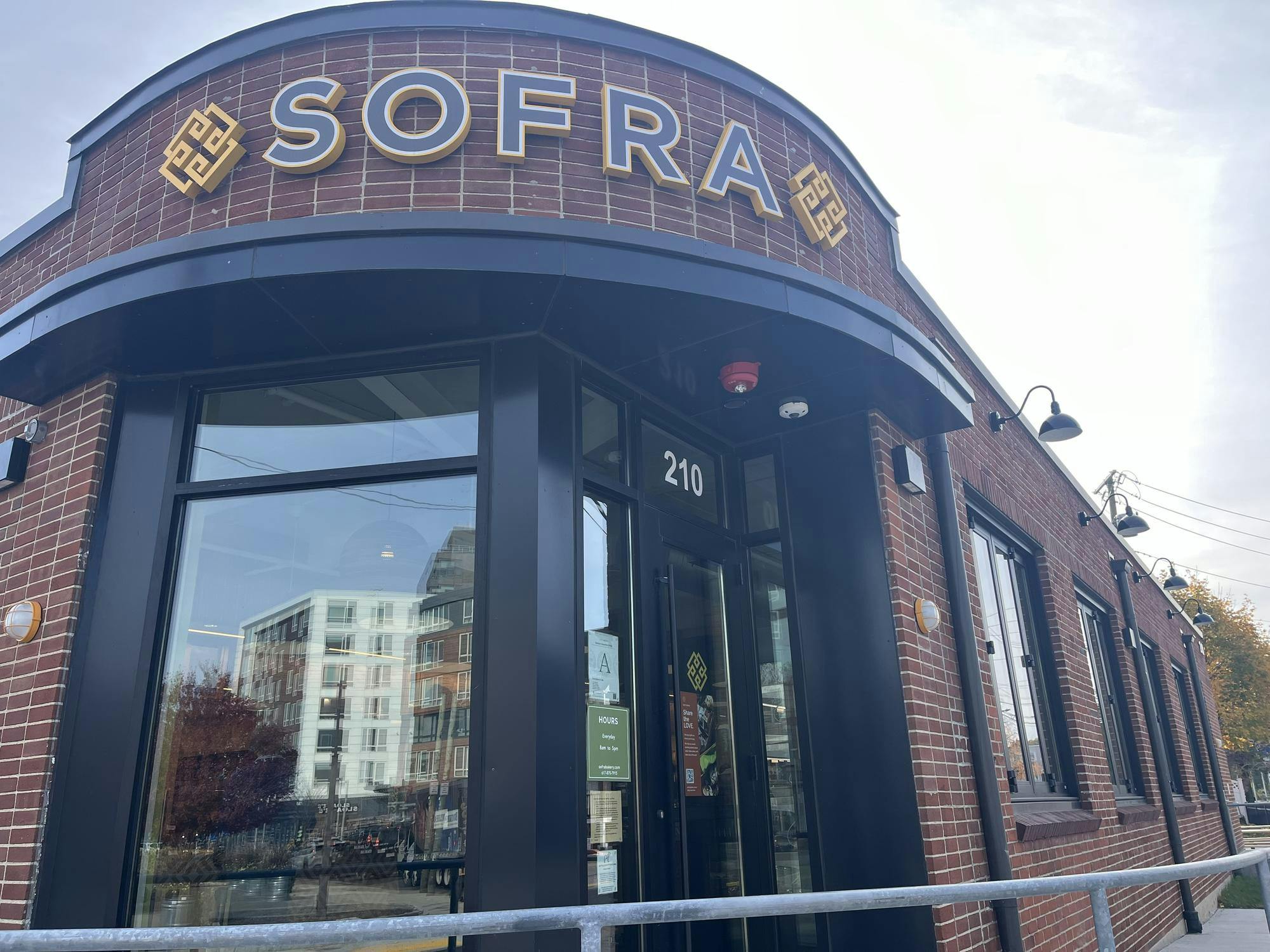
Today, Kilpatrick is the co-owner and pastry chef at Sofra Bakery & Cafe, with locations in Cambridge and Allston. She was voted Best Pastry Chef by Boston Magazine in 2002, 2007, 2008, 2009 and 2011.
Kilpatrick didn’t consider specializing in Middle Eastern pastry until she worked at a Middle Eastern restaurant. “You get to take chances that no one else can take,” she said. “You don’t have to play it safe, which is always appealing to a creative person.” Those chances include baking American-style pastries like cookies and donuts withMiddle Eastern spices.
Akers-Barrows also embraces risk. Fans of Food Network’s “Holiday Baking Championship” may recognize him as a contestant on season 8. “I always wanted to be on the show. I just was always scared, because as an artist, you just don’t think you’re good enough,” he said. After being on the show, Akers-Barrows realized that he wants to one day judge or host a similar competition. Recently, he was a contestant on the Canadian show “Holiday Bakeshop,” which premiered on Nov. 2. “I had less fear and a lot more confidence and a lot more knowledge,”Akers-Barrows said about returning to TV.
In pursuit of knowledge about Middle Eastern cuisine, Kilpatrick began researching recipes. She noticed that most Middle Eastern cookbooks include very few desserts. When she and Sofra co-owner Ana Sortun wrote their own cookbook, “Soframiz,” they made “a Middle Eastern book that’s half desserts.” The book also explores her more than 25-year working relationship with Sortun, because, as Kilpatrick put it, “you really can’t often work with somebody as long as we have.”
Sortun and Kilpatrick prioritize relationships at Sofra, including with their food purveyors. Their olive oil supplier once took them on a trip to Lebanon, and their tahini supplier, Seed + Mill, asked Kilpatrick to contribute a recipe to its cookbook.
Sofra aims to connect with the community as well. “[There’s] a woman who we work with right now, who has really amazing chai, and she’s local, and she just walked in our door and [said], ‘You have to try this.’ And she has a great product,” Kilpatrick said. There is still work to be done since Sofra’s Allston location opened in October 2024. “[The community is] just getting to know us,” Kilpatrick said. “So we’re trying to still belong to this neighborhood”
Although he has come a long way from his middle school home economics class, Akers-Barrows still finds inspiration in childhood and nostalgia. “My love is to take all the classics … and then just really vamp them up,” he said. Akers-Barrows compares his creative process to playing with Play-Doh because “you can have a big imagination.”
For Akers-Barrows, creating new recipes depends on trial and error. He asks people for feedback and tweaks his recipes until 70–80% of his test audience likes them. Once finalized, he builds client interest by incorporating trends, such as popular movies, into pastry decoration for his business. At The Langham, he uses negative space and symmetry when plating pastries to guide the diner’s eye — creating “a journey and experience of what they see.”
Kilpatrick also tweaks familiar recipes. “I think, in the beginning of your career, you look at a recipe and you make it as it reads, and then later, when you develop your own style or personality with food … you learn to make a recipe the way you want it,” she said.
Making something exactly the way she wants it can be a struggle for Kilpatrick, a self-described perfectionist. “After a while, there are recipes that you can’t touch,” she said. “But a lot of things, I can honestly say they’re not done.”. Sofra’s classic cookies are among the recipes she won’t change. “I’m always going to be a cookie person, and I'm always going to be most particular about the uniformity of cookies, and I'm always going to be most particular about what people are experiencing,” Kilpatrick said. “You feel like a cookie, you get two bites. You can’t waste them.”
Accordingly, the cookies in the Sofra display case are all perfectly aligned in size. Looking at them, Kilpatrick said,“I think they describe our work ethic. Everything's so well baked and well put together.”
When reflecting on his career thus far, Akers-Barrows offered simple advice: “Be creative,” he said, and “don’t be afraid of what you want to do.”



