
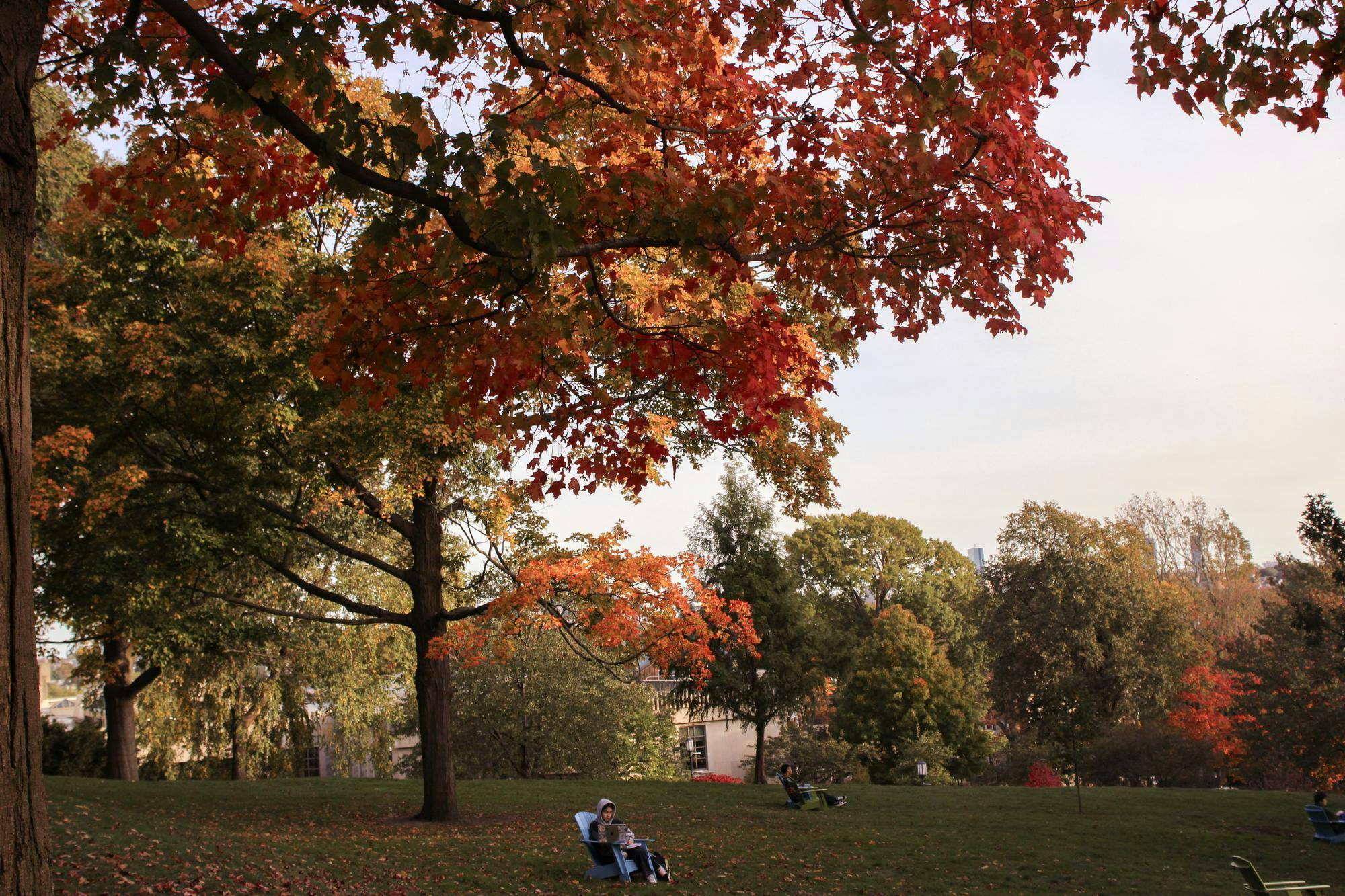
The vibrant transformation of leaves into shades of red, orange and yellow marks the transition from summer into the cooler months. With Boston ranked among the most beautiful autumn cities, its fall foliage is a popular attraction for both locals and tourists. This season, however, the picturesque scenery is threatened by increasing environmental stressors on the region’s trees.
In an interview with Steve Kendall, an International Society of Arboriculture-certified arborist and district manager at Hartney Greymont, a Massachusetts tree and landscaping company, we discussed local tree health and its effects on the vibrancy of fall foliage.
Boston’s most common fall foliage species include maples, oaks, ashes and beeches. The sugar maple — “a classic New England foliage tree,” according to Kendall — has been plagued by anthracnose, an early-season leaf disease. “When we have the right sort of confluence of circumstances early in the spring, with a temperature and moisture content that lines up with the development of anthracnose, that gets onto the leaves and makes the trees photosynthesize less efficiently,” Kendall said. This disease has lasting effects on local trees because it can persist between growing seasons. Severe infections may lead to premature defoliation, meaning the trees shed their leaves earlier than normal.
Greymont has also seen a rise in beech leaf disease, which involves microscopic worms that damage beech tree leaves and trigger bud damage and deformities such as changes in leaf texture and dark stripes in the veins. Once a tree is infested, there is no known cure, and extreme cases result in tree death. Similarly, ash trees have been affected by pest infestations by the emerald ash borer. This invasive beetle lays its eggs in bark crevices, and once hatched, the larvae bore into the tree and feed on the inner bark and phloem. Because the inner bark of trees does not grow back, the trees lose access to food and water, making them more brittle and susceptible to damage.
Drought in the greater Boston area is another major stressor affecting tree health. Rainfall totals have been 40–80% of normal precipitation across Massachusetts for the past three months, and Kendall noted that drought “interrupts a lot of those normal biological processes that trees require to remain healthy.”
Water shortages contribute to decreased turgor pressure, causing leaves to wilt and drop prematurely. Kendall explained that adverse environmental conditions also contribute to marginal leaf scorch, a condition in which “the edges of leaves brown and curl up.” In the long run, trees may experience crown death. While it is normal for trees to wall off branches that are not photosynthesizing enough to sustain themselves — known as interior deadwood — this typically occurs in branches lacking sufficient sunlight and water. Decay that begins from the top down or outside in, known as dieback, further weakens the tree’s structure. For deciduous trees, these factors mean that there will be a shorter and less vibrant foliage season because of premature coloration and defoliation.
Since it takes multiple seasons for trees to recover from drought, there are expected to be impacts on leaf out and tree development next spring. Due to the drought and shortened fall season, some trees may not leaf out next year. During fall, trees convert and store energy in their roots as starch in preparation for winter. Because premature leaf drop limited photosynthesis this season, many trees will enter spring with insufficient energy to set buds and renew growth.
As diseases, pests and drought continue to threaten local trees, the changing leaves serve as a visible reminder of the environmental challenges that the trees have been facing each year. In the spring, we can look forward to renewal and fresh growth, observing the resilience of trees as buds emerge and canopies fill in again. Yet beneath this renewal, we should recognize that many trees are still recovering from the lingering effects of past stresses and adapting to new ones.



