Sometime in spring 2025, Ray Feinleib (LA'25) found himself in a tough situation. Needing only one more course to complete a bachelor’s degree in film and media studies at Tufts in the twilight of his academic career, Feinleib had chosen to take “Advanced Documentary.” Yet, on the weekend before spring break, with the course’s final project’s due date set for the first week back, he found himself with nothing.
At first Feinleib had planned to make a film about high school referees and their quests to move up in the hierarchy of local sports, but that project was soon abandoned. His next idea, a documentary focusing on Boston’s underground standup comedy circuit, was similarly fruitless.
So, seemingly out of ideas without any tricks up his sleeve, Feinleib took a leap of faith; on a housemate’s suggestion, he walked down Powder House Boulevard to George Laturny’s driveway. And after only a few minutes of talking, Feinleib had found what he was looking for.
“I think that this doc was perfect for me,” Feinleib said. “It combined that interest to find something in the mundane, and my interest in playing with old stuff and finding out its story.”
While Feinleib’s passion for thrifting is evident throughout “George’s Yard Sale” — whether it be a stack of antique movie posters or a pile of stuffed animals, he takes extreme care in showing the items on offer in Laturny’s front yard — by the time he settled on a final cut, the film had evolved into something that speaks to larger issues. Talking to the Somerville residents who frequent the sale, Feinleib began to uncover a story about gentrification and the area’s ever-changing housing landscape.
“A yard sale is taking things from one person’s house and putting them into your house, and rehoming things, recycling things and going out with the old in with the new,” he explained. “I think it’s the perfect parallel with the housing market.”
Yet the approach of “George’s Yard Sale” is far from argumentative. Heavily inspired by the unique documentary stylization of filmmakers like Lance Oppenheim and John Wilson, Feinleib understood his responsibility was to simply “capture the whole breathing organism” that is Somerville.
What’s most striking about Feinleib’s work is the way it distills a web of complex questions about housing inequity into a concise, nine-minute piece that feels both comprehensive and clear. Though he enrolled in “Advanced Documentary” without ever having attempted a non-narrative project, Feinleib’s editing carries a tone and rhythm that feel remarkably assured — the mark of a far more experienced documentarian.
“Ray showed an intuitive sense of how an audience might respond to a more elegant edit,” Professor Natalie Minik, who teaches the course and is credited at the end of “George’s Yard Sale,” wrote in an email to the Daily. “He understood that efficiency and clarity can make a film more powerful.”
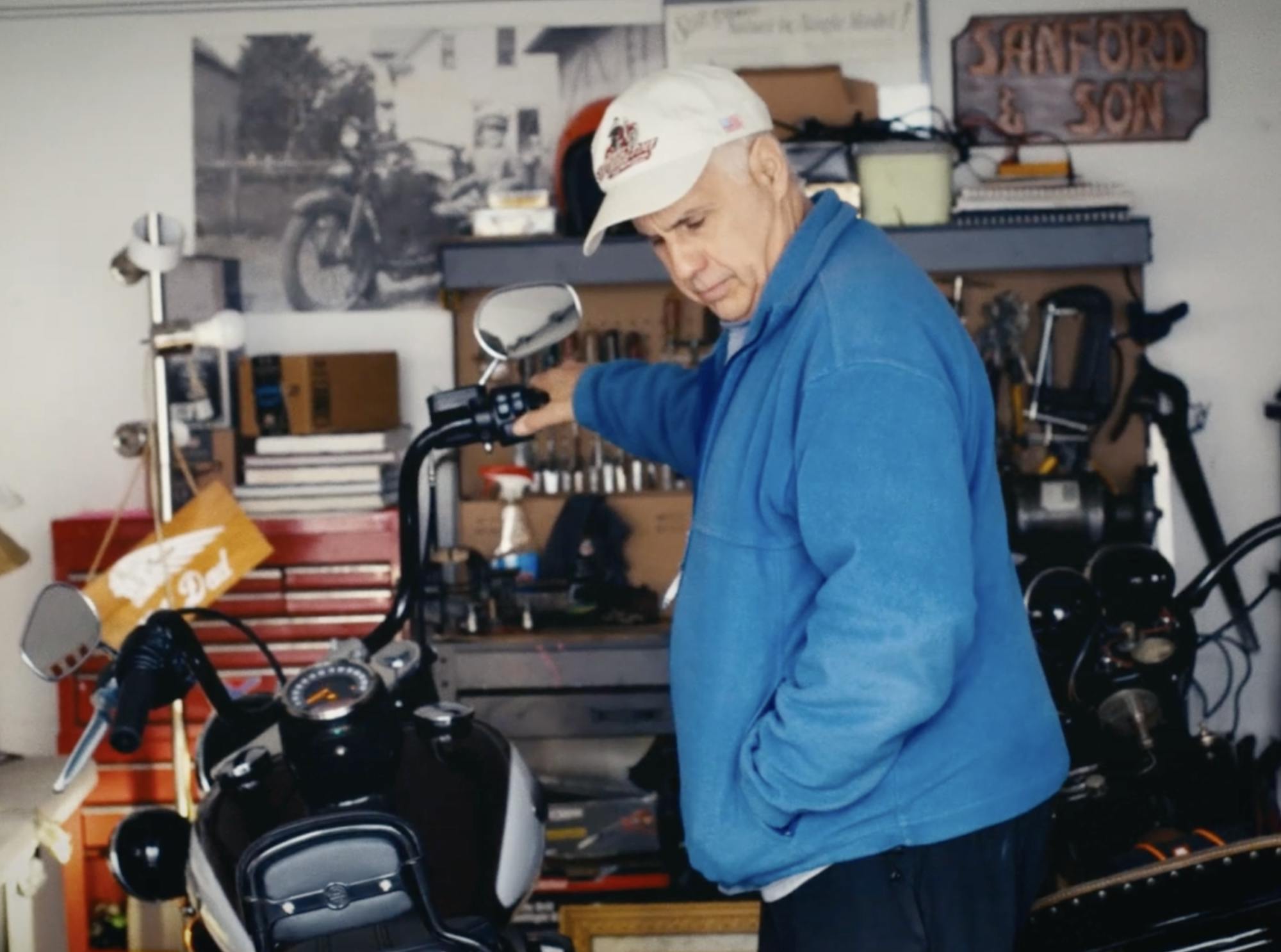
Though the film’s distinct atmosphere is a testament to Feinleib’s splicing ability, the story is brought to life by the testimonies of many interviewees. With participants ranging from younger residents and Tufts students to lifelong Somerville natives — one of whom proudly remarks he’s lived there for 75 years — the documentary succeeds in authentically representing the breadth of people and perspectives that shape the community.
For Feinleib, the process of listening to residents proved to be a novel yet fulfilling experience. “Tufts is this big place on a hill,” he remarked. “You never have to interact with the community if you don’t want to. And so taking that step to talk to people and hear from them was huge.”
What Feinleib came to understand was that every resident shapes Somerville’s housing story differently. Though rising property values are a near-universal concern, the search for someone to blame — if blame even applies — proves far more complicated than it first appears. Although the addition of the MBTA Green Line and the growing presence of Tufts students and young professionals have contributed to the problem, rising costs reflect a broader national trend, positioning Somerville as a poignant yet representative case study.
In many ways, the film serves as an ethnographic portrait of a community where the old and the new are perpetually intertwined — and the yard sale is the perfect vehicle for that exploration.
“There’s a flight of young people moving into the neighborhood who are having to furnish their homes, and they can't do it without stopping by this age-old watering hole,” Feinleib mentioned. “It’s impossible to make new of an old home without reintegrating these older factors.”
After being named the winner of Boston’s GlobeDocs Film Festival “Emerging Filmmaker” contest — an annual award given to a local filmmaker aged 18–25 years old — Feinleib remains uncertain about what the future holds. Having only recently purchased a camera of his own — after long holding reservations about making such a decisive investment — he now finds himself back home in New Jersey, continuing to seek out stories that merit being told.
“It’s just a matter of finding the next thing that's hiding in front of me and hiding in plain sight,” Feinleib concluded. “If it’s not documentary filmmaking that works out, I still want to remain curious about what's going on around me after this experience.”