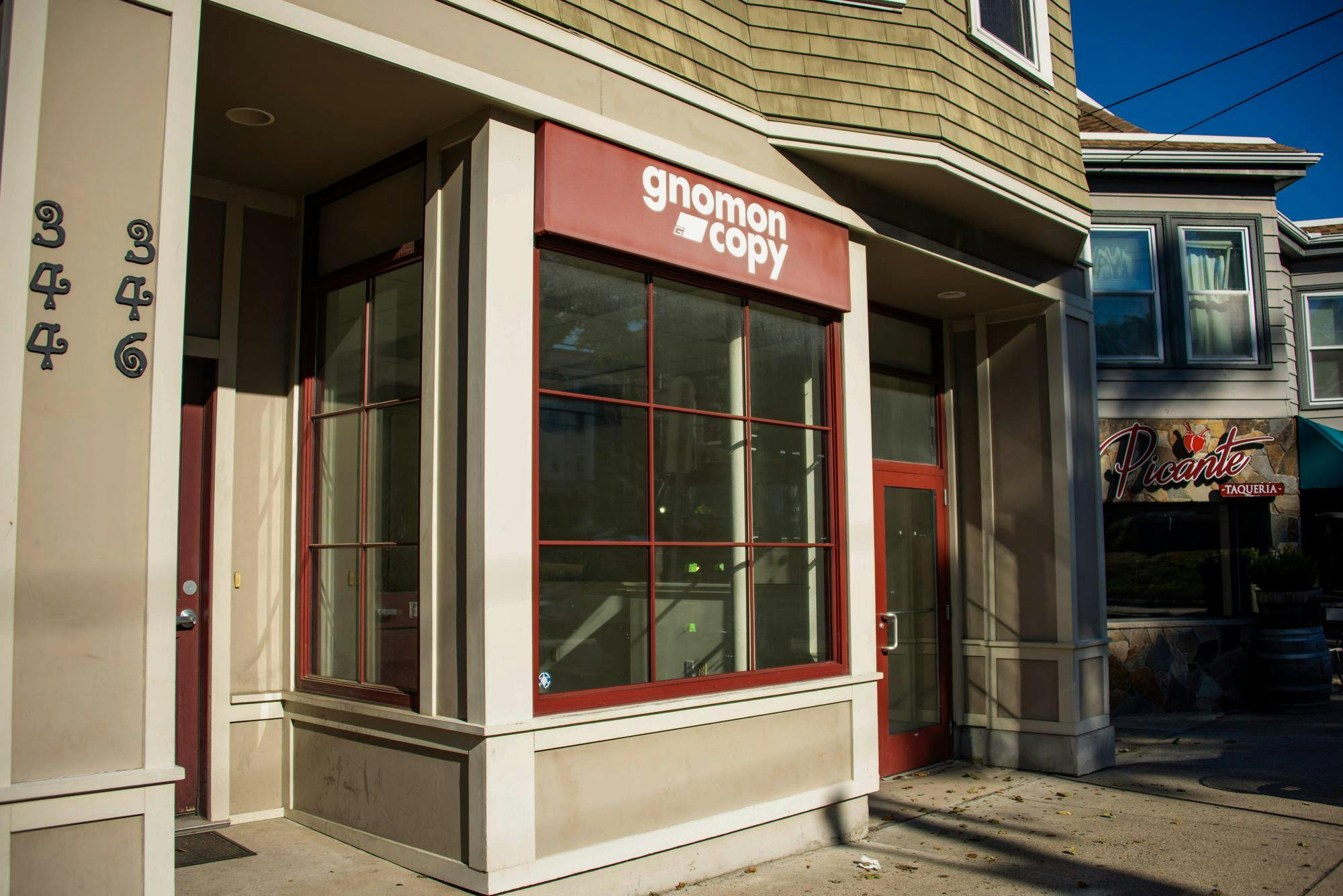
The second round of Project: Pop-Up Medford will transform 348 Boston Ave. into a shared retail space for three small businesses from November 2025 to January 2026. The project — a collaboration between the City of Medford, Tufts University and retail incubator consulting firm UpNext — provides microenterprises with the opportunity to promote their work, try new business models and learn how to operate a retail storefront.
The program is funded through a U.S. Department of Housing and Urban Development Community Development Block Grant, an annual grant to help state and local governments develop “viable urban communities.” In accordance with grant requirements, the program will support low-to-moderate income Medford residents.
Kayla Myros, Medford’s economic development planner, hopes these requirements will create “economic opportunity for Medford residents that may have a harder time because of their income or other factors accessing these opportunities.”
UpNext CEO Allison Yee founded the company in 2018 after seeing how temporary pop-up storefronts could rapidly transform vacant spaces into accessible “incubator spaces” for local businesses.
“It was one of those ‘aha’ moment type experiences where I saw [businesses] getting instant access to properties that would have otherwise been very out of reach, and getting proof of concept and connecting with their customers and building loyalty and experimenting,” Yee said. “I just immediately felt like this was the way of the future for retail.”
Project: Pop-Up began in the summer of 2021 as a reaction to the economic struggles associated with the COVID-19 pandemic, when many people launched home-based businesses while commercial spaces sat empty. Today, UpNext works with municipalities to use grant funding to lower market-rate rent and fill vacancies in local downtown districts.
Myros said the program serves as an early stepping stone for entrepreneurs hoping to grow in Medford.
“The outcomes that we hope for participants is, should they want to grow their business in Medford, that we can connect them with more resources like our vacant storefront grant program to help them find and occupy a space in one of Medford squares, and this together really goes back to our goals for economic development,” Myros said.
According to Myros, Medford’s key economic goal is “community and business district revitalization” which can be done by activating vacant storefronts and ensuring that business districts are inviting spaces for residents. Although none of the businesses from the first round of the program were ready to permanently occupy a retail space, Myros said the program was a “really great initial contact with them.”
City Councilor Emily Lazzaro said strengthening Medford’s commercial districts is critical for expanding city services. Unlike cities with larger commercial districts such as Somerville and Cambridge, Medford “[doesn’t] have really robust city services for vulnerable residents,” Lazzaro said. Expanding Medford’s commercial districts will allow the city to draw from business tax revenue instead of relying entirely on residential taxes to invest into city programs, according to Lazzaro.
The City of Medford and UpNext are working together to execute the project. The city works on finding the retail space and helps coordinate the leases, while UpNext manages the application process, selection and preparation of businesses for the storefront.
Since multiple businesses must share the same space, UpNext offers resources for conflict resolution with Yee emphasizing the importance of applicants with a “collaborative spirit.” The city also reviews applications to ensure income requirements are met and coordinates promotional efforts once the pop-up opens.
UpNext supplements the program with educational tools, including the Pop-Up Playbook, a retail market foundations course and a social media launch calendar. By helping entrepreneurs find leases and navigate branding, Yee aims to help make the normally tedious process of opening a physical storefront easier for the businesses involved.
“We’re doing a lot of the pieces that surround [this process] to make that lift lighter … so that they can really focus on the operational lifts of what it’s like to run a retail operation day to day, because that is no small feat,” Yee said.
Myros said that the first round of the program, which began in June and ran until July 15 earlier this year, proved successful for the three businesses involved.
“All three participants reported having learned really valuable lessons about operating pop-ups,” she said. “The initial round of Project: Pop-Up allowed these business owners to test their concept and positioned them to expand their business.”
Iris Zeng, the owner of Blob Says Hello, a brand that makes “fashionable fidgeting jewelry,” was one of the participants in the first round of the Pop-Up program.
“[It gave me] an understanding of how to put marketing materials together and to reach an audience,” Zeng said. She also learned other essential skills of running a brick-and-mortar business, such as how the time of day impacts sales.
Zeng, who previously made jewelry at home from her bedroom, also appreciated sharing the pop-up space with other small business owners. “The opportunity to connect is really huge,” she said.
She also said that she would recommend the program to other businesses.
“I definitely would recommend [it] especially if they never had a permanent place … or to understand their market, their brand themselves and their products and establish deeper connections with the small business owners.”