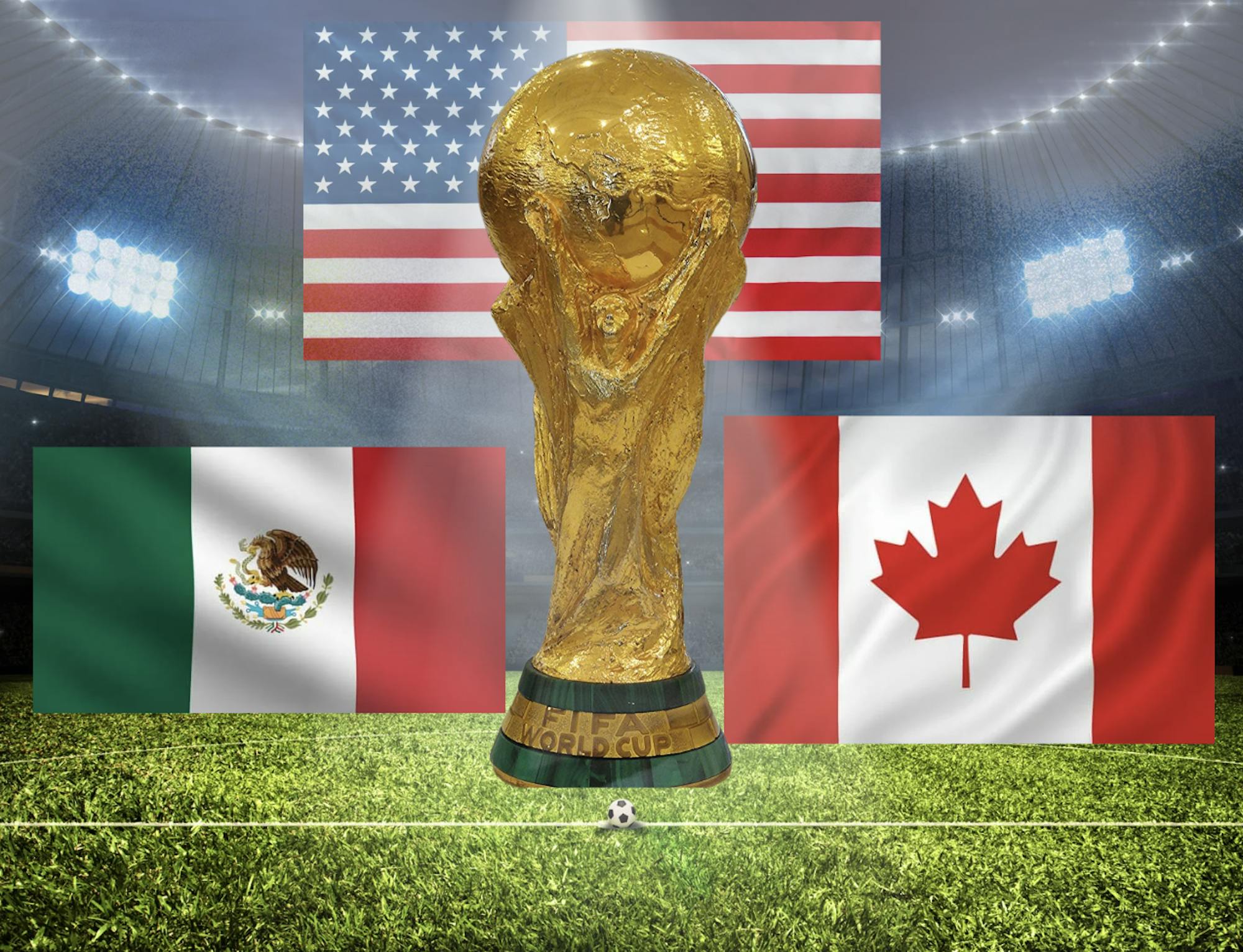
Welcome back to the “Road to the World Cup.” We’re now just 203 days away from the inaugural match at the Estadio Azteca. Recent developments have been coming fast, so let’s get straight to them.
The FIFA priority appointment scheduling system
A critical development designed to address the unprecedented scale of the event is the establishment of the “FIFA Pass.” This initiative, led by the U.S. Department of State, grants World Cup ticket holders access to prioritized U.S. visa interview appointments. The necessity for such a fast-track system becomes painfully clear when you consider the wait times: Travelers from Colombia face delays of up to 11 months, and non-Canadian citizens traveling to Toronto can expect to wait 14 months.
The new pass was unveiled this past week at the White House by President Donald Trump and FIFA President Gianni Infantino, who emphasized the “close collaboration” between FIFA and the task force established to prepare for the 2026 World Cup. Infantino expects between 5–10 million people to travel to the United States for the World Cup. Yet U.S. officials were quick to emphasize the stringent vetting that awaits them. Secretary of State Marco Rubio stressed that the ticket only guarantees an expedited appointment and that it is not a visa, nor does it guarantee admission to the country. Secretary of Homeland Security Kristi Noem confirmed that every applicant will be “thoroughly vetted.”
Meanwhile, co-host Mexico is confirming its readiness. Expecting an additional 5.5 million visitors across its three host cities, Mexico’s President Claudia Sheinbaum has announced that all federal infrastructure projects for the tournament (which will stage 13 matches) are on schedule for completion ahead of the June start. The government is investing $489 million into renovating the two terminals at Mexico City International Airport and constructing a new train line connecting the city with Felipe Ángeles International Airport.
Infantino’s peace prize
Adding political theater to the build-up is the introduction of the “FIFA Peace Prize – Football Unites the World” award. This new annual prize aims to recognize individuals who have taken “exceptional and extraordinary actions for peace.” The inaugural honor will be presented by Infantino on Dec. 5, during the Final Draw in Washington D.C.
Given Infantino’s public relationship with Trump, whom he considers a “close friend” and was recently photographed alongside at a Gaza peace summit in Egypt, speculation about the first recipient has reached a fever pitch. When asked directly if Trump would be the winner, Infantino offered only a coy response: “On the fifth of December, you will see.”
This geopolitical focus has drawn sharp criticism. Observers argue that Infantino should prioritize his core responsibilities rather than engaging in what some have called self-aggrandising stunts. Chief among those neglected responsibilities is ticketing. FIFA’s decision to expand to 48 teams (driven squarely by a desire to maximize receipts) has produced a dynamic pricing structure condemned as an affront to the game. The cost of a family outing could easily run into thousands of dollars, with the resale market producing outrageous mark-ups. One final ticket, for instance, has been relisted for $25,000.
Where the heart remains
Yet, ultimately, the raw excitement of qualification cuts through all the corporate posturing and political maneuvering. This international break has delivered exactly the kind of last-minute drama that reminds us why we care in the first place. Scotland secured its place with a thrilling victory over Denmark, punctuated by spectacular goals including Kenny McLean’s stunning long-range strike. Ireland clinched a vital playoff spot through Troy Parrott’s last-gasp hat-trick goal against Hungary.
These moments affirm an essential truth: While the organizational framework may be dominated by geopolitics and monetization, the enduring power of the tournament lies in the actual game.