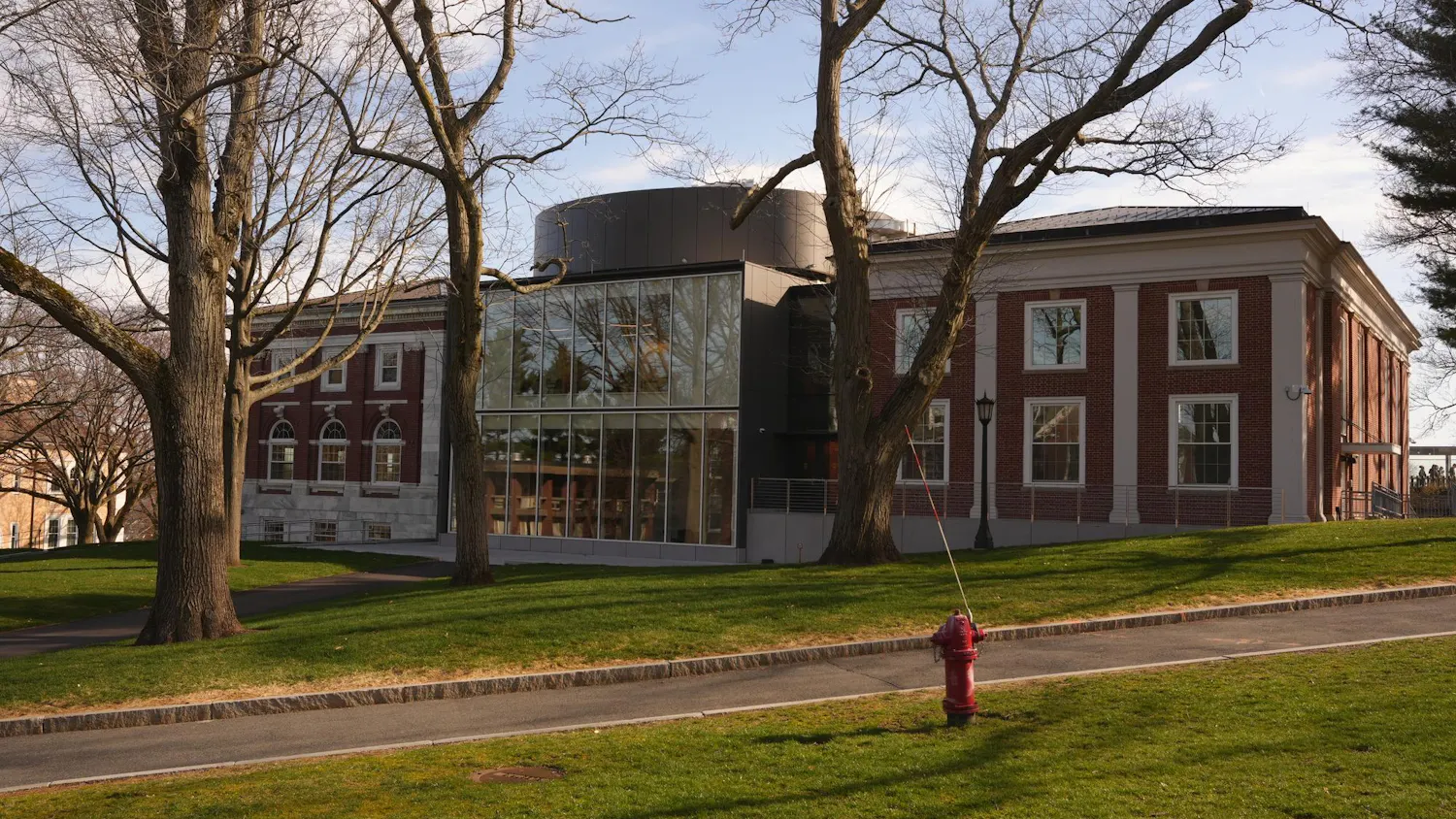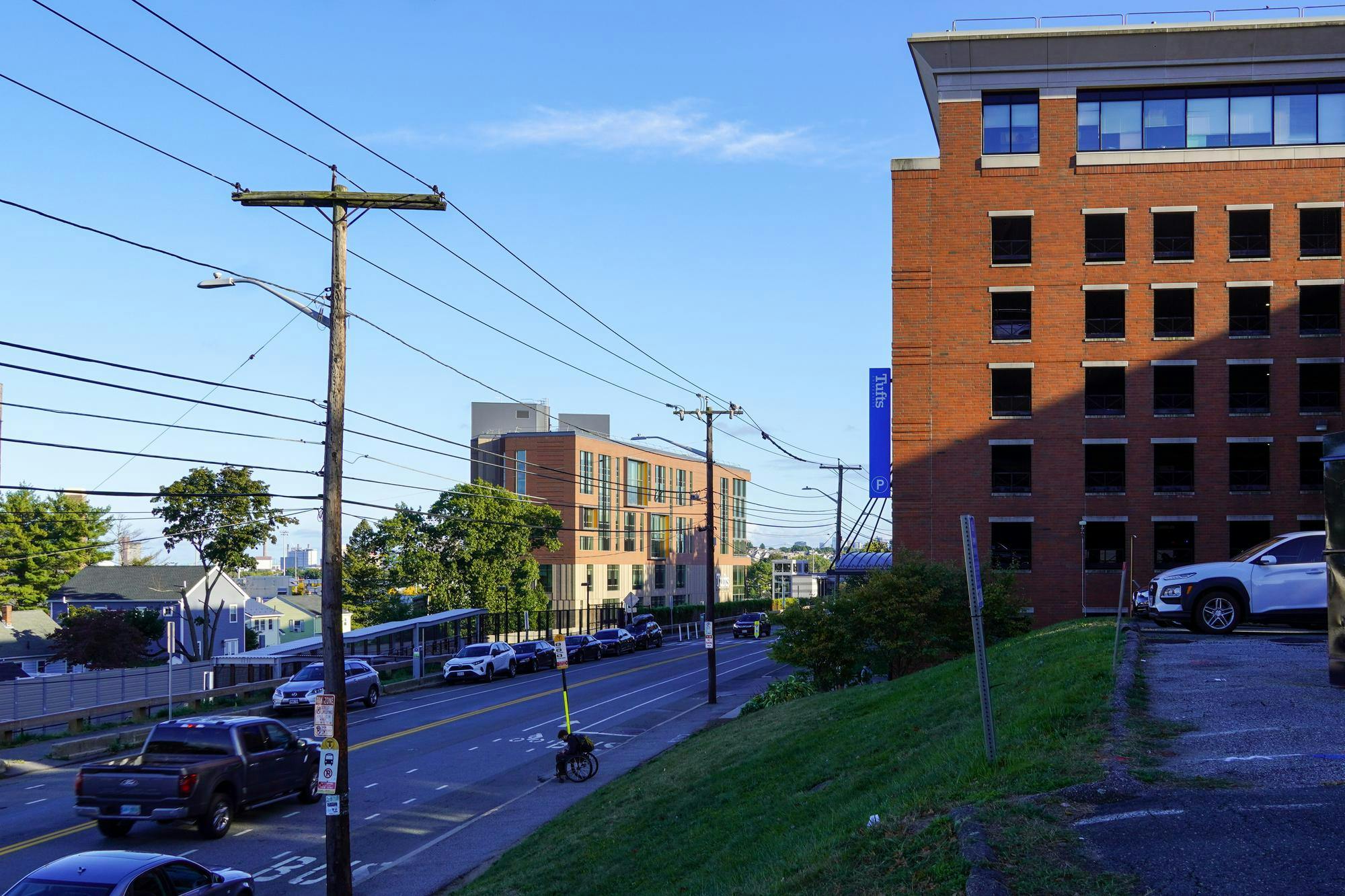
Within the next few years, Tufts is poised to own three retail spaces along the 700-yard stretch of Boston Avenue between College Avenue and Winthrop Street. Two existing properties — the recently vacated Starbucks location in the Joyce Cummings Center and a property by the intersection of Winthrop Street and Boston Avenue — are currently empty. The third upcoming retail space will be located on the ground floor of the new Boston Avenue dorm.
The abrupt closure of the on-campus Starbucks in October left a vacancy in what had been a hub of activity in the JCC. According to Rocco DiRico, associate vice president for government and community relations at Tufts, the university has partnered with a local real estate advisory firm to find a retailer for the space that will appeal to both the campus and its surrounding community.
“We received a lot of feedback from our neighbors regarding our available retail locations. We have passed that input onto the real estate advisory firm that is helping us find tenants,” DiRico wrote in a statement to the Daily.
The developer of the Boston Avenue dorm, Capstone Development Partners, is working with the same firm to locate a vendor for the ground-floor retail space.
Although Tufts purchased the property at 325–331 Boston Avenue in 2023, the university does not appear to be actively seeking new tenants for the site.
“325 Boston Avenue, the building that used to house Hillside Hardware, is uninhabitable and needs to be redeveloped,” DiRico wrote.
For Medford residents like Adrienne Landau, the closure of Hillside Hardware was a significant loss to the community.
“Some of us don’t want to go to Home Depot, which is a big conglomerate. We’d rather support local businesses and [Hillside Hardware] was an Ace hardware store, but it was a locally-owned business … a family-owned business,” Landau said. “We would love to have our hardware store back.”
The Boston Avenue dorm — and its proposed ground-floor retail space — has been a continued source of tension between Tufts and the Medford community. Just two years after the completion of the Medford/Tufts Green Line Extension, some residents were frustrated to learn that construction would begin again.
“The whole construction process of the Green Line was very jarring for many of the people that live in our circle, right around this particular part of Hillside. So when we heard that there was a dormitory being planned for that location … I think my first reaction was, ‘You’ve got to be kidding me,’” Landau said.
Concerns over the size and design of the dorm, a perceived lack of community engagement from Tufts and anticipated noise and disruption caused by construction have followed the project over its development.
Since the initial proposal for the 10-story dorm in 2024, Tufts has undertaken several efforts aimed at mitigating the impact on the community. The building’s design was changed so that the placement of windows was altered to minimize light pollution, and the hill it sits on was flattened so the residence hall would be located at street level.
Additional funds were set aside for residents who would be most affected by increased shade during the winter months. Tufts will also sponsor the construction of a new Bluebikes station on Boston Avenue and operate a free shuttle to Medford Square for students and the public.
As for what they want to see Tufts bring into the area, residents are hoping for local businesses.
“I’d love to see another coffee shop or something [where the Starbucks was]. It’d be great if it was locally owned, too,” Medford resident Laura Jasinski said. “I think there’s a need for … those places where you’re not just going to purchase something, but you are meeting people, you’re talking with people.”
“We’ll be weighing in pretty heavily into what would serve the neighborhood … [a] small business, private,” Landau said. “[We want] something that’s quiet, because again, we’ve had enough noise. And if there are seating areas outside, we want to weigh in a lot about that.”
Still, some Medford residents remain uncertain that their concerns are being adequately heard and addressed.
Landau highlighted an ongoing issue with construction: If someone trespasses on the construction site, the loud warning sent from cameras or motion detectors often wakes up residents in the area. Though neighbors have raised the issue with Tufts, so far, no changes have been made.
“Many of us felt, and still feel that … the university’s leaders [are not] treating the community members with care — real care,” Landau said. “It’s very important for the decision-makers to know who we are. … There are some very old people in this neighborhood, and there are some very young families who want to stay here and thrive.”
Jasinski hopes Tufts will continue to improve its engagement with local residents.
“A lot of what the community wants … also benefits students and benefits the university,” Jasinski said. “I think that we saw some progress, [with] intimate conversations, small group conversations … at the tail end of the residence project. [I] would encourage the university to think about how to really integrate those practices into their planning overall.”