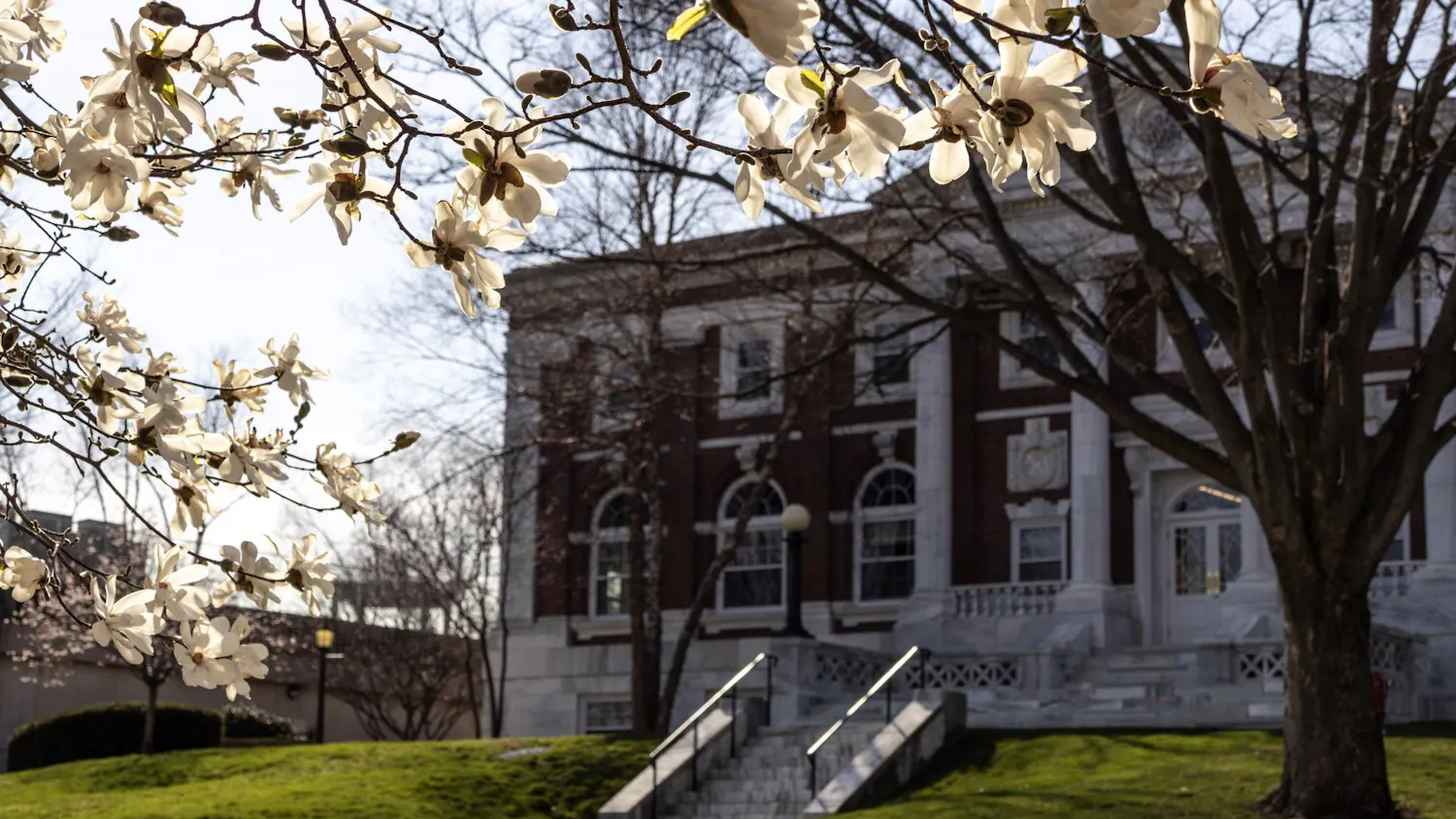
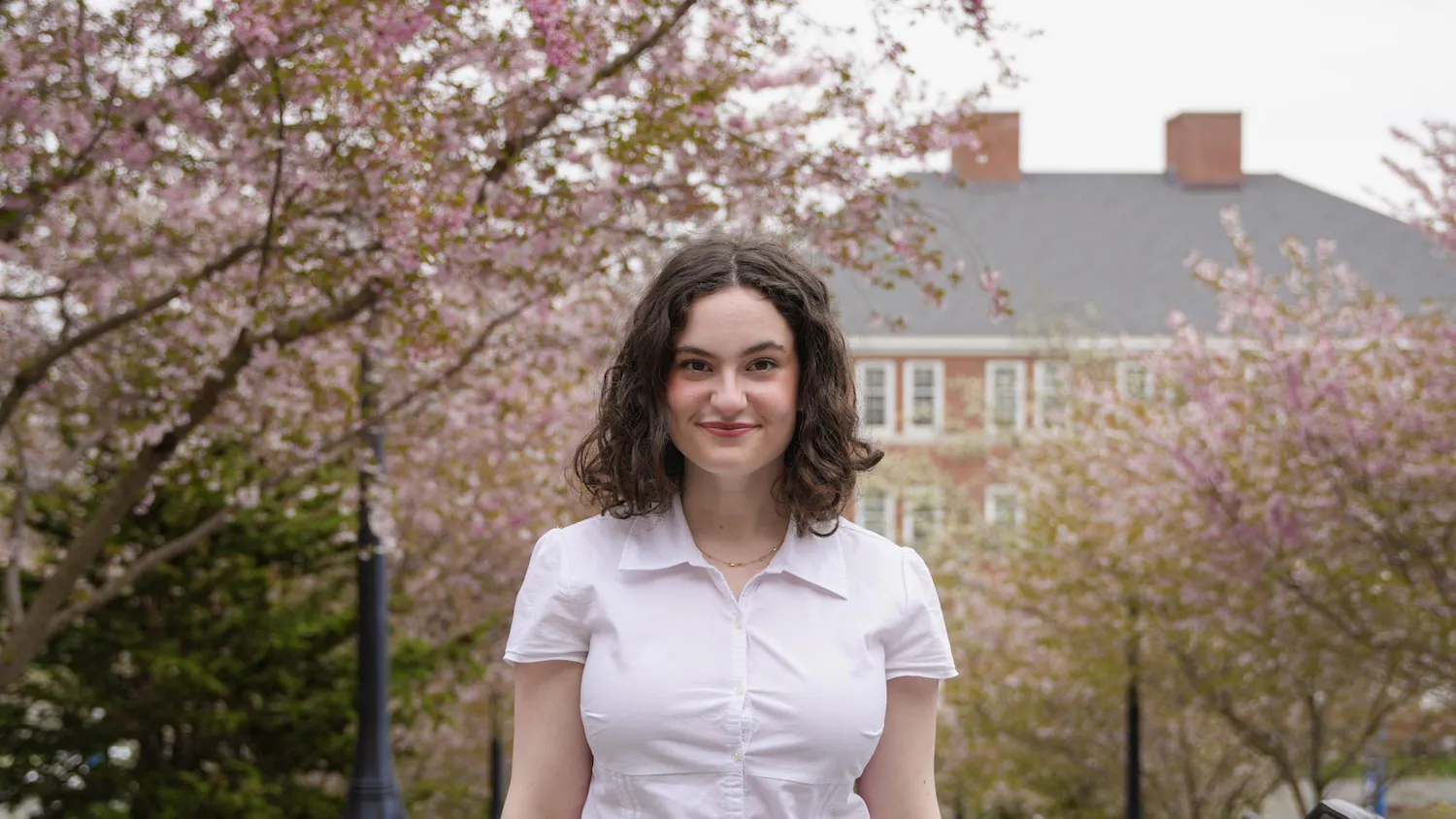
As a California native, I made the bold — and perhaps regrettable — decision to apply to colleges somewhere with seasons. My idealistic 17-year-old self had a vision: a fall of cable-knit sweaters and orange leaves crunching beneath my feet like in “Gilmore Girls” (2000–07), and magical snow blanketing my historic college town in the winter.
Oh, how naive I was.
The seasons, while I’ll admit were briefly gorgeous, kicked my butt. I wish that was a metaphor. It was early November of my first year at Tufts. The red and orange leaves had fallen cinematically on the ancient brick paths of Boston — very “Gilmore Girls” — though Rory failed to warn me how slippery they’d be underneath my bike tires as I made a sharp turn. My cheek hit the ground faster than I could recall the physics of inertia. I showed up to class clutching a fractured wrist, with leaf pieces dangling from my leggings and hair. The seasons found a way to humble me before winter even began.
A few days later, daylight saving time ended. Suddenly, I was walking to my 4:30 p.m. class in complete darkness. The cold set in, the trees went bald and everything turned to a monotonous gray. But it was okay, because soon the snow would fall and I would have a white winter — right?
Ha, no. No one warned me that after one picturesque morning, the snow would transform into a black sludge that dyed my poor, tractionless Uggs an unappetizing shade of tar from the number of times I slipped in it. Admissions also failed to mention the shameful amount of money I would spend on microwavable Trader Joe’s dumplings, despite my practically unlimited meal plan, because I soon realized it was not worth fighting wind tunnels to get to Fresh at Carmichael Dining Center when I had my MicroChill minifridge and “Grey’s Anatomy” (2005–) beside my bed.
Unintentionally, I fell into isolation. My injured wrist meant no physical activity whatsoever, including leaving my room. Walking would absolutely aggravate it — don’t ask me how, but I was very committed to that logic. Quickly, I lost motivation for any kind of socialization and schoolwork. I was tired all the time and crawling to break. If you couldn’t tell where this was headed, I had fallen into a pretty bad case of seasonal depression.
But this year will be different. This year, we can get through winter together. And no, we will (hopefully) not be getting seasonally depressed. I consulted the experts. I tested UV lights and electric hand warmers so you don’t have to. I might not have the iconic yellow dress in “How to Lose a Guy in 10 Days” (2003) — or Matthew McConaughey — but feel free to still consider me your Kate Hudson for the season, because I can now confidently tell you how to lose seasonal depression in 10 days.
To start, it is natural to get what they call the “winter blues.” Some of us notice feeling less motivated as daylight hours shorten. When the intensity of symptoms causes significant distress and begins impairing different areas of life, that’s when it becomes more of an issue of ‘seasonal affective disorder,’ or ‘seasonal depression.’
While there are no recognized medical diagnoses for these terms, the impacts are very real. But luckily, this winter, you have a coach to walk you through it. Although scientists are still debating the exact scientific mechanisms, it is clear that sunlight plays an important role in our mood and brain chemistry.
“The thought is that [reduced sunlight hours are] affecting people’s circadian rhythms, which is your body’s internal clock … [and] is contributing to mood and behavioral shifts,” Alex Queen, an associate teaching professor of clinical psychology, said.
He explained that sunlight exposure might affect levels of serotonin, a neurotransmitter that “is responsible for mood, and feeling motivated and active.” Reduced light, conversely, can lead to “symptoms of depression and reduced activity.” At the same time, longer hours of darkness in winter are theorized to increase production of melatonin, contributing to lethargy and oversleeping.
In a Boston December, the darkest month of the year, there is an average of nine daylight hours — a 40% reduction compared to June — so it’s imperative to maximize the light we do get.
Tip 1: Start a routine of waking up early and getting outside. No excuses.
When I was in my peak state of ‘winter blues’ last year, I was waking up around 10:30 a.m., cutting my potential daylight hours by nearly half. This year, I forced myself to start every day at 7 a.m.
As a lifelong night owl, I reluctantly discovered that mornings are the world’s best-kept secret. There’s an indescribable peacefulness to campus before 8 a.m., the way the morning light spills through the trees as you clutch a hot cup of coffee. I realized that getting up early doesn’t help much unless you actually go into the light. Throw your phone across the room if you have to and get outside.
“The only thing that kind of helps is just spending time outside anyway, even if it's miserable. … As long as you have warm enough gear to be able to walk comfortably, I think that you can survive the winter months,” sophomore Holland Haeck said.
Which brings me to my next tip.
Tip 2: Invest in warm clothes.
The cold is more manageable if you layer up. You don’t need a fancy coat to be warm, just one reliable, insulated jacket and some layers of Uniqlo HEATTECH will do the job.
Hear it from Haeck: “I did learn two years ago that wearing a scarf and gloves does actually make a difference. That was my big breakthrough, … wearing warm clothes does actually make you warm.”
So bundled in my hat, boots, gloves and HEATTECH, I’ll walk to the gym or grab a hot beverage at Nine Bar Espresso. You may sacrifice some arm mobility under the layers, but at least you’ll still have arms — along with the will to live again. Also, electric hand warmers are very likely the future (my dad was right). Yes, they’re rechargeable. Yes, they’re awesome. Moving on.
Tip 3: Try a Seasonal Affective Disorder lamp or vitamin D supplements.
If getting outside is impossible, light therapy using a SAD Lamp is another strategy. Queen suggests using them “first thing in the morning upon waking for about 20 to 30 minutes, at about an arm’s length from you.” This means keeping it on while you do homework or your morning routine (not recommended for those with bipolar disorder). You can find them on Amazon for a reasonable price, or maybe, like me, your concerned father can gift one for Christmas.
Vitamin D supplements may also help, as sunlight — a major source of the vitamin — is limited.
“Vitamin D supplementation can be helpful, and I think there is some evidence that it can’t. For people who are truly deficient in vitamin D, supplementing with it to bring up normal levels can be helpful for mood and energy regulation,” Queen said.
Senior Alice Estrada, from Miami, Fla., found both options beneficial.
“My friend told me to start drinking vitamin D and it’s been helping a lot,” she said. “[My SAD lamp is] orange and bright, and it’s warm, so it feels kind of like the sun. So I guess that’s my way of coping.”
Tip 4: Don’t ghost your friends; prioritize activities that make you happy.
Low mood makes socializing harder, but isolating worsens depression — a “vicious cycle,” Queen said.
“Social engagement [is] really important. Making sure that you are talking with your friends, spending time with people, texting, calling friends — that you’re not isolating from other people,” he said.
Do what brings you joy. For sophomore Lilly Marchbanks, that means being in the kitchen with friends and practicing art.
“I’ve been trying to spend more time around people. So I’ve been cooking a lot and trying to get back into studios that bring me joy,” Marchbanks said.
Tip 5: Move your body.
I know you might not want to hear it again, but even with a fractured wrist, movement can do a lot of good. Bundle up and go to the gym — better yet, bring a friend to keep you accountable. Exercise releases endorphins that can help boost your mood. You will thank me.
Tip 6: Consistency. Consistency. Consistency.
Routine is powerful. I’ve come to a point where routine overpowers my lack of motivation. When I stopped giving myself a choice, I’d already won half the battle. So keep it up until it becomes second nature.
Tip 7: Divide the season into more manageable chunks.
For many, the hardest part of winter is its length.
“It’s just that hopeless feeling of, ‘Wow, the next few months are going to be absolutely awful,’” Haeck said. “Once it progresses into the later months — so like January, February — you do have a little bit of hope for things getting better. But then you can’t actually see them getting better, because it just never gets sunny until the end of March or possibly mid-April.”
We will not fall into the trap of endless winter doom. We can tackle it by mentally categorizing the months into more attainable periods. November and December are easier — we have Thanksgiving and the holidays. Even if you don’t celebrate, you can appreciate the lights and Justin Bieber’s recent live version of “Mistletoe.”
Marchbanks embraces the good parts: “I go on long walks and I see nostalgic Christmas posts, and it inspires me to try and view the winter with a more positive view. … And I also really like all of the food activities that they have [at] the dining halls, when they start serving non-mediocre food.”
But coming back after break is where it gets real. “January and February, you’re screwed. … There’s something about the pure misery that’s so tangible,” Haeck said.
But no, we are not screwed. After break, we lock in. We stick to our routine — consistent bedtime, early wake-up, dose of sun or lamp, morning walk, gym, weekly meals with friends, repeat. Routine is vital so these changes won’t feel like chores, but like habits.
Embrace little dopamine hits in your everyday life — a hot shower, Carm chocolate-chip pancakes, whatever works. Estrada focuses on the beautiful moments.
“I think when it’s nighttime, and it's quiet … like 5, 6 p.m.-ish, the sky kind of looks blue and orange. I love seeing those colors in the sky. So that makes me happy,” Estrada said.
Tip 8: Seek support from a mental health professional.
If habits aren’t enough, it can be really helpful to speak with a mental health professional. Tufts Counseling and Mental Health Service offers trained support.. One evidence-based approach to resolving seasonal mental health challenges is cognitive behavioral therapy. This method involves making lifestyle and mindset changes in a structured way.
“[CBT involves] looking at someone’s thoughts — what are their thought patterns? … [And] challenging, maybe really negative thinking styles that’s maintaining their depression.”
If that’s not helping, another option is working with a professional to find a medication that can alleviate symptoms.
Tip 9: Move away?
If, after giving all my tips a try you still feel seasonally depressed, maybe just move. Seasons are overrated anyway.