
The spectacle of the New York Sales auctions at Sotheby’s last November, which were headlined by Gustav Klimt’s “Bildnis Elisabeth Lederer” (Portrait of Elisabeth Lederer, 1914–16), sold for $236.4 million, is a great opportunity to introduce East Asian artworks that have set records at international auctions.
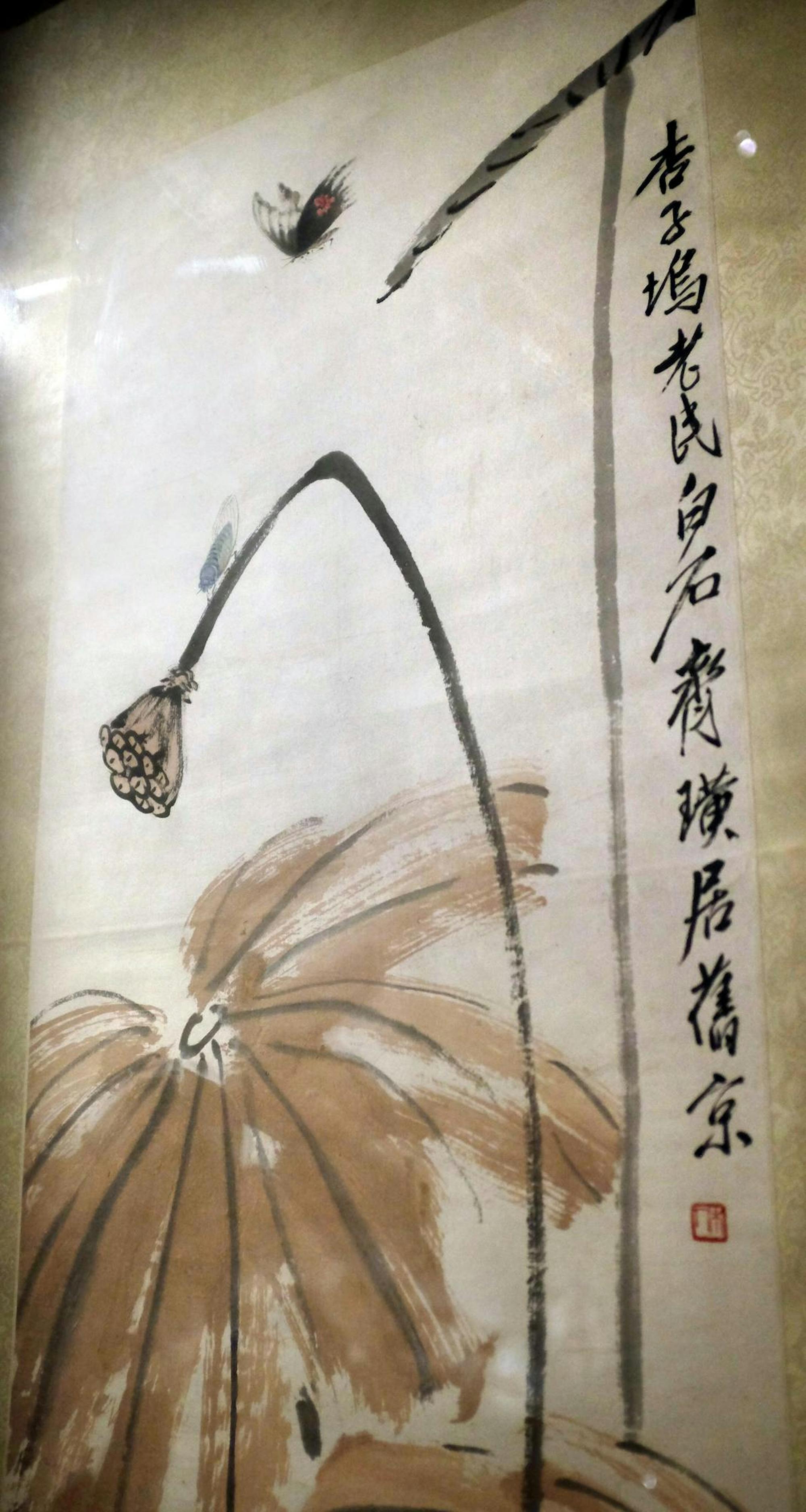
Currently, the most expensive work of Chinese art is a 12-panel set of ink-brush paintings by traditional artist Qi Baishi (to learn more about Qi and his artistic style, see The people’s artist: Qi Baishi). “Twelve Landscape Screens” (十二山水屏风, 1925) features mountain and river landscapes throughout China, accompanied by Qi’s calligraphy. According to Beijing Poly International Auction, the auction house that facilitated the sale for 931.5 million yuan ($140.8 million) in December 2017, “[The set] can be regarded as the most expressive style from Qi Baishi’s stylistic transformations and is also the largest in dimension of the twelve landscape screens format.” This acquisition made Qi the only East Asian artist whose works have exceeded $100 million at auction.
Ceramics and pottery have also long raised the bar for East Asian art, with the most notable example being the Imperial Qianlong “Revolving Phoenix” Vase (有凤来仪). The vase sold for 265.7 million yuan ($41.6 million) at Beijing Poly International Auction on June 7, 2021, and holds the record for the most expensive Chinese ceramic piece in history. The revolving style of the vase was pioneered by Tang Ying, who lived during the Qing dynasty and served under the Qianlong Emperor, whose taste for novelty pushed the limits of porcelain production. Each revolving vase consisted of multiple separate parts, each individually glazed, enameled and fired. As one spins the inner layer of the vase, it reveals drawings on the inner walls, giving rise to the ‘revolving’ name. It took an average of 18 weeks to complete a single piece, contributing to the scarcity of revolving vases and their high auction value. The vase’s phoenix motif, gracefully flying in the sky, serves as the feminine counterpart of the dragon, which commonly symbolized the emperor. The ground is dominated by lush flora and a playful variety of birds.
Among contemporary artists, Zhang Daqian (张大千) and Zao Wou-Ki (趙無極) both boast expensive portfolios. A renowned 20th-century ink painter, Zhang is considered one of the best-selling painters in the international auction market. “Landscape after Wang Ximeng” (仿王希孟千里江山) sold for 370 million Hong Kong dollars ($47 million) at Sotheby’s Hong Kong on May 3, 2022, a record high for Zhang. The painting is a contemporary rendering of Wang Ximeng’s “A Thousand Li of Rivers and Mountains” (千里江山图), inheriting the breathtaking blue-and-green palette of the original. These colors represent a historical legacy Zhang sought to preserve, while the level-distance perspective reflects his own stylistic development. Zao, on the other hand, was a Chinese-French artist whose work appealed to an increasingly global audience. His multicultural influences and abstract expressionist style gained broad appeal, culminating in the 2018 bidding of his work “Juin-Octobre 1985” (1985). Measuring 33 by 9 feet, the triptych was the largest work Zao created in his career and sold for 510 million Hong Kong dollars ($65 million) at Sotheby’s Hong Kong on Sept. 30, 2018. The abstract piece, with a luminous palette of blue and yellow accented by green, debuted at the Galerie de France in Paris.
Most Asian works that dominate auctions are Chinese, a trend shaped by many factors. The late 20th-century economic boom granted many in China the financial power to participate in auctions, while the massive size of the market and competition amongst bidders helped drive prices upward. Yet, the increasing popularity of works by Japanese painter Yoshitomo Nara, Korean artist Kim Whan-ki and various Indian sculptors indicates a growing Asian presence in the global art auction scene that should not be overlooked.



