To many of us, CDs and records are relics of the past. While they were once collected by our parents and grandparents to access music, the widespread use of the internet has given birth to digital media. The size of one’s collection slowly gave way to the strength of one’s internet connection as the primary measure of music accessibility.
With the purchase of a monthly subscription and the touch of a finger, listeners can now access any song they could ever desire. We assemble playlists of any order and length, cherry-picking the best songs from each album with listening algorithms filling in the gaps. But as listening to music no longer necessitated the purchase of physical media, listeners lost a tangible connection to the music that could not be replicated. We are no longer required to listen to the ebbs and flows of an album and, as a result, the listener no longer encounters the entire production process.
However, many have become fatigued of the constant skipping and swiping that comes with music streaming services, opting to download MP3 files to listen to their favorite tunes. Others prefer the adventure of physical media, wandering through the aisles of a record shop, hoping to discover hidden gems.
Each time I make the journey to Ball Square to ride the Green Line, Stereo Jack’s in Somerville has a handful of people combing through the countless amounts of vinyl records and CDs. Sure, physical media will never again be the ultimate medium for consumption. But I will explore why so many have turned to physical media as a source of entertainment in an increasingly digitized world.
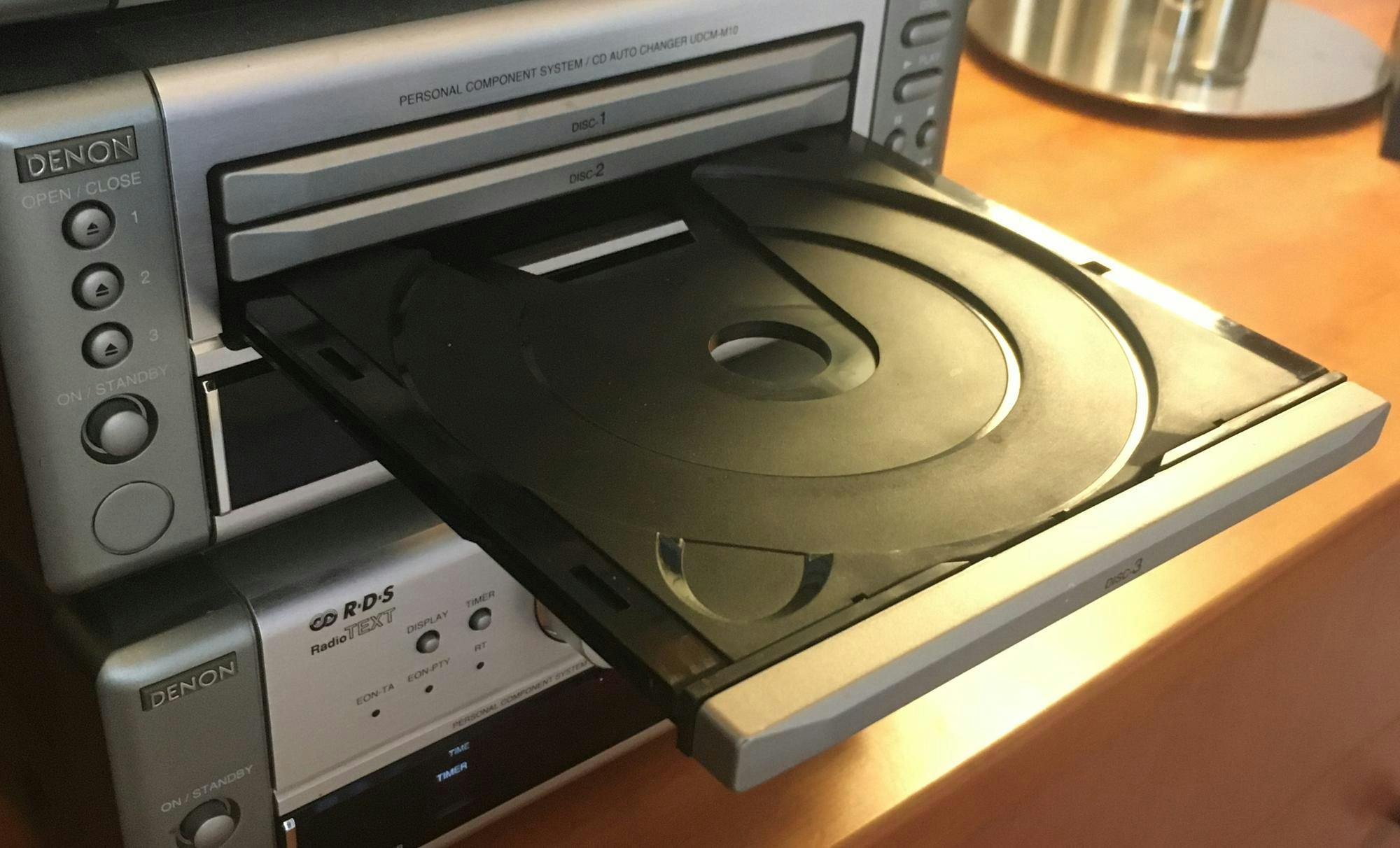
If you want the satisfaction of playing physical media without having to fork over several upfront costs, a CD player is your best bet. Many appreciate CDs for their ability to play music fully offline, as well as their ability to play quality music through a car’s sound system in older vehicles lacking Bluetooth or USB connectivity.
While certainly not as customizable as modern playlists, CDs still offer users the ability to ‘burn’ a series of songs to disk. Recently, I repurposed a DVD player from an old PC and wrote a series of MP3 songs to disk. What the MP3 format delivers in convenience is what the CD brings in permanence. The content inside a disk can’t be modified until you use a writing laser to rewrite it.
CDs might offer the conveniences of pausing, playing, writing and rewriting, but vinyl records have music almost literally etched in stone. Listeners must go through the act of cleaning the record, placing it onto the turntable and physically dropping the needle onto the album. Users manually select the record, take care of it and preserve it for playing every time it’s taken out. What record playing lacks in accessibility, it makes up for in greater human connection to the music. While no metrics can objectively deem that vinyl has better listening quality than a digital setup, users have cited a ‘warmer feel’ to the track as a whole.
The act of listening to vinyl has become a community event, too. It has brought back the ‘listening party’ where people gather around the record player to listen to an album. Listening bars have also popped up in major U.S. cities for minds looking for respite from noise and a more deliberate choice for music. In an increasingly connected world, we choose friction over convenience. The act of placing the needle onto the turntable fosters a sense of connection far beyond the three bars of service on our cell phones.
So, my message to you is clear: If you want to feel more connected to the music while also supporting the artists who created it, bringing back physical media may be worth considering. In a world defined by convenience and endless choices, intentionally selecting a record, sliding it from its sleeve, placing it on the turntable and, finally, dropping the needle, offer something streaming cannot: presence. Vinyl does not simply play music — it asks you to listen. And for those seeking a deeper, more intentional relationship with music, that experience may be reason enough to begin a collection.