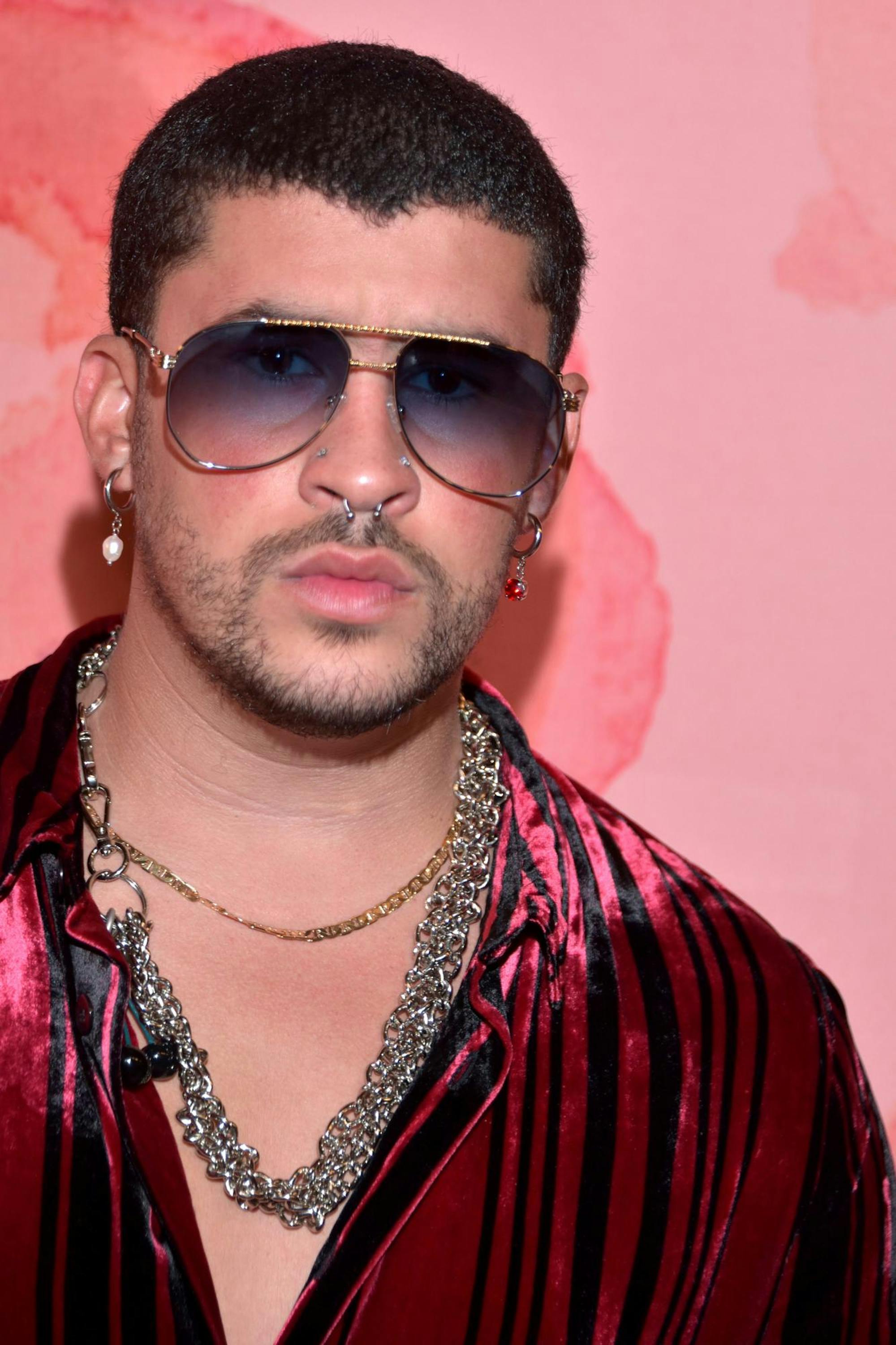
Recently, the NFL Super Bowl Halftime show has provided a means to flex the rich cultural diversity the United States has to offer. Bad Bunny delivered a cutting-edge performance, upholding, but also deviating from, the standards of the Super Bowl halftime show.
A native of Bayamón, Puerto Rico, Bad Bunny — born Benito Antonio Martínez Ocasio — performed almost entirely in Spanish, a clear appeal to Puerto Ricans as well as millions of others of Latine descent in the country.
Puerto Rico, an unincorporated territory of the U.S. under the designation of a commonwealth, is home to over 3 million people. Additionally, approximately 6 million people of Puerto Rican origin — whether they were born on the island or are descendents of a resident — live in the continental U.S.
Bad Bunny has been very vocal in his criticism of the Trump administration’s anti-immigration policies. While his performance on Sunday evening refrained from any explicit remarks, his opinions provided viewers with subtle references to his diverse definition of culture in America.
Although it may have been a surprise to some that Apple Music and Roc Nation announced a Spanish-speaking Superbowl LX halftime show headliner, Bad Bunny was certainly well deserving of the announcement, as his award-winning resume includes hit singles such as “Tití Me Preguntó,” “Mi Porto Bonito” and “MONACO.”
A striking feature of Bad Bunny’s performance was his outfits. He sported a cream-colored jersey with the number 64, a reference to 1964, the year his late uncle was born. For a brief time afterwards, he also wore a similarly-colored Zara suit before donning the jersey again.
The performance began with Bad Bunny walking through a field of sugar cane before appearing among a crowd of backup dancers. A slew of celebrities on stage including Alix Earle, Cardi B, Pedro Pascal, Jessica Alba and Ronald Acuña Jr. joined Bad Bunny on stage as he sang “Yo Perreo Sola” from the roof of a house — a roof he then fell through. During the transition to his next song, Bad Bunny pays respect to his predecessors, briefly playing Puerto Rican rapper Daddy Yankee’s hit “Gasolina.”
He was later joined by Lady Gaga for a Latin jazz rendition of “Die with a Smile” in the only English-language part of the show, followed by a performance of “BAILE INoLVIDABLE.” During the performance, an actual officiated wedding took place as the band played in the background. The couple had actually reached out to Bad Bunny previously, inviting him to their wedding, to which the singer responded by offering to host their ceremony in his halftime performance.
Bad Bunny then trust-falls into the “La Marqueta” scene for “NUEVAYoL,” featuring a set that resembled the many bodegas dotted across New York City. In a not-so-subtle gesture, Bad Bunny hands over his Grammy to an eager 5-year-old child — an act of passing down his success to the next generation. The Puerto Rican singer is then joined by Ricky Martin and the plastic chairs featured on his album, “DeBÍ TiRAR MáS FOToS.”
Perhaps the most powerful scene of the night was when the rapper summited a power line while holding the Puerto Rican independence flag — featuring a light blue triangle instead of the dark blue Commonwealth one — and performing “El Apagón.” This scene was a direct reference to Puerto Rico’s outdated energy infrastructure in which power lines are frequently knocked down by hurricanes, resulting in months-long power outages. Just this past month, the Trump administration canceled the Department of Energy’s multimillion-dollar solar power project meant to address the island’s chronic outages.
After descending the power lines, we saw Bad Bunny followed by an entourage of flags of various countries in the Americas, highlighting how the very word “America” represents more than just the U.S. In the background, a screen displayed a quote from his speech from the recent Grammy Awards ceremony: “The only thing more powerful than hate is love.” Then, with a football in hand, he began his final song of the evening, “DeBÍ TiRAR MáS FOToS,” and proceeded to spike the football to a firework ending.