
According to the traditional Chinese calendar, on Feb. 4, we officially transitioned into spring. The first season in the 24-term solar calendar, Lichun (立春), marks the start of the new year and the beginning of harvest. It is also known as ‘risshun’ in Japanese, ‘ipchun’ in Korean and ‘lập xuân’ in Vietnamese. Lichun doesn’t mark the immediate defrosting of snow, yet it is felt as and symbolizes the first marks of blooming life. In fact, the present snow is often seen as a contributor to the joys of the season because, as snow gradually melts, it nourishes the ground underneath to bring a strong, lucrative harvest. Beyond its practical role, snow also holds powerful symbolism and aesthetic meaning in East Asian thought.
Snow has always been celebrated in East Asian traditions as a sign of serenity, refinement and otherworldly beauty. When it surrounds us, the vast whiteness resembles the emptiness that is prized in East Asian art, that blankness for meditative reflection and personal interpretation.
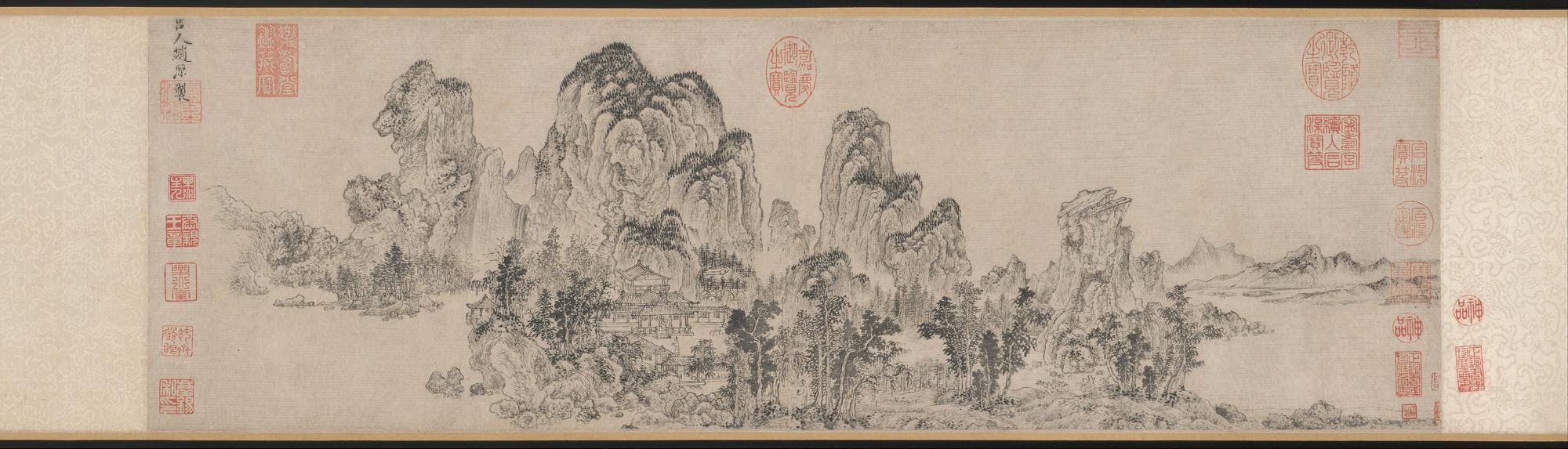
One of the most enduring snow masterpieces is Fan Kuan’s “Snow-Covered Scene and Cold Forest” (“雪景寒林图”). The painting depicts the quintessentially Chinese geographical phenomenon of tall, vertical limestone formations, formed by the forces of water, which, by themselves, are a striking visual element. The forest and temple that are loosely scattered across the scroll are barely visible in comparison to the colossal mountain. However, instead of overwhelming the viewer in a geographical spectacle, the mountain appears solemn and embodies a quiet authority provided by the snow.
No snow is actually painted on the scroll. It is present in the abundant blank space that holds weight and creates an absence of time. Here, it is as if nature will never change and the mountains with their snowy caps will solemnly persist. Yet, the forest at the bottom hints that life is secretly happening and that the frozen rivers will eventually flow again. These seemingly contrasting elements are a staple of Taoist philosophy; they indicate that yin and yang exist alongside each other, not in competition but in gentle harmony.
The ink painting spans 81.2 inches by 40.7 inches and is proudly displayed in the Tianjin Museum. During the Northern Song Dynasty, when landscape painting and cultural development flourished alongside the robust economy, Fan Kuan was given liberty to travel across the land and build his connection with nature. What resulted was a masterful understanding of the poetic connection between us and the world we inhabit. Accuracy isn’t important when painting landscapes; it is more about the spiritual manifestations of nature that can be transmitted to the viewer. Kuan is presenting us with an alternative way of existing in a world with so many forces that seem overpowering and unconquerable.
As New England suffers from one of the worst snowstorms in years, it is comforting to allow art to remind us that snow can also be beautiful. So while trekking the paths towards your appointment, lift your head to admire the gorgeous view that is one of the blessings of this limited season, and remember that spring might already be among us.



