
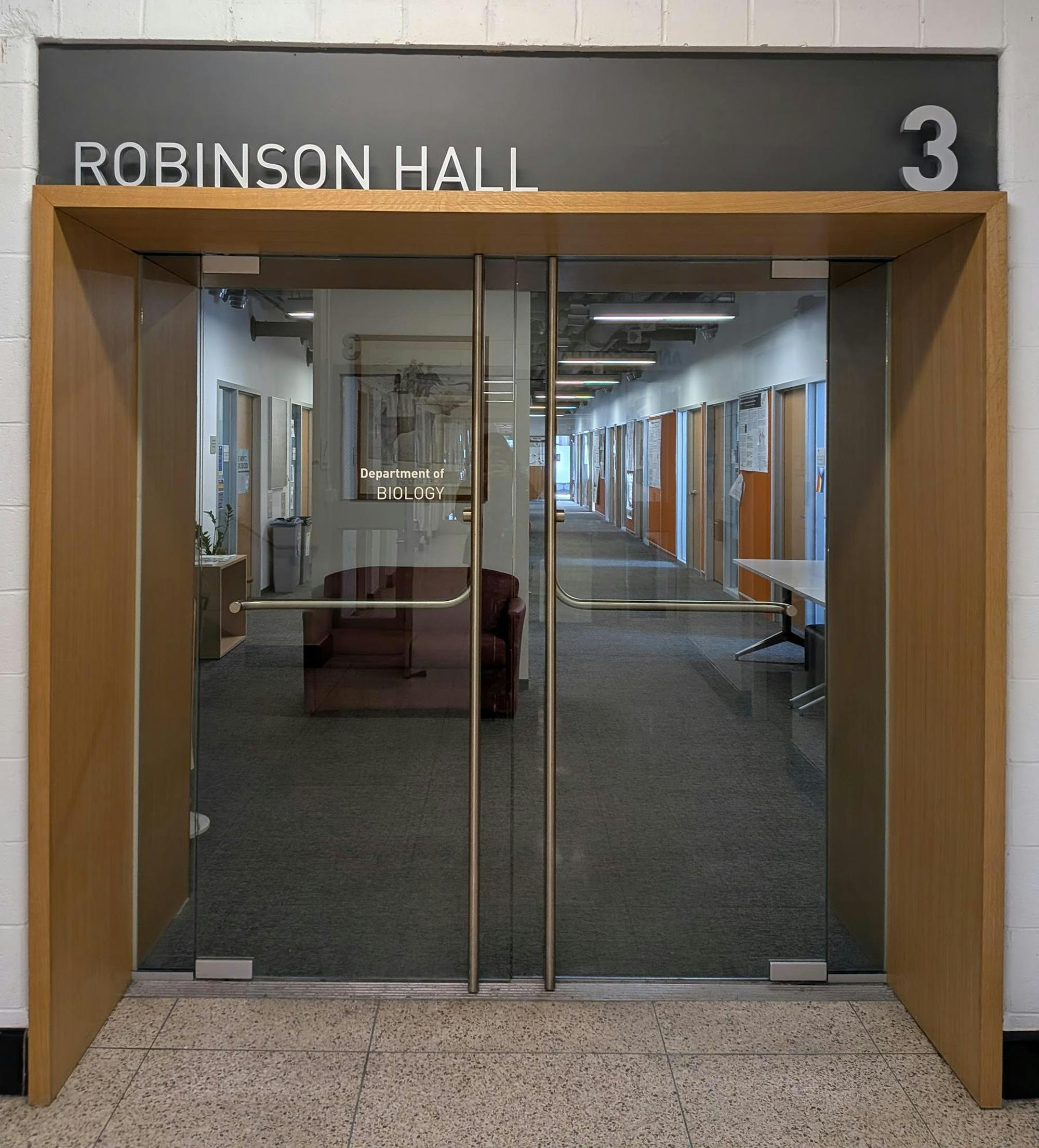
In an increasingly tech-driven world, specialization in bioinformatics will set graduate students in Tufts’ biology master’s program apart. Bioinformatics is a scientific subdiscipline situated at the intersection of biological and computer sciences. Through the use of computer technology, complex datasets from biological experiments can be effectively stored and analyzed.
Ayanna Thomas, professor and dean of the Graduate School of Arts and Sciences, remarked that the specialization expands upon an “existing pathway for students who want to add practical data and computational skills to their biological training.” She believes that this specialization will give students “hands-on experience with modern bioinformatics tools and workflows,” preparing them for careers in the analysis of biological data.
The program is intended to equip students without traditional computer science training with bioinformatic tools for a career in biology. For consideration, students must have completed undergraduate coursework in molecular biology and genetics.
Thomas said interested undergraduate biology students can begin preparing for the specialization “by taking approved bioinformatics, computational and quantitative biology courses.”
Additionally, the bioinformatics specialization is currently available to Tufts undergraduates planning to participate in the Fifth-Year Master’s Degree Program. Frank David, professor of the practice of biotechnology at Tufts, said completion of the specialization may not be possible within two semesters, but he hopes current Tufts undergraduates will be interested in extending their studies.
“It’ll end up being a four plus one and a half,” David said.
Thomas believes the addition will benefit a wide range of students, from undergraduates to current master’s students. “The specialization provides a clear, applied bridge between biological coursework and data-driven research and career pathways,” she commented.
The specialization will be part of Tufts’ Open-Choice Master’s program, which all biology graduate students at Tufts participate in. The program allows master’s students to design a course load tailored to their academic interests in biology. According to Tufts University, courses can be selected from a variety of departments, including biology, chemistry, biomedical engineering, psychology, data analytics, environmental studies, entrepreneurship and more. Some students may focus on a particular area of biological study, such as molecular genetics, while others may pursue a broader range of subjects.
As part of the 10 courses required for the OC-MS degree, students pursuing the bioinformatics specialization will take four bioinformatics courses and complete a bioinformatics capstone project. Sample first-year courses include “Scalable and Reproducible Computing for Bioinformatics,” “Biostatistics for Bioinformatics,” “Introduction to Bioinformatics and Computational Biology,” “Applied Bioinformatics” and an additional graduate-level course required for the degree.
In the fall of the second year of the program, students will complete their bioinformatics capstone project. They will then complete the remaining courses required for the OC-MS degree in the spring before graduation.
The capstone project is intended to situate the bioinformatics skills students obtain in their technical courses within real-world applications. “We’re going to be developing relationships with faculty who have ongoing work, data sets and research questions that would be suitable for a master’s-level student to work on for a semester,” David said.
The specialization will provide graduate students with several advantages, particularly given bioinformatics’ relevance to the biotechnology and pharmaceutical industries. “A lot of our master’s students are interested in going into industry, so this just gives them another avenue to build skills that could help them in the job market,” David said.
Tufts stated online that it expects “top-performing graduates will be competitive for research associate and data analyst positions in hospital and academic labs; Ph.D. programs in genetics, molecular biology or related areas; and some entry-level research scientist positions in industry.” Through the specialization, “students will get exposure to bioinformatics approaches for analyzing complex DNA, RNA and multi-omics data sets.” This will be accomplished through instruction in basic coding skills using programs including R, Jupyter, GitHub and Linux.
One distinguishing feature of Tufts’ bioinformatics specialization is its focus on biologists seeking to gain computational skills, rather than computer scientists learning biology. “At other institutions, [bioinformatics programs are] often housed in computer science departments, and [are] intended for people who have a deep CS background and a little bit of biology [experience],” David said.
Tufts’ program intends to reverse this trend. Through this approach, the specialization provides graduate biology students with the opportunity to explore bioinformatics within their home department.
The specialization isn’t intended to teach students how to develop new algorithms, but rather how to use existing algorithms effectively. As a result, Tufts hopes to cultivate the next generation of tech-informed biological researchers and lay the groundwork for future bioinformatics programs at the university.



