
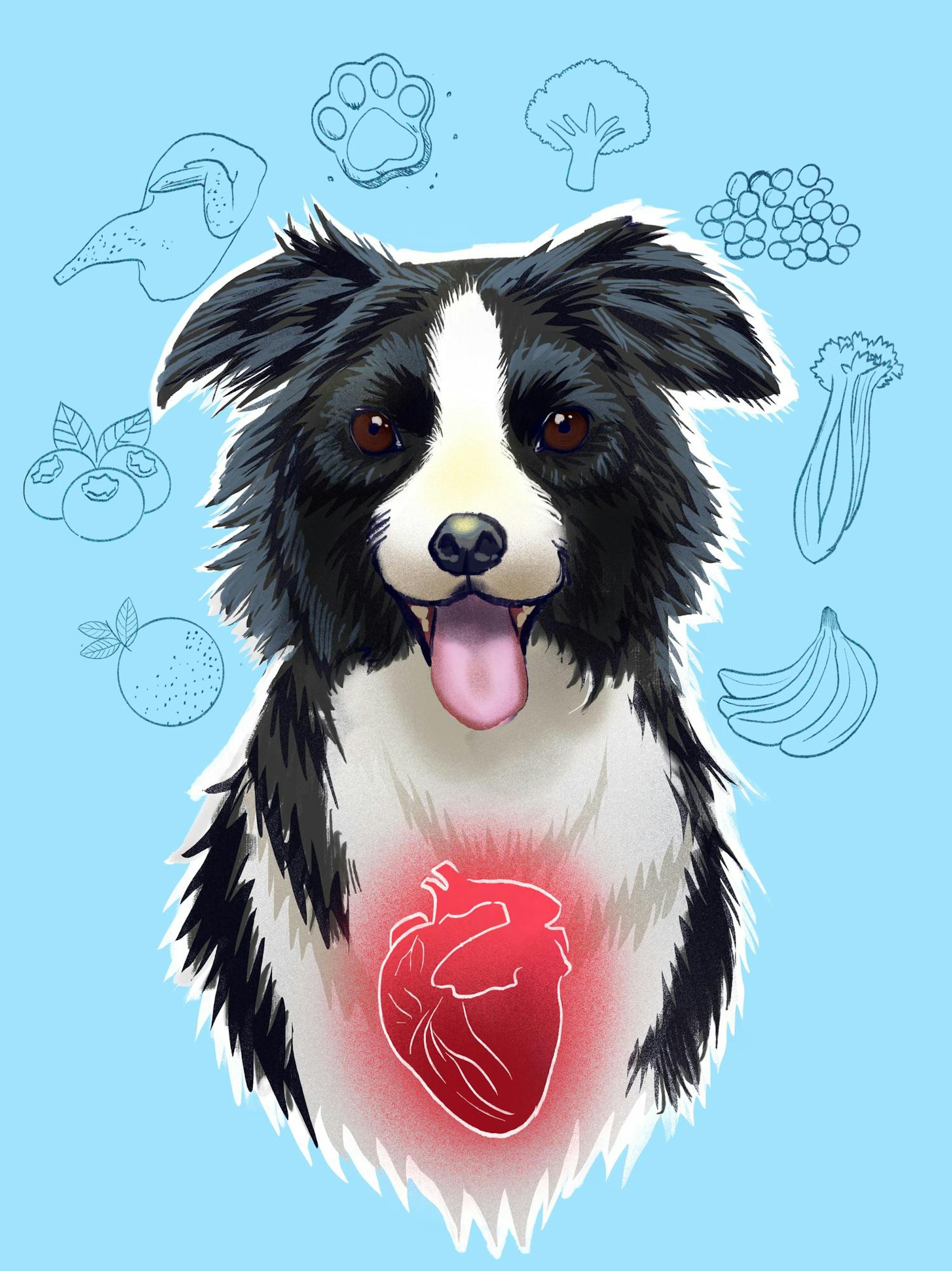
Dilated cardiomyopathy is the most common cause of congestive heart failure in some large dog breeds, including doberman pinschers, Saint Bernards and Great Danes, and is often inherited. DCM causes thinning of the heart muscle, leading to a weakened heart with arrhythmias, or irregular heartbeats, and fluid buildup, that can ultimately result in heart failure. However, another form of the disease — diet-associated DCM — can affect many breeds of dogs and cats regardless of genetics.
At the Tufts Cummings School of Veterinary Medicine, Dr. Lisa Freeman (N’96) and her team are studying how diets containing large portions of “pulses” — such as peas, lentils, chickpeas and beans — may contribute to the development of diet-associated DCM. Freeman, who has studied nutrition and heart disease for over 30 years, received the inaugural Canine Health Discovery of the Year Award from the AKC Canine Health Foundation in December in recognition of her work on diet-associated DCM. When asked about the honor, Freeman emphasized the effort her team has devoted to the project and stressed the urgency behind the research, noting that they “feel a sense of urgency to identify the cause because we continue to see dogs affected by [DCM].” The award helps support the group’s ongoing research and brings broader attention to the issue.
Freeman, who has the rare distinction of earning a degree from each of Tufts University’s campuses, originally studied the intersection of muscle loss and rheumatoid arthritis. During her doctoral research, however, one dog changed the trajectory of her career. She discovered that treatment with a nutritional supplement could alleviate heart disease-related muscle loss, and she was hooked.
Since then, Freeman’s focus has shifted to diet-associated DCM, particularly following a 2018 alert from the Food and Drug Administration highlighting the potential role of diet in the disease’s development. Already working at the intersection of heart disease and nutrition, her team was well positioned to investigate the new phenomenon. Today, their research centers on identifying the specific causes and mechanisms of diet-associated DCM, with the goals of preventing disease onset and improving treatment options. Freeman noted that diet-associated DCM differs from genetic DCM in that symptoms can improve when an animal’s diet is changed.
Discussing her team’s current work, Freeman emphasized the importance of collaborative science. While she has extensive expertise in nutrition, Freeman noted that she lacked the scope of knowledge to investigate diet-associated DCM on her own. “By working with cardiologists, human and veterinary pathologists, basic scientists and experts in electron microscopy and many other fields, we’ve been able to attack this problem from many different perspectives,” she said. “We can solve challenging research problems much more efficiently and effectively through teamwork with experts across disciplines.”
So what does Freeman wish the public knew about pet nutrition?
“Consulting with a veterinarian is always an important first step in making good decisions about pet nutrition,” she said. Much of the world of dog and cat nutrition has become confusing for pet owners, especially as misinformation runs rampant in marketing. Making a choice for your pet’s nutrition should be based on scientific research, and part of Freeman’s work focuses on how to make that information accessible. Her team compiles resources on the Tufts Petfoodology blog, where pet owners and veterinarians can find accurate, expert information. Many pet owners remain unaware of diet-associated DCM, especially in breeds that aren’t commonly associated with the genetic form of the disease. Additionally, the disease was initially associated with diets that contain high levels of pulses, contributing to confusion for pet owners.
Research into diet-associated DCM is ongoing, with scientists like Freeman and her team working tirelessly to investigate its causes and explore new treatment options.



