
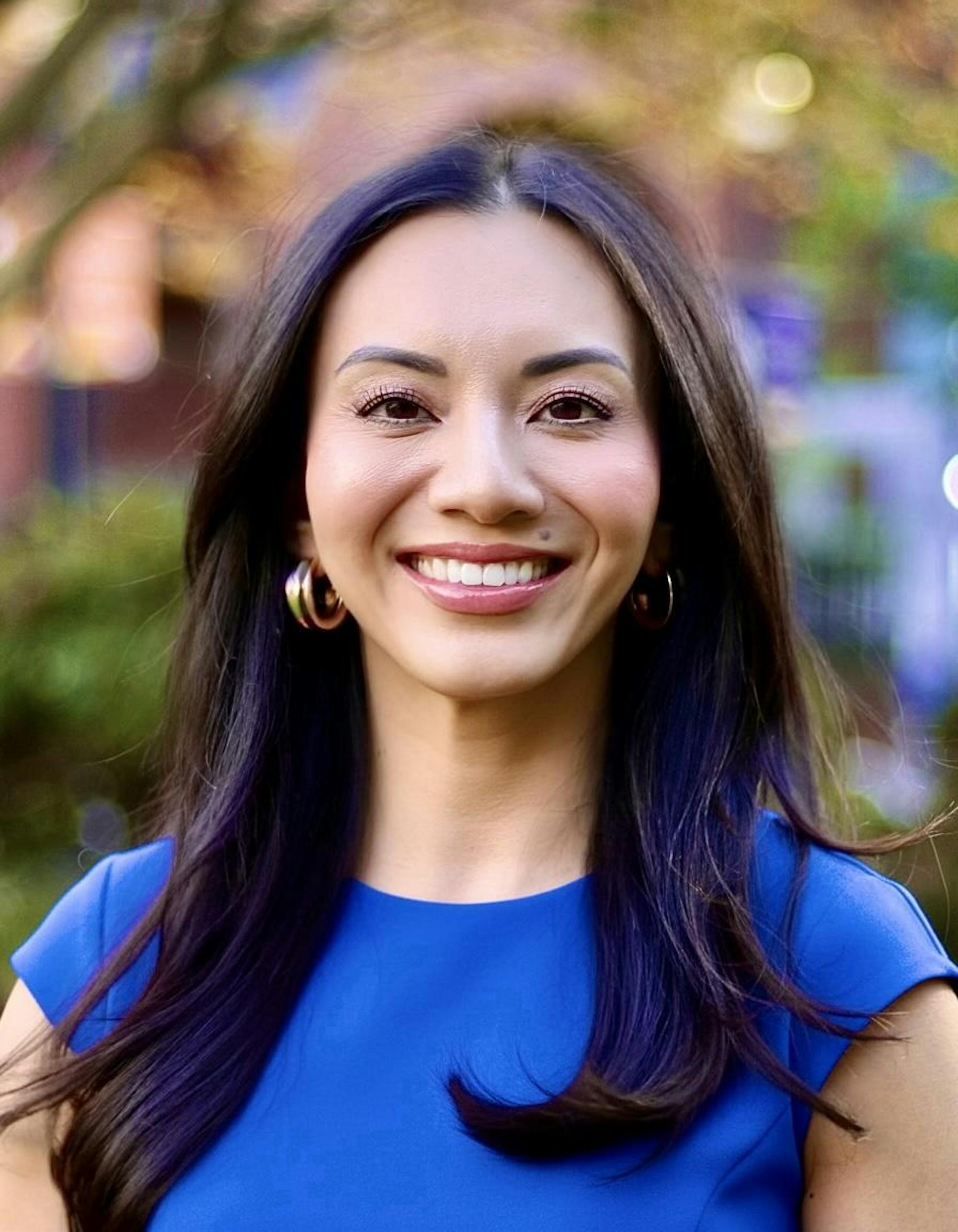
Award-winning public health researcher Dr. Monica L. Wang (LA’07) spoke on Feb. 26 at Boston’s Museum of Science, discussing her new book “The Collective Cure: Upstream Solutions for Better Public Health” and the importance of community-centered solutions in healthcare.
Wang is a globally recognized public health leader. She directs research in nutrition, chronic disease prevention and health communication, and aims to implement data-driven health policies and programs to improve health outcomes.
Wang earned a Bachelor of Arts in Child Development and Community Health at Tufts and a Master of Science and a Doctor of Science at the Harvard T.H. Chan School of Public Health.
When Wang began as an undergraduate at Tufts, she was initially on the pre-med track. But that all changed when she took her first introduction to community health class, where then-guest lecturer and now Dean of the Friedman School of Nutrition, Christina Economos, gave a presentation on a study called “Shape Up Somerville.”
This talk changed Wang’s view on what it meant to create healthier populations. Wang had previously seen few examples of successful, community-based interventions despite knowing the environment and neighborhood mattered when it came to health.
“It ignited excitement and passion in me to move from treating health one person at a time to moving it to a system-scale and treating communities and population as a whole,” she said.
Wang grew up in a rent-controlled house in Roslindale, a neighborhood in Boston, while commuting to school in Belmont. The part of Roslindale she lived in was marked by a series of inconveniences and safety hazards: it lacked grocery stores at the time, residents avoided parks at night due to crime and vehicles from the major Washington Street filled the air with exhaust. In stunning contrast, Belmont featured fresh produce in grocery stores, safe bike lanes and plenty of extracurricular activities for children. She also saw people in Boston suffer from chronic diseases and asthma, while those types of health risks were not seen in her peers from Belmont.
These neighborhood disparities are baked into our systems due to discrimination. The three levels of racism –– internalized, interpersonal and institutionalized –– defined by epidemiologist and physician Dr. Camara Jones, can apply to any kind of discrimination, according to Wang.
Internalized discrimination, where a person believes negative stereotypes about themselves, can lead to self-fulfilling prophecies in health, as they believe that they are destined to have negative health outcomes. They may not ask questions at the doctor or seek treatment for their conditions.
Interpersonal discrimination, where people mistreat someone explicitly, contributes to chronic stress and heightened levels of anxiety and depression.
Institutionalized discrimination refers to policies and norms that are baked into practice, often taken for granted as part of everyday life.
Wang advocates for communities to come together in the face of discriminatory disparities today. She shared her own story of being harassed on the bus and followed home by a group of older boys while she was in middle school. With no cellphone, she went to her neighbor’s home, where her neighbor dried her tears and walked her home.
“Even in the face of structural conditions, or personally mediated, or different kinds of mistreatment between individuals, are there other people who can provide you resources and support you?” This is the question that guides Wang’s work.
This commitment to community-based solutions that Wang advocates for also extends into the healthcare setting. In many Indigenous cultural traditions, it is believed that land can provide almost everything one needs. Eating food such as fresh produce as if it was medicine means that people can rely less on medicine. Health is not an individual concept in these communities –– it is shared and spiritual.
Wang first witnessed this approach when she was invited by an Indigenous clinical social worker to visit their practice outside of Austin, Texas. While there, Wang had the opportunity to join in a group prayer where people, including herself, spoke of their trauma, so that they could process and move through it in community.
“I came out of that experience and felt like a new person,” she said. “That was probably the most accepted that I had ever felt, having just shared some of my most intimate moments.”
This method of confronting trauma in a collective allows people to not carry their struggles alone. It prevents isolation and decreases the risk of anxiety, depression and suicide.
“The connection between the community, spirituality and physical body is all interconnected,” she said.
When asked about how to build these connections in communities, Wang encouraged people to take small steps. Community is not about living next to a best friend or parents, but about trusting neighbors in day-to-day life or crisis for things like taking care of mail or shoveling snow.
“Part of changing the environment is creating conditions where people can actually be able to follow doctors’ advice,” Wang said.
Wang is an associate professor at the Boston University School of Public Health and an adjunct associate professor at the Harvard T.H. Chan School of Public Health. Academia allows her to make an impact through her research and teaching the next generation of leaders in the field.
When asked how she stays motivated through this tough time for public health, Wang credited both her belief that public health is a team sport and her students. She mentioned that public health is a “forward-thinking” sector, and that her students bring fresh ideas every year.
“I see their passion, their commitment, their willingness to be here, even in the midst of challenge, as a testament to how mission-driven public health is, and that’s the heart of the work that we do,” Wang said. “We’re not focused on the health of half of the country or only parts of the world. The commitment to public health is that we care for the wellbeing of everybody.”
Wang emphasized that every single person can make an impact in the world of public health, not just those who pursue these fields professionally.
“There’s many different ways we can contribute to creating a healthier society, and it takes one person to make a ripple, and it takes all of us to make a wave,” she said.



