
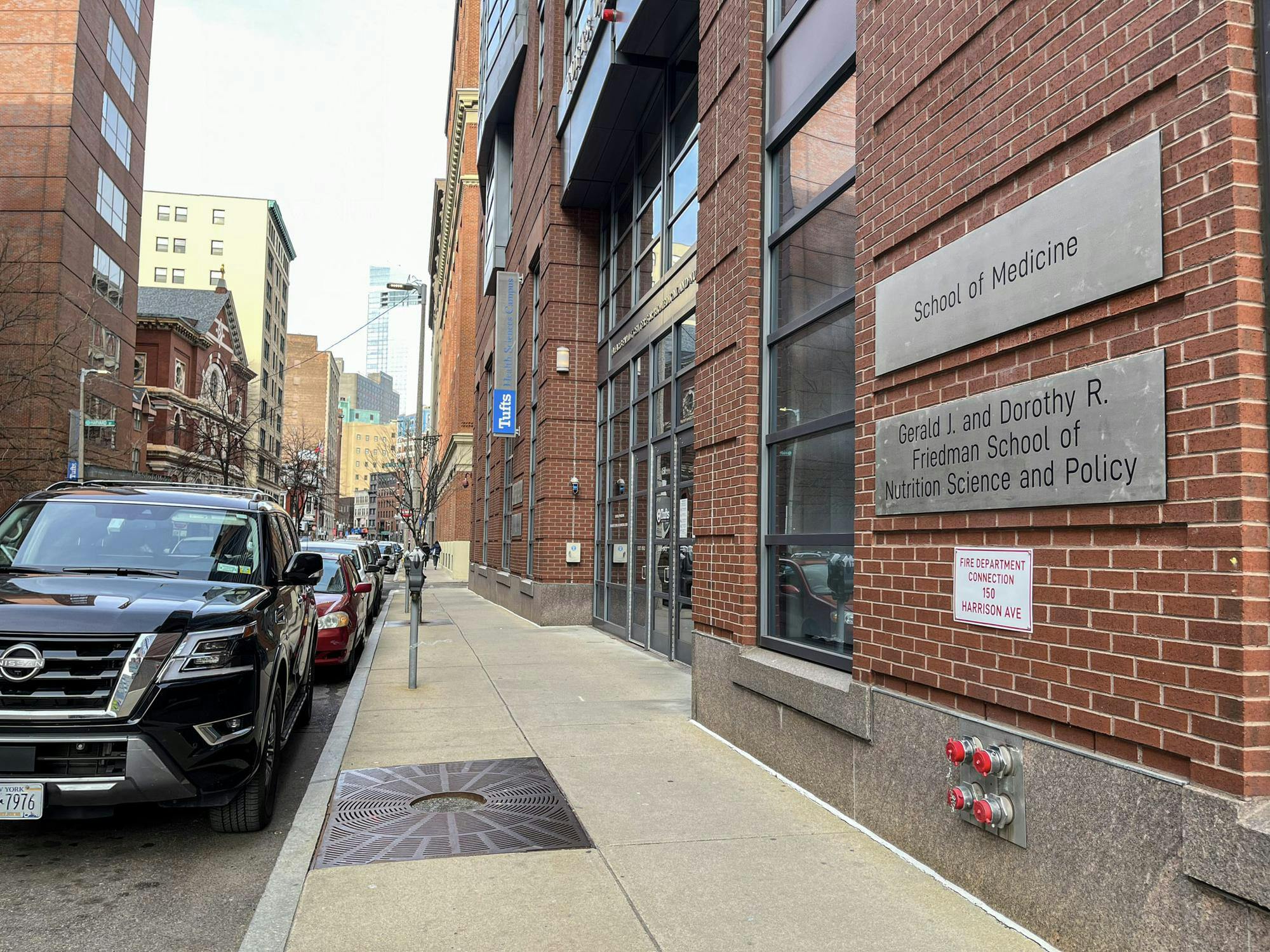
In 2009, ChildObesity180 was founded out of the Friedman School of Nutrition Science and Policy at Tufts University as an initiative to combat the trend of childhood obesity in the United States. The organization was formed by current Dean of the Friedman School Christina Economos, Professor Emerita Miriam Nelson and former Chair of the Tufts Board of Trustees Peter Dolan.
Erin Hennessy was another member of the group that founded ChildObesity180 and has since become the organization’s director. Hennessy described ChildObesity180 as “the brainchild of putting the best of business and public health together to do something different.”
The founding of ChildObesity180 was built on one of the first community interventions addressing childhood obesity, led by Economos, called Shape Up Somerville. This took place from 2002 to 2005, with the goal of making small changes in the daily environment of children in Somerville, both during and after school. These changes included adding over 50 bike racks across Somerville and training over 90 teachers to provide a health curriculum to their students. By using a range of interventions like these, the founding members of ChildObesity180 gained valuable insight into what worked and what did not.
In its first phase, ChildObesity180 affected the lives of over 12 million children across every state in the United States, fulfilling the lofty goal it set at its founding: to reach 80% of children with an evidence-based intervention to prevent childhood obesity. ChildObesity180 has described its approach as using both science and business innovation.
According to Hennessy, data show it takes about 17 years for a public health trial to have a real impact on people’s lives. ChildObesity180, at its core, is trying to drive this innovation at a faster rate.
Hennessy also leads a $1.3 million National Institutes of Health grant working with New York Road Runners. The goal of the Road Runners, along with the NIH grant, is to improve physical education resources for children in the United States.
Hennessy described a decrease in physical activity as children age, saying that “the trajectory gets really stark as children get older, especially in the later elementary school years and through middle school and high school. The drop-off in sports participation and physical activity overall is pretty steep.”
Because school and home environments are the two most important in shaping eating and activity habits, the partnership with New York Road Runners has also expanded into developing healthy habits in the home, in addition to schools.
In addition to her Road Runners project, Hennessy leads another program, an $8.5 million award focused on telehealth in the delivery of the U.S. Department of Agriculture’s Special Supplemental Nutrition Program for Women, Infants and Children. WIC supports almost 50% of all infants in the United States and is the second-largest federal nutrition program in the country, behind the Supplemental Nutrition Assistance Program.
However, participation in the WIC program has been declining. To receive food vouchers, participants must go to a WIC site to receive nutrition education, which is not accessible for many people. As a result, Hennessy’s team is focused on reducing these barriers by providing this education through video conferencing. Not only does this allow for increased nutrition education, but the states that tested this program saw a positive return on their investment.
ChildObesity180 also works with several coalitions that aim to create lasting effects, ensuring that the changes made by the organization’s interventions do not revert once new systems are introduced. Hennessy said that in areas across the country where ChildObesity180 cannot maintain a permanent intervention, partner groups are vital in sustaining long-term changes.
The childhood obesity prevention field has shifted markedly from trying to change individual behavior to influencing systemic changes.
Hennessy described ChildObesity180’s experience with this shift: “Through a series of different research initiatives that were taken up across the country — one around active living research, another around healthy eating research — we really started to lean in and understand more about … how the environment shapes what we do.”
As a result of this shift, ChildObesity180 emphasizes systemic change at its core. It is apparent that simply receiving and understanding information about nutrition habits is not enough to effect real change in the trend of childhood obesity. If healthy foods are inaccessible to the public, the knowledge that people receive is insufficient. This is central to ChildObesity180’s work on health equity. Childhood obesity disproportionately affects young Black and Hispanic people, reflecting inequities in access to healthy foods and physical activity, not the choices individuals make. As Hennessy said, “knowledge doesn’t equal behavior change.”



