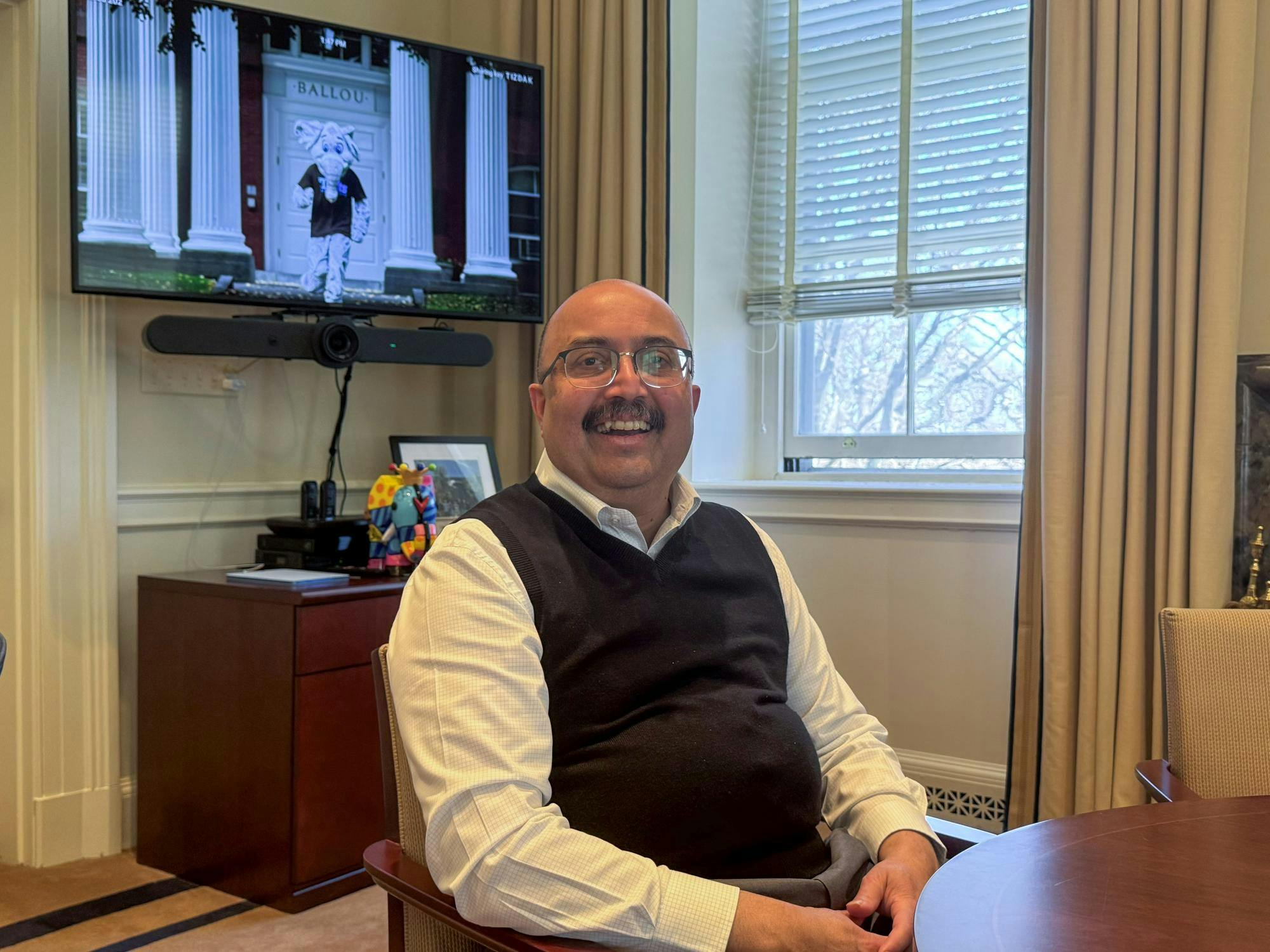
The Daily sat down with Tufts University President Sunil Kumar to discuss Steve Tisch’s relationship with sex offender Jeffrey Epstein, pressures from the federal government, new initiatives rolled out this semester and the progress of new buildings, among other issues.
This interview has been edited for length and clarity.
The Tufts Daily (TD): What impact has the Tufts Tuition Pact had? How satisfied have you been with it? In what ways is the university hoping to expand access to the university?
Sunil Kumar (SK): The reason we rolled out the Tufts Tuition Pact — free tuition for families making less than $150,000 a year — was because we wanted a clean and concise way by which we could signal to families our commitment to expanding economic inclusion in the class, and that we are actually affordable because people can have misconceptions, especially about private universities, that they may not be affordable. … We had a record number of applications this year, so I’m quite happy with how it has turned out. In terms of expansion, when programs like this work well, what they do is they hit against our budget constraints.
Fortunately for us, our alumni, and friends and parents have come through in that we have quite a lot of philanthropy this year, and we hope that we can use that to continue to expand this program. Tufts not only appears to be more affordable, but is actually more affordable.
TD: Are there any updates on federal funding cuts and the university’s efforts to find alternative sources of funding?
SK: The situation remains complicated. We have gotten singed, not burned in the sense that we have had reductions in the number of funded grants as well as the dollar amounts being funded. We continue to advocate for the model itself, which is under stress.
In terms of alternate sources of revenue, our faculty have been very entrepreneurial. They have gotten proposals into foundations, etc., which all help, but they will not fully substitute for the losses of federal funding. The university launched a $75 million Faculty Excellence Endowment Fund. The idea would be that we can support our faculty’s research through endowed funds, which are permanent and therefore are not subject to the same variations that federal funding would be. Now, this is not going to be able to fully substitute for what we may potentially lose on the federal side.
Finally, we continue to advocate, both individually and collectively, both with the administration but also with Congress. As you know, Congress restored much of the cuts that the White House had suggested for research funding, and we’re hoping that Congress will remain a good partner going forward as well.
TD: Federal funding is not the only way the university has come into conflict with the federal government. There is an investigation into [National Study of Learning, Voting, and Engagement] at the [Jonathan M. Tisch College of Civic Life] and the Department of Defense’s decision to shut down several scholarships at The Fletcher School [of Law and Diplomacy]. Do you have updates on those investigations? How important is it to you to maintain strong relations with the federal government? How do they affect day-to-day operations at the university?
SK: It is, I think, crucial that Tufts serve the nation, period. It does this in conjunction with local, state and federal governments, and those relationships are invaluable if we are to deliver on our mission. I’ll give you an example: The Fletcher School has a long and proud history of having produced leaders for the U.S. military.
It is true that we have lost one program at Fletcher, but we still have many officers from the U.S. military who are studying there, and we are hoping that that will continue. As regards to NSLVE, we asserted that we believe that we have always complied with [Family Educational Rights and Privacy Act] and the law and made our case. We are in continued communication with them and are hoping for a speedy resolution.
TD: The past year has been difficult for international students at many universities across the country due to pressures from the federal government. What’s your message to international students who may fear for their safety or worry about the risk of speaking publicly, especially now, more than a year since recently graduated Ph.D. student Rümeysa Öztürk was arrested?
SK: Let me first make an unequivocal statement: I believe that international students are an important and critical part of U.S. higher education and that Tufts welcomes them. We believe that our international students belong here, period. I have no doubt about any of those statements.
I myself came to this country on an F-1 visa. I got an H-1B to teach at Stanford and converted it to a green card and eventually was naturalized as a citizen. I have been through the same process that many of our international students have to go through. The process 30 years ago was easier than it is today.
There are limits to what we can do, but we will do our utmost to enable students who are qualified and want to study at Tufts to come to Tufts, to enable them to have the full student experience while they’re here and, afterward, should they choose to do so, have a reasonable set of possibilities for staying and getting trained here further or to work here. We would very much like that to continue, and to the extent that the International Center and the university can help, we do our best.
That said, both what the federal government does, as well as other governments — you ran the story about Russia — is, of course, beyond our control. I want to again state that I believe in academic freedom and lawful, free expression for our students.
TD: This January, a newly released batch of the Epstein files included several notable names. Has the university considered putting out a statement in response to the revelations about Steve Tisch?
SK: First of all, Jeffrey Epstein was a despicable person. Steve Tisch showed a remarkable lack of judgment in associating with him. Tisch himself has admitted this. The university does not condone these actions, period. We have seriously evaluated the situation and we continue to monitor to see if there are further revelations of facts. We have a process with our Board of Trustees. What I want to reassure people who may be mistaking the lack of a formal statement — as an aside, I’m hoping this will substitute for a formal statement — as apathy on our part, nothing could be further from the truth. This has very much been on people’s minds and we are continuing to evaluate this.
TD: What is the decision process for removing a name from a building like the Sackler family name was from the School of Medicine?
SK: There’s first an initial assessment and understanding within the Board of Trustees. Then there is an attempt to compile as many facts as possible, either through an external investigation done by us or by others. Then, finally, there has to be a judgment call. That said, I feel that the comparison to the Sacklers is fraught because the Sackler family and Purdue Pharma, for example, had been sued by multiple attorneys general of multiple states, including Massachusetts, for their role in the opioid crisis. The facts were quite different, and each case has to be evaluated on its own circumstances.
TD: How would you evaluate Tufts’ current negotiating strategy amid labor disputes and ratified collective bargaining agreements?
SK: A university is basically about two sets of people who are committed and who are in close contact with each other: the students, and the faculty and staff who work with them. We approach collective bargaining in good faith and in a way that is consistent with data … on our peers, what others are doing, what our own history has been, etc.
We are balancing something difficult: supporting our people the best we can and stewarding current and future resources of the university, which are more limited than people give credit for. At the end of the day, I think we always walk away with both sides satisfied. I think that is what I’d like to see going forward.
TD: How is the university continuing to respond to the presence of artificial intelligence in classrooms and research?
SK: I think more and more members of the faculty are, both individually and collectively, deciding how they would adopt it in the curriculum. … I want our faculty to experiment and do what they want, but what I want to guard against on the teaching side is an overreliance on AI, which will produce a monochromatic gray among our student body. How can you be excellent if everybody else turned in the exact same answer as you did? In particular, how will it reflect your own individuality, and how would you grow as a human being, which is part of a liberal arts education? That remains a fear and I’m hoping that we’ll do more.
TD: What thoughts do you have about AI’s implementation in classrooms?
SK: It’s not for me to prescribe, because I am a firm believer that curriculum should be designed bottom up. But that said … not adopting [it] is no longer feasible. Whether you like it or not, it’s out there. To insist that people will write [their homework] with a piece of chalk on a blackboard is actually unfair to the student, because when they go out in the world, AI is going to be everywhere in their jobs and elsewhere, so they have to learn how to use it and yet be better as humans. Now, how does that translate in introductory writing classes? Well, that’s why we have an English department. Let them figure it out. Why should I do that?
TD: The [Tufts Community Union] Senate, over the past year, has passed several resolutions regarding issues such as renaming the psychology building for the late professor Sam Sommers, language offerings and graduation robes. How does the administration determine which resolutions it will adopt? Have you had any concerns with those that have been passed?
SK: We have a very good working relationship with TCU. We’ve had it for the last couple of years; this year has also been excellent. We take all resolutions seriously, because you can’t discount what they are.
When the Sam Sommers resolution came out, I called the Dean of Arts and Sciences [Bárbara Brizuela] and we had a chat — we both knew Sam, it was an incredibly tragic loss. She said, ‘We’re going to remember him with something more permanent than a building.’ There’s a prize, there’s a scholarship. This is not to say the building is off the table, but there’s a process by which buildings are named at the university. But the idea was: What are the ends the students are trying to achieve and is there a way for us to achieve those ends? In this case, it was to honor Sam Sommers, and the university feels there are many ways to do that, and we should continue to explore all of them.
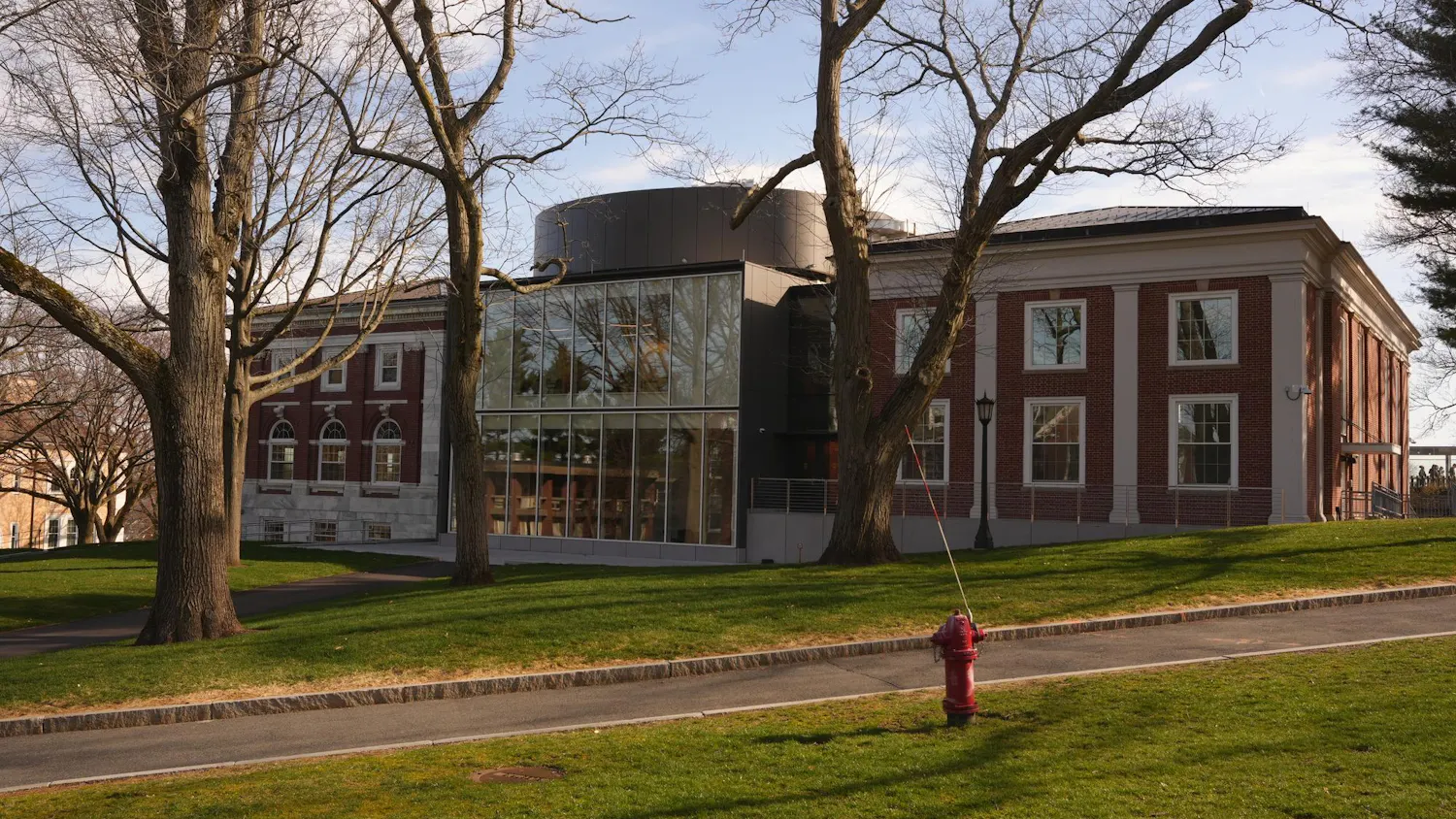
TD: Beyond Pachyderm Place and the new Aquatics Center, are there plans to expand or add campus spaces? Are there spaces you would like to see expanded or added?
SK: There are three sets of space constraints that I would like to relax. … First, there’s not enough recreational space. This is actually a serious problem. In winter, if you go inside Cousens Gym in the back, which is the kind of unprogrammed space, there’s not really much space for people to just kick a soccer ball around.
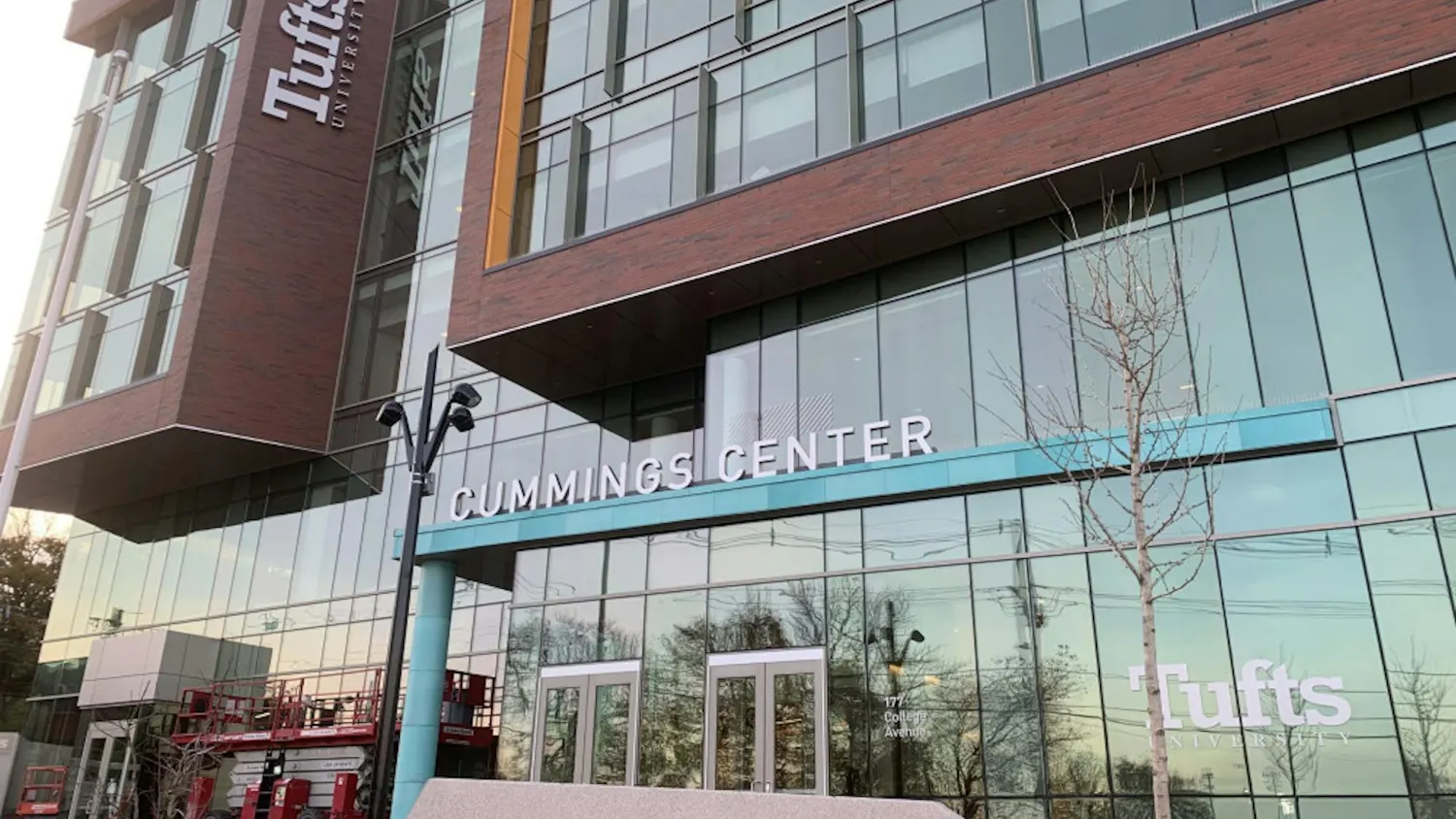
Second, we don’t have enough spaces for convening. I always have mixed feelings when I walk into the Joyce Cummings Center because it’s great to see the place full but it’s sad to see that a classroom building is one of the only places where students hang out in the evening. I think the approach has to be more adaptive. We don’t have space to suddenly say we’ll build a giant anything. We are to be sensitive to the community. … For example, Lane Hall will be demolished. The question is whether that space is usable in the future.
The third area is for our science footprint. For example, Pearson, which is our chemistry department, is no longer sufficient to meet the needs of the chemistry department. It’s too old. We built science buildings from time to time, but we built them sufficiently small that they kind of maxed out on day one.
TD: As your third year as president comes to a close, how do you view progress over your tenure? What do you see as the greatest challenges of being a university president? What do you look forward to?
SK: These have not been an easy three years. But that said, I’m very proud, and credit for all of this goes to someone other than me. Tufts Tuition Pact, Pachyderm Place, new degree programs — we’ve managed to make progress. One reason we managed to make progress, which I’m very proud of, is that our alumni, parents and friends have stepped up.
I’m glad that we didn’t go into a defensive crouch, which we easily could have given all that’s happening. I think the faculty and the staff have kept this in perspective. It’s not happening to us uniquely. It’s happening across the sector, and if we sit still for four years, people will regret it in 20. Universities have long half-lives and we can’t afford to sit still.
TD: The role of university president has taken on more pressure in the past few years. How do you view the role? Is there something that guides you as a university president?
SK: Many times, people think that if you did what they wanted you to do, you’ve done the right thing, otherwise you’ve done the wrong thing. I’m not a Christian, but my favorite line from the Bible is from the Vulgate: Veritas vos liberabit — the truth shall set you free. When in doubt, say it like it is. You have to have a strong moral compass, and you have to care deeply about the institution.
TD: Now for a fun question. Is there a spot on campus that you frequent or one that you would like to spend more time in?
SK: It’s the perfect spot for us: our backyard. … I take videos of what the students are doing on Prez Lawn. They can’t really see me, especially in summer, once the hedge grows in. In winter, you can. We love sitting there when it’s nice and it’s nice to be around happy people on Prez Lawn.
TD: If you were to take a class or create a class, what would it be, and why?
SK: I’ve been thinking about it, and I might teach this in the future. I’m a probability theorist and statistics is my area so I might teach a class called Data Science Through Sport, using sport statistics to motivate and get people to understand serious data science.
TD: Is there anything else you wanted to add about the year, a message to students?
SK: It’s been a difficult year on many dimensions, but in 20 years’ time, nobody will remember all that. So, enjoy Tufts to the fullest. Don’t let whatever is going on spook you. That’s why I keep telling people, keep calm and eat dosa.