Skip to Content, Navigation, or Footer.

Opinion

Scrolling_on_phone
Editorial

Editorial: Before you blame ‘the media,’ read the news

If you were an Instagram user in 2019, you likely remember an early iteration of online outrage: the Amazon rainforest wildfires. As fires tore through the Brazilian Amazon — partly due to regular farming practices and partly due to excessive deforestation — social media users were quick to direct outrage toward the news media.


Untitled-design-2-1
Editorial

Editorial: On a free student press

With tomorrow marking 54 years since the Supreme Court’s ruling in Tinker v. Des Moines, a case fundamental in affirming the First Amendment rights of students, we write to stress the importance of a responsible free press and the important role of student newspapers in holding university leadership accountable and ensuring an informed readership.


winickmarchmadness
Viewpoint

College basketball and the security dilemma

Every year, I try to win my friend group’s March Madness bracket pool, and I always fall short. The challenge of making a perfect bracket is so close to impossible that Warren Buffett offered $1 billion to any fan that could, but no one did. Therefore, it would be understandable if I was simply bad at making brackets, but I like to think I’m pretty good. So this year, in an effort to make it atop the pool, I found a new source of inspiration: political science.


erodgan
Viewpoint

Turkish and Syrian governments have failed their people

Turkey and Syria recently experienced a 7.8 magnitude earthquake, the largest earthquake to have hit land since the 2010 earthquake in Haiti. Impacts were felt hardest in Turkey, where the country has experienced a death toll so far of more than 40,000, while the death toll in Syria has climbed to more than 5,800. Although there is little that countries can do to prevent earthquakes from happening in the first place, except for perhaps taking measures to slow the rate of climate change, it is imperative that governments act in their citizens’ best interests by preparing extensively.


The-Strike-Zone-Banner
Column

The Strike Zone: Beijing’s precarious position

By transitioning from a centrally planned, collectivist economy under Mao Zedong to a free market system of “capitalism with Chinese characteristics,” China has undergone an economic explosion since the late 1970s, and many scholars see the nation’s continued rise as inevitable. China’s GDP per capita is quickly rising, and its annual growth has long outpaced the United States’, leading to predictions that China’s GDP will overtake America’s by 2035.


Daniel-Chung-Column-Banner
Column

The End of the World Has Just Begun: The imperial backyard

Empires are built out of chaos, and when they fall, chaos often replaces them. As we soon may learn, this lesson applies to Russia and its periphery. Ever since the 19th century, Moscow has ruled over the Caucasus mountains, much of Central Asia and its Far East territories, and to this day has remained the regional security guarantor in the post-Cold War era. But now, ever since the Russia-Ukraine war exposed the weaknesses of Russian military force, its authority in the region has significantly deteriorated. Unfortunately, it is likely that this slackening will only lead to intensified geopolitical competition. Besides the Caucasus and potential internal security problems, the Central Asian states are where this is most likely to occur.


The Setonian
Column

Ukraine at War: What is known about the spring offensive?

Kryvyi Rih, a large industrial city in Ukraine where my immediate family lives, is located 43–49 miles from the frontline, so many of the wounded soldiers receive treatment in its hospitals. Both of my parents are doctors, and our conversations about their work often leave me speechless. Recently, my mom was testing new methods of lung ultrasound diagnosis with a group of patients — volunteers, who are mostly military officers. One of them shared with my mom that during the retreat from a small town, Soledar, something small and sharp — likely a bullet or a missile fragment — hit his ribcage. 


The Setonian
Guest

Op-ed: Bashar al-Assad is manipulating you

Across social media, calls have been mounting for the U.S. and the EU to lift sanctions against the Syrian government. One particularly influential post, which accumulated over two million views in just three days, claimed, “the US and EU refuse to lift the sanctions which prevent Syrians from receiving direct aid from many countries. Remember this the next time they lecture the world about human rights.” It seems that this take has garnered considerable popularity, especially among younger liberals who are genuinely wrestling with the legacy of a complex and morally ambiguous history of U.S. foreign policy.


AsherColumn
Column

Around the Corner: We cannot abandon nuclear power

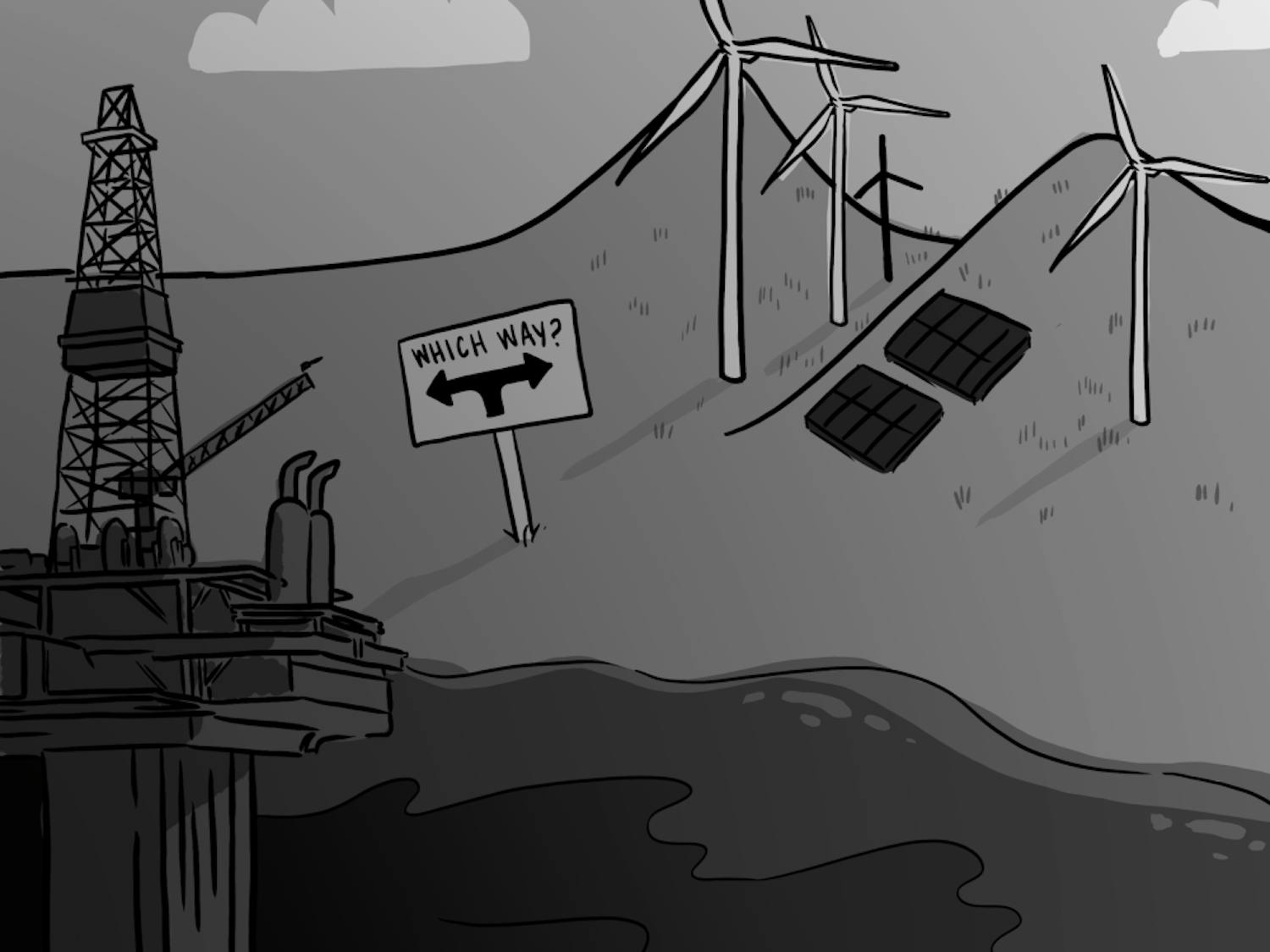
Our efforts to fight global warming, while increasingly significant, have not been enough. The prospect that warming will be halted at 1.5 degrees Celsius, the boundary between the bad and the disastrous, is growing less likely by the year. Indeed, the World Meteorological Organization estimates that there is a 50% chance that temperatures will reach 1.5 degree warming within the next five years. Given the increasing severity of the situation, averting this fate would be a monumental feat. The UN Environment Programme has warned that carbon emissions would need to be slashed by at least 45% by 2030 to accomplish it. If this target is to be met, significant changes will need to be made in nearly every facet of our lives. However, the most important facet is energy: the foundation of the modern world. Nearly three quarters of global greenhouse gas emissions come from the energy sector. Evidently, reducing emissions will require significant changes to how we produce and use energy. In short, clean energy generation methods must replace fossil fuels.


DSC09916-1
Viewpoint

Unpaid internships: The price of privilege

February: a month to anxiously await the groundhog’s forecast, celebrate Valentine’s Day and prepare for internship season. As winter comes to a close, the last-minute frenzy to edit resumes, write cover letters and find the perfect interview outfit begins, sweeping across college campuses as students strive to finalize their summer internship applications. 


Chinese_surveillance_balloon_over_Billings_MT
Viewpoint

It’s a bird! It’s a plane! It’s a … weather balloon?

The recent polar vortex left many of us indoors, glued to our screens and inevitably following a bizarre news story developing in the midwest. One headline read, “Suspected Chinese spy balloon spotted over Montana,” which then evolved when Mao Ning, a Chinese foreign ministry spokesperson, claimed that the flying object was a “civilian balloon” rather than a surveillance balloon; this claim is largely disproven by the technical features of the flying platform such as motors, propellers and a much larger diameter than a weather balloon that would fly at such high altitude. Most recently, an unidentified object was spotted flying over Alaska and another balloon over parts of Central and Latin America, with Ning admitting that the balloon flying over Central and Latin America was a “civilian airship.” The object flying over the coast of Alaska was shot down much more quickly than the first spy balloon; the U.S. military was made aware of its presence in the airspace on Thursday evening, and it was shot down midday on Friday. The spy balloon, which was first detected on Jan. 28, was shot down off the coast of South Carolina at the order of President Biden on Saturday. Will this lead to bullet holes permanently tattering U.S.-China relationships?


OLD_STREETLAO_JIE_SHENZHEN_28
Viewpoint

Post-'zero-COVID' economic recovery and the problems facing China

Following the onset of the COVID-19 pandemic, China’s economy incurred consistent downward economic trends as a result of President Xi Jinping’s stringent “zero-COVID” policy. Many foreign firms considered leaving China, factory activities were severely reduced, workers were laid off and the entire economy only saw a mere 3% growth during the entire year of 2022 — the second slowest growth rate since 1976. However, with the abandonment of the “zero-COVID” policy and the recent reopening of the country in the final months of 2022, China has made various attempts to revitalize its lackluster economy and return to its pre-pandemic economy. 


The Setonian
Viewpoint

Let’s be smart about regulating AI

Massachusetts is a leader in higher education and scientific discovery, as some of the world’s most prestigious universities and research labs are located in Greater Boston. Companies like Boston Dynamics have been on the forefront of artificial intelligence development since its inception and have been continuously pushing the boundaries of science. Boston’s dominance in the technology world must be coupled with a leading role in responsible use and growth of AI.


Daniel-Chung-Column-Banner
Column

The End of the World Has Just Begun: From fistfights to more?

In the waning weeks of 2022, a video circulated online of Chinese and Indian troops stationed in the Himalayas engaging one another with sticks as weapons. The clash happened near the Line of Actual Control in Arunachal Pradesh, part of the disputed territory between the two states. Although this belligerent behavior seems par for the course, combined with other recent foreign policy moves by the Chinese government, the clashes in the Himalayas actually highlight a potential new or refocused strategy for China.


Mumbai_Night_City_18219784390
Viewpoint

Toward a brighter economic future

As India’s economy remains resilient in spite of a challenging global environment, it has been called a “bright spot” against a global recession. The country’s large domestic market, young demographics, and relatively low levels of exposure to international markets are some of the reasons why it is partially insulated from global economic headwinds. However, the country’s cumbersome red tape and inadequate infrastructure are significant economic drawbacks.