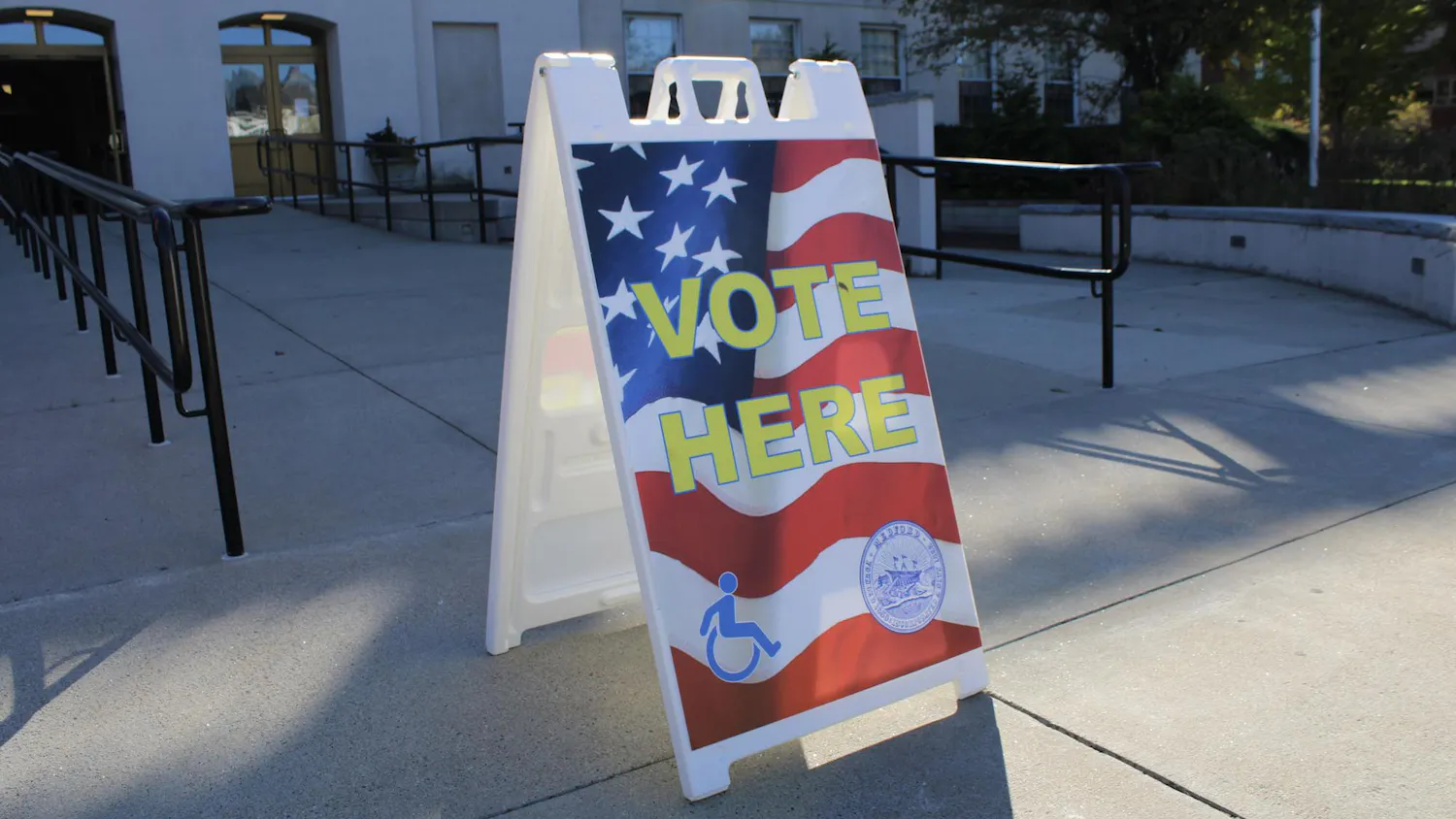
As the race for the Tufts Community Union (TCU) presidency heats up, the three candidates in the running have attempted to distinguish themselves from each other through unique approaches to winning students' votes.
Over the past six days, senators Chas Morrison and Brandon Rattiner have orchestrated all-out advertising blitzes, while Senator Samia Zahran is aiming for a highly personal and informative approach.
"We have three very dynamic, very energetic candidates," Elections Commission (ECOM) Chair Adam Weldai said.
Morrison, a sophomore, is focusing on name recognition and visual advertising, according to members of his campaign. Fliers, chalking and stickers will make up a large part of efforts to raise Morrison's visibility on campus, said sophomore Ian Hainline, who is handling scheduling for the campaign.
"The nice thing about Chas' name is that, frankly, it's four letters, so it can easily be chalked or stuck on a flyer anywhere," Hainline said. "It's a noticeable name — it's not a very common name."
Rattiner, a junior, said the promotional aspects of his campaign have been event-focused.
His official campaign kickoff, "The ? Show," took place last Wednesday on the lower campus center patio and featured three a capella groups and a band. His campaign also took advantage of Friday's warm weather by bringing a sound system and summer staples like a Slip ‘n Slide to the Residential Quad.
Rattiner's campaign has also put larger-scale advertisements in public places around campus. On Friday morning, those walking by Tisch Library may have noticed "B. RATT" written in chalk on the grass of the President's Lawn; yesterday, spray-painted forks stuck in Academic Quad ground spelled out "Brandon."
Zahran's campaign has been less enthusiastic about spreading its candidate's name, however. Her campaign manager, Brandon Sultan, said name recognition only takes a candidate so far.
"The other two candidates are implementing the very generic big-billboard, big-posters" strategy, Sultan, a junior, said. "But all that name exposure is more of a facade of just what it actually is; it's just someone's name. There's no real facts to it; there's no genuine approach of really connecting with the student body."
"It doesn't matter if they have the biggest banners around," he added. "Empty words are empty words, and the best candidate will win out in the end."
Weldai explained that these different strategies have at least one thing in common: their emphasis on increasing voter participation.
"Each of the candidates is very good about creating their own spin on the advertising game," he said. "They know it's their responsibility to get out the vote."
Connecting with the student body
While the candidates have chosen different advertisement strategies, they are all seeking out meetings with students. Zahran, a sophomore, has made this tactic a centerpiece of her campaign, according to Sultan.
"What we're focusing on in our campaign is group meetings with various student organizers and student body members … to come up with a platform, an idea which really appeals to the student body and connects with the student body," Sultan said.
The two other candidates, meanwhile, had a head start with respect to the number of one-on-one personal meetings they have held. For weeks, Rattiner and Morrison have been meeting with friends and student body leaders about their respective presidential runs; Zahran started publicizing her intention to campaign for the presidency later.
Morrison is planning to hold a town hall meeting with students soon; his campaign hopes that event will show that the sophomore cares most about his peers.
"Our events are all designed to get people to really know Chas and see that he's all about putting students first," Hainline said. "There is one student group we're courting very actively, that being the undergraduate population."
Rattiner's campaign is emphasizing his platform.
"We're doing a lot of our promotion based on the platform and based on the changes that he wants to promote," said sophomore Katy Simon, Rattiner's campaign manager.
She added that the campaign has focused on what she called "cohesive programming" that involves as many students as possible.
"We want to make [the election process] as inclusive as possible," she said.
Those running for president can court specific student organizations and receive endorsements, but they are required to keep ECOM informed every step of the way.
The candidates, for example, must let ECOM know in advance if they send an e-mail to the president of a student organization, a common practice.
Immense effort, hundreds of dollars
An great amount of effort goes into the TCU presidential campaigns, with dozens of students spending a couple of weeks of their spring semester helping out their preferred candidate.
"The presidential election is a completely different ballgame than the general election, mostly because this is when we are trying to engage not a specific class, but we're trying to engage the entire Tufts community," Weldai said.
Much of the planning for the elections goes unnoticed, he added. Candidates and their supports have been for weeks shaping their platforms, planning strategies and reaching out to potential supporters.
"The funny thing is a lot of people really don't see what comes into it because they only see the flier-ing and the chalking and the Web site — that one week we have to campaign," Simon said. "We probably started about at least a month in advance."
Not all aspects of a TCU presidential campaign need to be planned far in advance, however, according to Hainline. Logistical considerations can often be taken care of at the last minute, he said, although some things do take longer.
"We can get our hands on a speaker system very quickly," Hainline said. "A Web site, obviously, is a bit more involved of a process … In terms of fliers, we order in the hundreds and thousands, so printings that large can take several days."
Candidates finance their campaigns mostly with funds from the Student Activities Fee.
Each candidate receives $750 from ECOM and is allowed to raise an additional $250; donations to the campaigns may not exceed $50 per donor.