
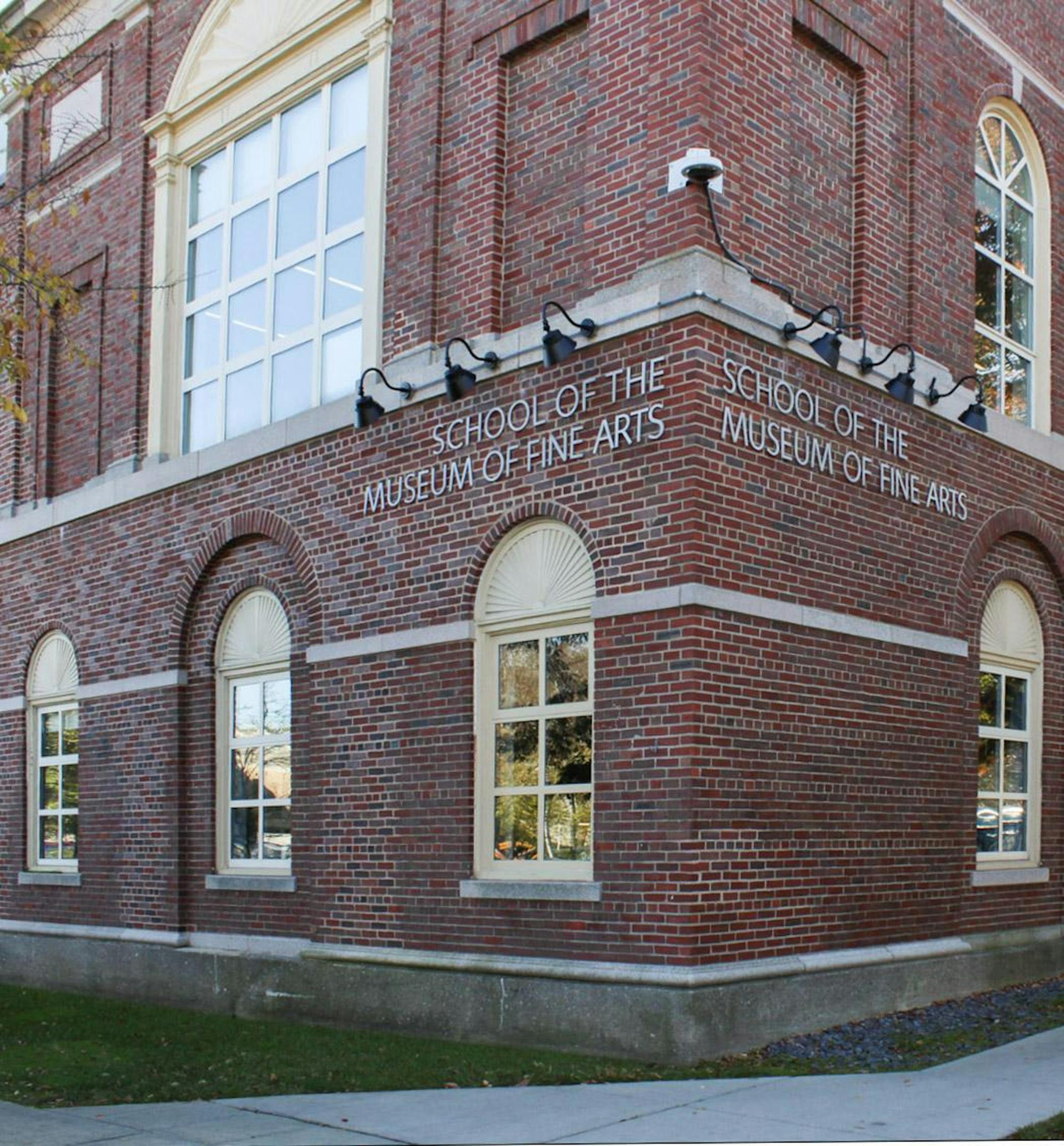
Six courses at the School of the Museum of Fine Arts at Tufts University were canceled this fall after failing to meet the required minimum enrollment of eight students. This fall semester saw an unusually high number of cancelled classes that left some professors of the practice without opportunities to teach as many courses and some students facing last-minute schedule changes.
Some SMFA part-time lecturers are particularly concerned about course cancellations. Part-time lecturer John Ros explained how faculty members in his position often struggle with uncertainty over course loads.
“[Part-time lecturers] who are already stretched super thin, who already work at multiple institutions … know that precarity always exists for many of us,” Ros said. “There are more [part-time lecturers] than there are full-timers at SMFA, so the bulk of the faculty are dealing with precarity and looking at those enrollment numbers.”
For part-time lecturers with four years or less of experience at the SMFA, a last-minute course cancellation can result in the loss of $11,000 from their salary.
Ros explains how, because a set number of seats in studio courses are reserved for incoming first-year students, returning students may miss out on certain course offerings. When coupled with class cancellations, those options become even more limited. SMFA combined degree student Afrida Mehzabin described how losing access to animation courses affected her.
“I’m specializing in animation, [so] I [want] to take more classes on animation. I want to build my portfolio so that I can get a job,” Mehzabin said. “If I’m not getting my classes, it’s like going back by one year.”
The SMFA increased its minimum enrollment from six to eight students in 2023 which has played a central role in the class cancellations, particularly in certain studio courses designed for small cohorts. Executive Director of Media Relations Patrick Collins cited “operational considerations and peer practices” as the reasoning behind the increased enrollment minimum.
Ros recalled one of their classes failing to fill up with the required enrollment number during their time at Tufts.
“I was looking at [the class], and I was super concerned, because … I only had two enrolled,” Ros said. “[But] I was really lucky, because [my department head] found another class for me.”
Course cancellations also cause disruptions in students’ schedules. Mehzabin noted that she had to email a professor to try to get off a waitlist for a new class after her original course was canceled.
Ros shared how communication issues from the new SMFA administration have left faculty members unsure of their standing going into new semesters. They observed a lack of support from administrators for faculty members after introductory courses that they were told would not be canceled ultimately were.
“Decisions are made in the dark. No information is sort of given to us, and then we all have to deal with the repercussions,” Ros said. “If we know more, if we’re communicated with, … at least [we’ll] understand what’s going on.”
Collins reiterated support for SMFA faculty amid the larger-than-usual number of course cancellations.
“SMFA leadership has met with faculty representatives and the union to address these issues and explore solutions. The collective bargaining agreement provides cancellation fees or partial course rates for affected [part-time lecturers] if there is no other available alternative course. [Professors of the practice] have a guaranteed salary that is not impacted by course cancellations,” Collins wrote in a statement to the Daily.
Some part-time lecturers including Ros met with SMFA’s administration on Dec. 2 to talk about issues with course cancellations. Prior to the meeting, Ros shared some of the concerns they hoped to address during the meeting, including questions of course seat minimums and faculty support in the wake of cancellations.
“I think communication goes a long way, and that’s something that we haven't been getting at SMFA,” Ros said.



