I love reading. But, there is one glaring caveat: I do not love reading textbooks. Recently, I opened my first one in two years and found that it took me forever to finish 10 pages. But even so, I still love reading: the act of finding meaning everywhere and anywhere.
Yet books are struggling nowadays. Borders has recently gone out of business, and there's always a whispered threat that Barnes & Noble could follow, too. In an era of reality television, Internet and technology at our fingertips, novels seem like an ancient invention. Our era is the era of instant connections. Ordinary people are famous. Famous people are ordinary (you can always reach out to them on Twitter). So books, without a social medium of their own, are missing from our daily dose of entertainment. Sure there are NOOKs, but they're expensive and therefore somewhat inaccessible.
In essence, with so much groundbreaking technology in the 21st century, it has been a long while since print seemed novel, exciting or relevant. But the fact that stories have been around since the beginning of the history of the world doesn't make them stale. Instead, it shows that they won't give up the struggle to connect with us and convey time−tested truths so easily.
For me, I distinctly remember discovering the magic of reading. My mother was driving us down the small streets of Ohio in the humid, impassive heat of summer. I was dying a little because everything had these weird scribbles on it that made no sense to me. This red sign with a plethora of corners, all upright and official, was especially troublesome. It made all the cars stop just by being there. Words were power. And I felt left out.
When I finally could read and was introduced to the library, I found words even more invincible. Power, experience and knowledge: they were entirely tangible on the shelves!
So, what does all this mean to us as college students? Even though the decline of books is evident, there is still strength within them. In fact, I believe books become more influential in our hands. With our own money and ability to educate ourselves, we can change the fads and affect the book market.
Our relationship with books is reciprocal as well. Books are especially influential to us because now, at college age, we can read anything and everything and understand it. Remember when we were restricted to picture books that explained how cows say moo, sheep say baa, dogs say woof, etc.? And then we had those short chapter books with font size 18? Afterwards, we moved on to the "Harry Potter" series (1997−2007) which thankfully had more weight. Lastly, we sneaked into the racy YA section when we were barely teens, gazing at the black covers with cursive font, beautiful people and one−word titles like "Twilight" (2005). Now, what are your reading restrictions? We can read any of the above mentioned. We can comprehend classics or non−fiction, storybooks or chapter books or picture books, or cook books or graphic novels or audio books. We can even find some deeper meaning in Dr. Seuss books.
In this column, I will propose the ultimate college−student book collection. I'll highlight and explore wonderful stories about us: books that have been written for us. There will be books that capture our experience and put it eloquently, ones that show how life was for us in the past so we can appreciate our futures, ones that inspire and teach. I will also profile the authors that bring us these tales: the masterminds behind the scenes. And always feel free to send me your book suggestions. In this way, books won't die. Instead, we'll be able to see just how relevant and significant words and tales are to us, every week. Except for textbooks — I'll never understand why they are so difficult to absorb. So, if you love them, teach me, please.
--
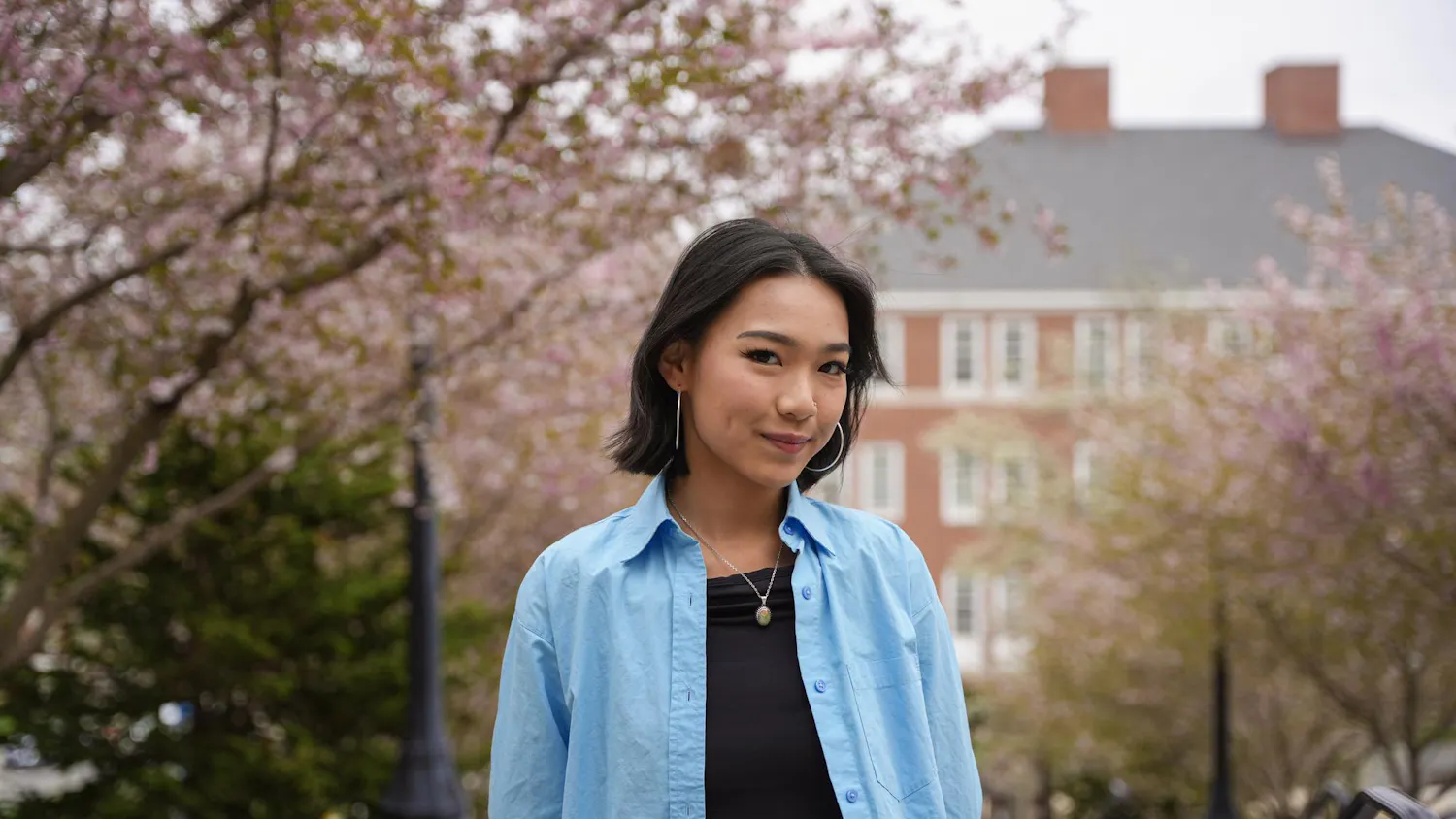
Alexandria Chu is a junior majoring in English. She can be reached at alexandria.chu@tufts.edu.