Students frustrated by high textbook costs may soon have another means of accessing books for their courses.
This fall, sophomore Tyler Agyemang opened a campus-based book donation program to alleviate the cost and inconvenience of purchasing textbooks. JumboBooks, which currently exists as a Facebook page, is hoping to expand its audience to become a viable alternative to bookstores and rentals.
Agyemang developed the idea for JumboBooks this summer when he realized that he had hundreds of books in his home that he did not plan to read. He then decided to launch an on-campus hub for free, used textbooks on LibraryThing.com.
The concept, however, has yet to get off the ground, Agyemang said.
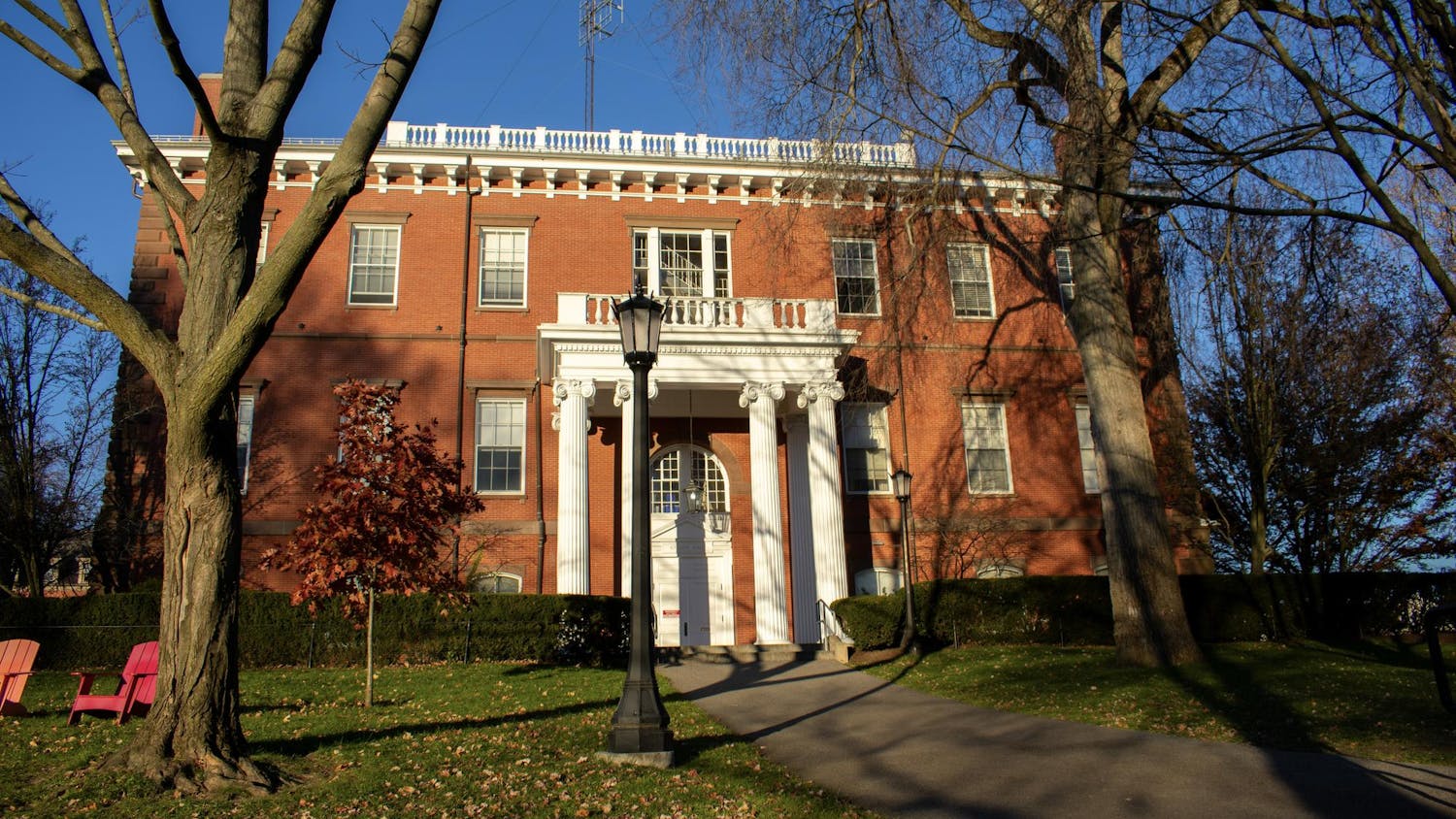
While a book "drop-off day" was announced earlier this semester, only 10 to 15 donors actually showed up, he said, adding that he received approximately 100 books. A general interest meeting scheduled for Oct. 16 in Hodgdon Hall went unattended, according to Agyemang.
"There are multiple problems," Agyemang said. "I think the main one is publicity and labor force. It's just me, so far. There's also the problem of making people willing to donate - most people will sell the book for $5 instead of giving it away. It's just running off of human generosity, which is a very small fuel."
JumboBooks currently runs entirely out of Agyemang's room, he said. Donated books are stacked and stored there for later use, and all transactions are arranged via Facebook.
Nicola Chang, a sophomore who donated to JumboBooks, supports the concept but remains skeptical about its prospects.
"It's a great idea and he's got so much heart behind it, but he needs more people and a more official event," Chang said. "Put it in the [Mayer] Campus Center and let everyone come and browse books. I think it works theoretically, but it needs more participation from the school administration."
Chang suggested that JumboBooks would benefit from visibility on websites like RaptorAttack.com and GetchaBooks.com, which provide course planning and textbook price-comparison services, respectively, for Tufts students.
Given the poor response to his program, Agyemang said he has no immediate plans to seek student group recognition from the Tufts Community Union.
JumboBooks also faces the difficulty of integrating into a marketplace that is responding to the need for cheaper textbooks on a much greater scale.
The Tufts University Bookstore has already addressed this problem by offering rental books at 51 percent off retail price, according to Store Manager Carolyn Laquaglia. She does not feel that the bookstore is threatened by the introduction of a book donation program.
"What's been more detrimental to our sales has been competition, prior to us offering rentals," she said. "Now that we have rentals, you have the convenience of not ordering online and paying the same or less."
Laquaglia noted that textbook publishers are attempting to push alternatives out of the market by making their products available digitally.
"Publishers are reacting to the rental process," she said. "They can only change editions so frequently without it being too costly for them. Publishers have a huge incentive to push all of their content to digital to stop the rental process and to offer it on a cheaper basis digitally."
Publishers are also beginning to protect their business by bundling books with single-use access codes to databases and other online/offline integration services, according to Laquaglia. Since the codes are non-transferable and often cost as much as the book itself, donation programs like JumboBooks may soon become obsolete for textbook-dependent disciplines such as biology.
That possibility does not intimidate Agyemang, who believes that JumboBooks will ultimately act as a catalog of cheap books that are easy to donate.
"We're really open to anything," he said. "The cheap books, the ones that you use for literature class, that's what we have more of. So long as we're alleviating the burden on people, that's the main goal."