
“Better Call Saul” (2015-present), the “Breaking Bad” (2008-2013) spin-off that debuted on Feb. 8 on AMC, presents the origin story of smarmy lawyer James “Jimmy” McGill (Bob Odenkirk), who goes by the infamous alias, Saul Goodman. The challenge for any spin-off is to escape the gravity of the series that preceded it. The success of “Breaking Bad” was rooted in its at times comic, but mostly gritty, depiction of the terrifying journey to the criminal underworld of its main characters Walter White (Bryan Cranston) and Jesse Pinkman (Aaron Paul). "Better Call Saul" delivers a similar insight into the evolution of Saul Goodman, one of the most famous minor, and underutilized, characters of the original series. “Better Call Saul” succeeds on its own merit while also including enough allusions to its heritage to satisfy die-hard fans of “Breaking Bad.”
The series opens with a fan-service-laden, black-and-white scene of present-day Saul who, after fleeing Albuquerque following the events presented in "Breaking Bad," is now working at a Cinnabon in Omaha, Neb. Saul returns home to wallow in nostalgia. The show transitions back in time to show the titular character at the beginning of his career, not as Saul, but as James “Jimmy” McGill, a struggling public defender who earns a measly $700 per case. Later episodes chronicle Jimmy's (who, at this point in the timeline, has not yet adopted the moniker of his "Breaking Bad" days) attempts to drum up business for his failing law practice and his gradual transition into criminal activity.
“Better Call Saul” benefits chiefly from pin-sharp dialogue. Moreover, Odenkirk’s phlegmy delivery of Saul’s off-the-cuff eloquence, complete with elaborate circular gesticulations, does justice to the quality writing. Beyond the dialogue, “Better Call Saul” is peppered with darkly comic situations. Saul is tasked with taking care of his brother, a mentally ill former lawyer who, due to a phobia of electromagnetic radiation, requires that all visitors' cell phones be placed in a mailbox. Saul's run-ins with the mentally unstable provide one of the largest, and bleakest, sources of comedy. In one episode, Saul walks a psychotic drug dealer through the logic of proportional punishment. Such situations grant the show a balance between levity and grittiness, a welcome change after the unrelenting grimness of the later seasons of “Breaking Bad." In that same vein, Saul, with his moral dilemmas and frustrations, is a far more nuanced character than Walt, whose character arc seemed to sweep from unbelievably tragic to evil personified over the course of “Breaking Bad.”
The series is mindful of its origins, giving numerous nods to “Breaking Bad” that fans of the original series will appreciate. From newly replaced wind shields held in place with sky-blue tape to Saul’s affinity for nail salons, “Better Call Saul” highlights small details that make it clear that the series still inhabits the "Breaking Bad" universe, albeit before Heisenberg first cooked blue meth.
Perhaps the greatest problem with “Better Call Saul” is its use of the “artfully composed close up.” Most often set to music, these shots (tomatoes being chopped for example) pad episodes without achieving anything other than putting breathing space between the opening fade-in and the start of the action. The fact that, at first blush, the show’s most substantive flaw is a minor aesthetic annoyance at best, stands testament to its quality.
Overall, “Better Call Saul” is a fantastically well-executed piece of television. While it's possible the wheels may come off in the two episodes yet to air, that doesn’t seem likely. Thus far, the series has managed to strike a delicate balance between humor and grit, while its cast -- Bob Odenkirk in particular -- delivers impeccably written dialogue. To top all this off, Saul is a far more sympathetic character than Walt, who eventually became monotonous.
If “Better Call Saul” can maintain its high quality for a few more seasons, while resisting the temptation of the spiral into darkness which brought “Breaking Bad” to a low point, it may even come to eclipse its predecessor.
'Better Call Saul' uses sharp dialogue, comic situations to create engaging story
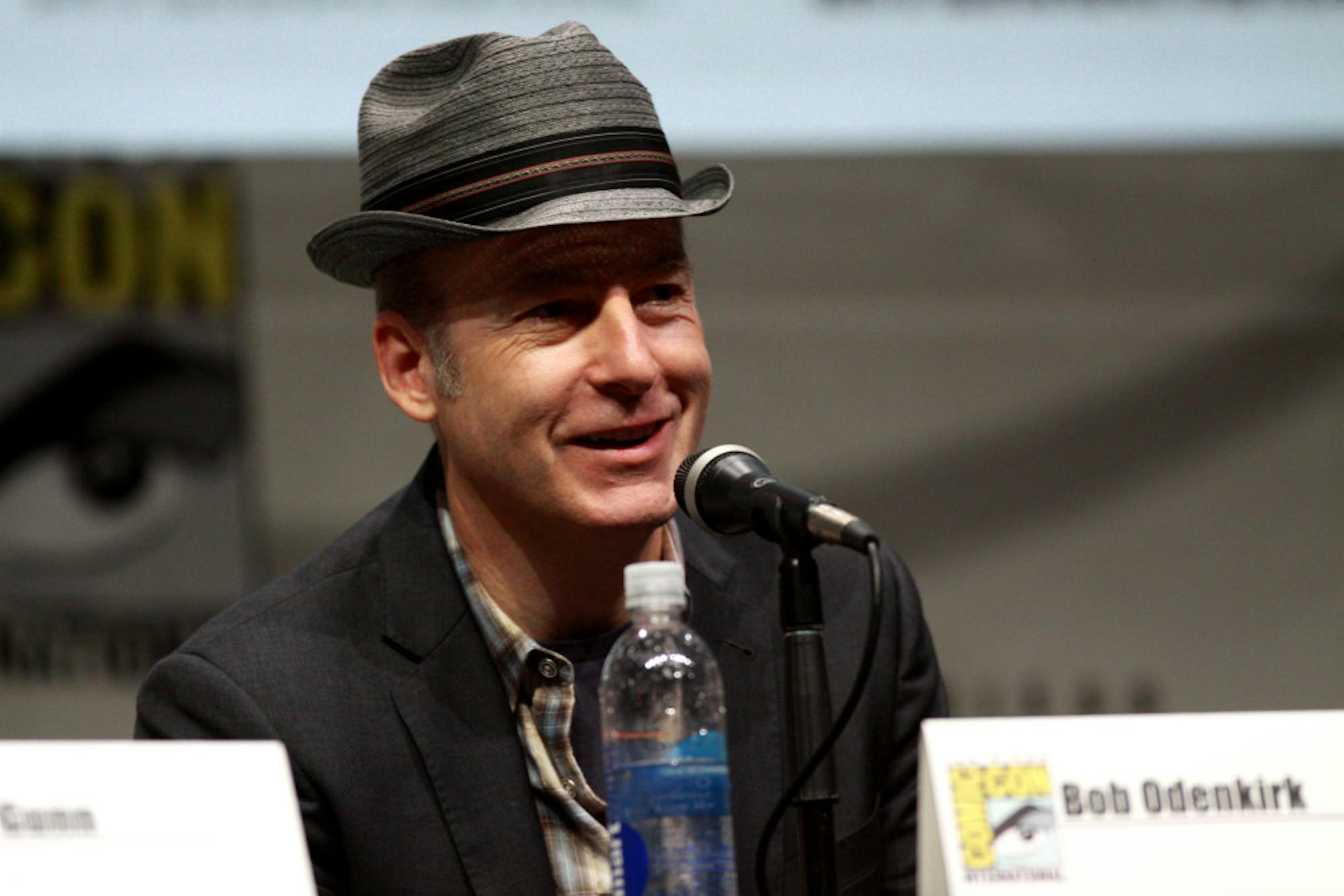
Bob Odenkirk shines as criminal lawyer Jimmy McGill in "Better Call Saul."
Summary
If “Better Call Saul” can maintain this high quality for a few more seasons, while resisting the temptation of the spiral into darkness which brought “Breaking Bad” to a low point, it may even come to eclipse its predecessor.
4.5 Stars



