
Depop was once imagined as the future of sustainable fashion. When it was founded in 2011, the resale platform offered itself as an antidote to fast fashion: a community marketplace where clothes that were already in circulation could be given a second life. Its design looked more like Instagram than eBay, and that was the point. Shopping on Depop felt less like scrolling through dusty thrift store racks in a Goodwill or Savers and more like browsing someone’s curated Pinterest board. For a generation raised primarily on social media, it offered a way to shop that felt authentic, personal and, most importantly, socially conscious.
The model had obvious appeal. Rather than turning to notable fast fashion brands like Shein or Zara for a new outfit, young people could discover distinctive pieces, purchase directly from other individuals and extend the lifespan of garments that might otherwise be discarded. Sellers — often teenagers or college students — were able to turn closet cleanouts into income, sometimes even building recognizable brands with loyal followings. Buyers, in turn, could feel that they were participating in something different. Shopping secondhand on Depop seemed to offer a way to engage with fashion without fully giving in to the clutches of fast fashion.
As Depop expanded, though, the neatness of its early vision began to fray. By 2025, the app counted tens of millions of users and no longer resembled the small, somewhat-eccentric resale community it had once been. What started out as a platform for vintage enthusiasts had grown into a significant player in online retail, and in that shift, it became increasingly difficult to separate the app from the very forces it was meant to resist. Depop’s mission statement declares the desire for the platform to “be the most exciting place for anyone to engage with fashion and trends in a more circular way.” Unfortunately, in practice, it showed how hard it is to step outside the cycles of trend and the desire that drives the industry as a whole.
The pandemic only deepened this transformation. With stores closed and people spending more time online shopping, Depop emerged as an obvious substitute, and in the process became closely intertwined with TikTok. Trends and aesthetics on social media could emerge and vanish in a matter of days, and each one sent waves through the resale market. A series of ‘cottagecore’ dresses or Y2K-inspired tops could spike almost overnight. The experience of shopping on Depop, which was once defined by the randomness of stumbling across something unexpected, shifted toward a more curated and calculated feel.
As you might imagine, this evolution produced a paradox. Buying secondhand, even when the items are mass-market, does extend the lifespan of clothing and, in principle, diverts it from landfills. Yet, the growing presence of fast fashion on Depop has complicated that narrative. Pieces from the 2000s and early 2010s from Forever 21 and Abercrombie began showing up for resale, often priced five times their original cost. A platform that was built on challenging disposable fashion sometimes ends up reinforcing it, only with a different kind of markup attached.
The dynamics of the marketplace played a role in this shift. Depop rewards sellers who can move quickly, respond to trends and present their shops as cohesive aesthetics. The more consistent and on-trend a storefront looks, the more likely it is to gain followers and attract sales. This kind of structure does not align with what Depop was originally built for –– selling off old clothes in the back of your wardrobe. In fact, it only promotes aggressive sourcing and encourages people to stockpile inventory for resale.
Clothes that might once have remained affordable in local thrift stores are instead pulled into an online market, marked-up and offered to buyers far-removed from the communities where they originated.
Some sellers pushed this boundary further, skipping the thrift store entirely. Dropshipping — where a seller lists products from wholesale sites like AliExpress or Shein and ships them directly to the buyer without ever handling the merchandise — became a persistent issue. Even after Depop officially banned the practice in March 2020, it remained widespread enough to blur the distinction between resale and retail. For buyers, it could be hard to tell whether they were purchasing a secondhand garment or a bulk-produced item marketed as rare. The persistence of dropshipping underscored how thin the line can be between sustainable reselling and just pure greed.
At the same time, the way value is constructed on Depop has shifted. In traditional secondhand shopping, the thrill often came from finding something unusual or distinctive. On Depop, however, rarity is largely defined by virality. For example, a pair of leopard-print sequined Forever 21 hotpants, originally priced under $20, sold on Depop for nearly $300 after a TikTok trend spotlighted a similar Charlotte Russe version worn by a Coachella backup dancer. On Depop, the perceived rarity of an item often comes from its popularity in a viral trend, rather than its inherent quality or craftsmanship.
All of this being said, can we say that Depop has failed to do what it intended? It is hard to make such a bold claim. The app has undeniably reshaped the cultural meaning of secondhand clothing. Vintage and resale no longer carry the stigma of being associated strictly with necessity; instead, they have become aspirational, fashionable and mainstream. Many young sellers have used the platform as an entry point into entrepreneurship, experimenting with branding and community-building in ways that resemble small business ownership. For buyers, the app has made sustainability visible, reframing secondhand shopping as not only acceptable but fun and desirable. Along the questionable listings and inflated prices, there are also genuine archival finds, handmade sweaters and earrings, and well-worn but beloved pieces that find new life rather than ending up in the trash.
What Depop ultimately reveals, though, are the contradictions that are inherently embedded in consumer culture more broadly. The platform was built exactly at the intersection between sustainability and desire. On Depop, deciding what to buy or sell is influenced as much by fleeting trends as by ethical considerations. The platform isn’t a simple solution to overconsumption, nor is it entirely to blame; it simply exposes how complicated it is to navigate style and conscience in a world that demands both.
Sustainability, as Depop makes clear, cannot be reduced to a platform or a business model. Buying secondhand is not inherently sustainable if it falls victim to the trend cycle and removes affordable clothing from local circulation. At the same time, reselling fast fashion is not automatically exploitative if it extends the life of garments and delays their disposal. Perhaps it more so depends on how sellers approach their practices and how buyers think about their choices.
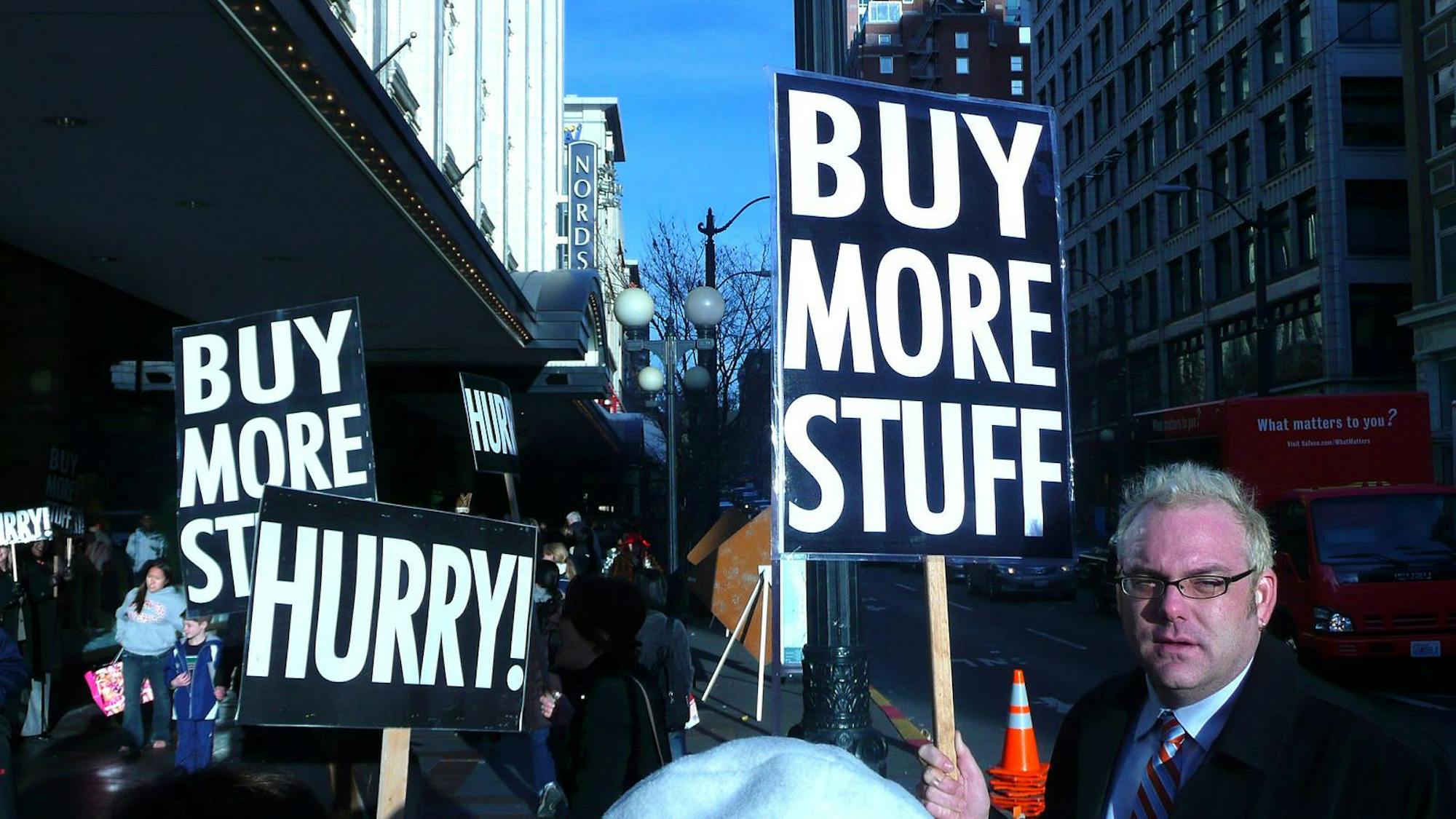
Depop started as a promise of an alternative to fast fashion, but it has revealed just how inescapable the system really is. Reselling clothes can extend their life, but it can’t dismantle the larger forces of overproduction, trend cycles and the plain desire to own more. In many ways, the app has simply spotlighted these contradictions; it has become a place where fast fashion is simultaneously resisted and encouraged, where secondhand can feel both sustainable and exploitative and where an item’s worth is shaped more by virality than by quality.
To shop on Depop today is to shop within a tension of wanting to consume responsibly while still being caught in the desire to consume at all.



