
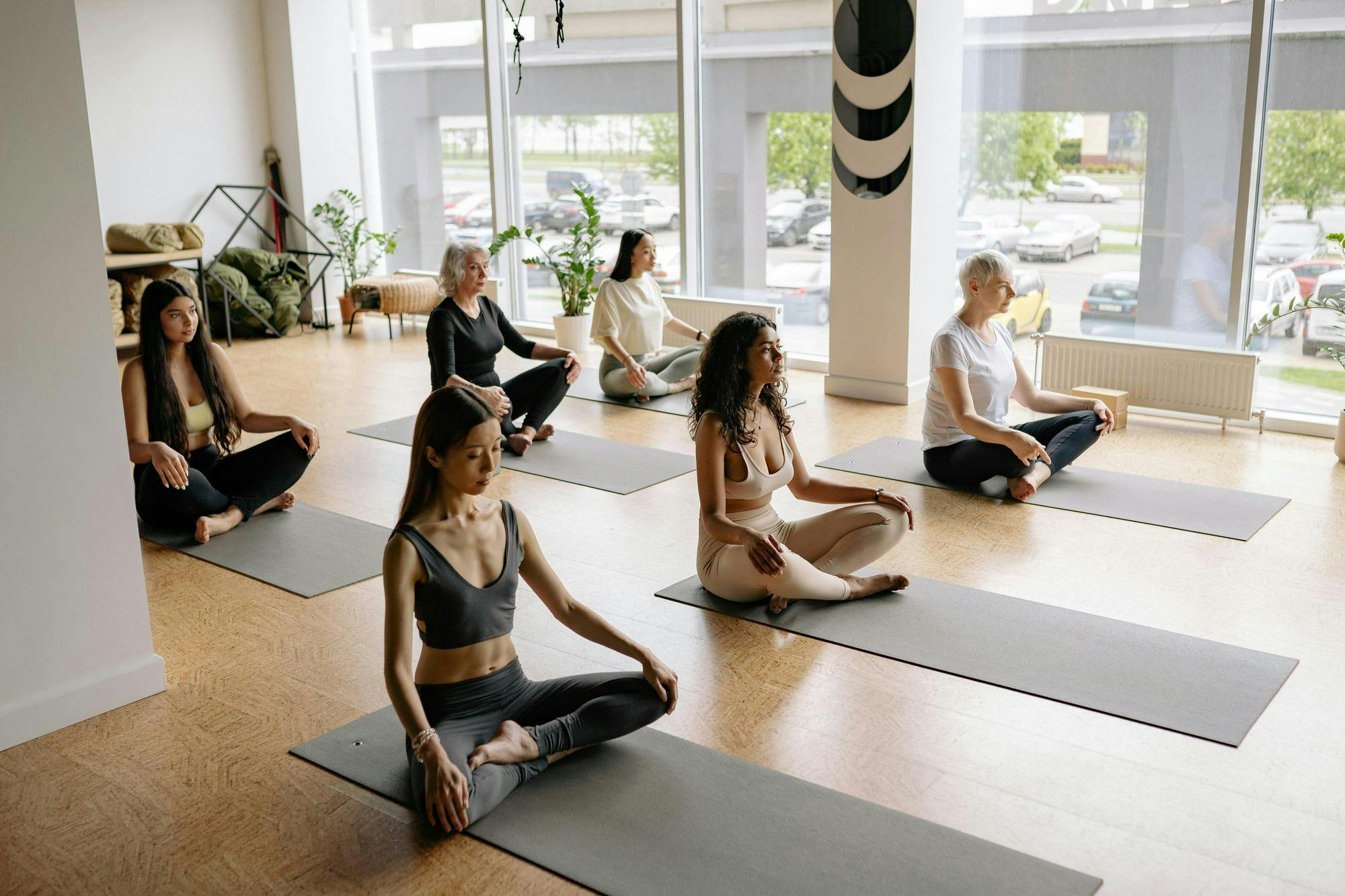
Today, yoga is a billion-dollar industry in the Western world, but its roots and journey to Boston are deeply complex, shaped by many influential figures from India who helped introduce yoga to the West.
One major event in the history of yoga happened around 2,500 years ago, when the sage Patanjali created the first systematic approach to yoga. The “Yoga Sutras of Patanjali” is the earliest classical yoga text and remains one of the most translated works from ancient India. Patanjali is famous for developing a more accessible form of yoga referred to as Ashtanga yoga, also called eight-limb yoga. One of the eight limbs is asana (yoga postures), a core component of modern yoga. However, yoga began to gain popularity in the West in the 19th century, largely thanks to Indian revivalists such as Swami Vivekananda.
Vivekananda first introduced yoga to the West in the summer of 1893. Professor John Henry Wright of Harvard University, impressed by Vivekananda’s knowledge and charisma, arranged for him to attend and speak at the Chicago World’s Fair, representing Hinduism. Vivekananda addressed the World’s Parliament of Religions, receiving a standing ovation. The New York Herald described Vivekananda as “undoubtedly the greatest figure in the Parliament.”
Two years later, in the summer of 1895, Vivekananda visited Thousand Island Park, situated on the St. Lawrence River in New York. Thousand Island Park was a community dedicated to religious, social and family values. He was invited by Miss Mary Elizabeth Dutcher, an artist and cottage owner who had attended his spiritual classes in New York City. There, he led the first known yoga retreat in the United States, teaching a group of 12 students in Dutcher’s Victorian cottage over the course of seven weeks. Today, the cottage is still regarded as a sacred site by many followers of his teachings. Each summer, hundreds of students gather to study the ways of Vivekananda, whose room now serves as a small chapel.
While Vivekananda played a pivotal role in introducing yoga to the West, Tirumalai Krishnamacharya is often considered the father of modern yoga. Although he never traveled to the West himself, his disciples — K. Pattabhi Jois, Indra Devi and B.K.S. Iyengar — spread his practice throughout Europe, Asia and the Americas. A key contribution of Krishnamacharya was Ashtanga (vinyasa) yoga; known for its energetic, flowing sequences, this dynamic style of yoga remains highly popular today.
Boston also played a crucial role in yoga’s journey to the United States. In October 1920, Paramahansa Yogananda, a monk, yogi and guru, represented India at the International Congress of Religious Liberals at Unity House in Boston, where he shared his knowledge of yoga. Yogananda is recognized in the Boston community for founding the Boston Center of Self-Realization Fellowship, now located in Somerville, as a quiet sanctuary for group meditation and spiritual study. His autobiography, “Autobiography of a Yogi,” also sold several million copies and remains highly influential; even former Apple CEO Steve Jobs, a fan of the book, arranged for copies to be given to guests at his memorial service.
Today, Boston is home to a vibrant yoga scene, with numerous studios throughout the city, including Down Under School of Yoga, Boston Yoga Union, Beacon Hill Yoga and more. This reflects how yoga remains highly relevant in our modern world. By practicing asanas, we can regulate our emotions and thoughts, fostering harmony between the mind and body. Especially for college students juggling academics, clubs, work and social activities, yoga is proven to be excellent for regulating the nervous system and supporting both mental and physical well-being.
From Vivekananda’s speech in Chicago to Yogananda’s spiritual influence in Boston, the history of yoga serves as a beautiful testament to the transformative power of cultural exchange. Rooted in ancient Indian spirituality and continuously adapting to meet the needs of modern life, yoga is truly a moving art form.
If you’re interested in exploring Boston’s yoga scene further, keep an eye out for upcoming articles on the city’s top yoga spots.



