I stood outside a hangar at the Anchorage airport, facing the morning sun, one week after finishing my first year at Tufts. If I had turned around and flown home at that moment, no one would have faulted me — and my heart might have stopped trying to leap out of my throat. The last thing on my mind was school. Gone was the friendliness of my dorm, but gone too was the pressure and low self-esteem that had dragged and dragged on me all year. I blinked hard, walked inside and thus began my journey through seasonal work.
Seasonal jobs are temporary positions that draw new employees every term, such as lifeguards and camp counselors. Places in the far North even provide food and housing at no (or low) cost, attracting travelers from across the country. Over the past few years, I’ve worked in three very different seasonal industries — hospitality, firefighting and fishing — which I hope to explain to you.
My first summer, I worked as a dishwasher at Brooks Lodge, a bear-viewing destination in Katmai National Park, Alaska. Dishwashing involved running plates, silverware, pots and pans through the dish machine; scrubbing; sweeping; mopping; taking trash out; cutting meat and veggies; and moving freight. After a long day, I could go swimming or fishing alone, or watch a movie, play darts and party with coworkers. We were of every age and background, yet we all experienced the same loosely organized but tightly impactful frenzy. One especially busy July night, my boss pulled me from the kitchen and told me to put waders on. We boarded a skiff and drove for hours up the Brooks Lake headwaters, where I silently watched him fish for grayling with a mouse pattern. The land, parts of which had surely never been walked by a human, swallowed my imagination whole. My least favorite part of the job was the brainlessness of it, along with the stress of working alongside temperamental or old-fashioned coworkers. I entered Brooks Lodge and didn’t say a word for two days, and I left it a far more confident person. Back at Tufts, it took months before I made it through a day without missing that place. I did not miss dishwashing at all, though — and when the dish machine at Fresh at Carmichael Dining Center broke, I felt terrible.
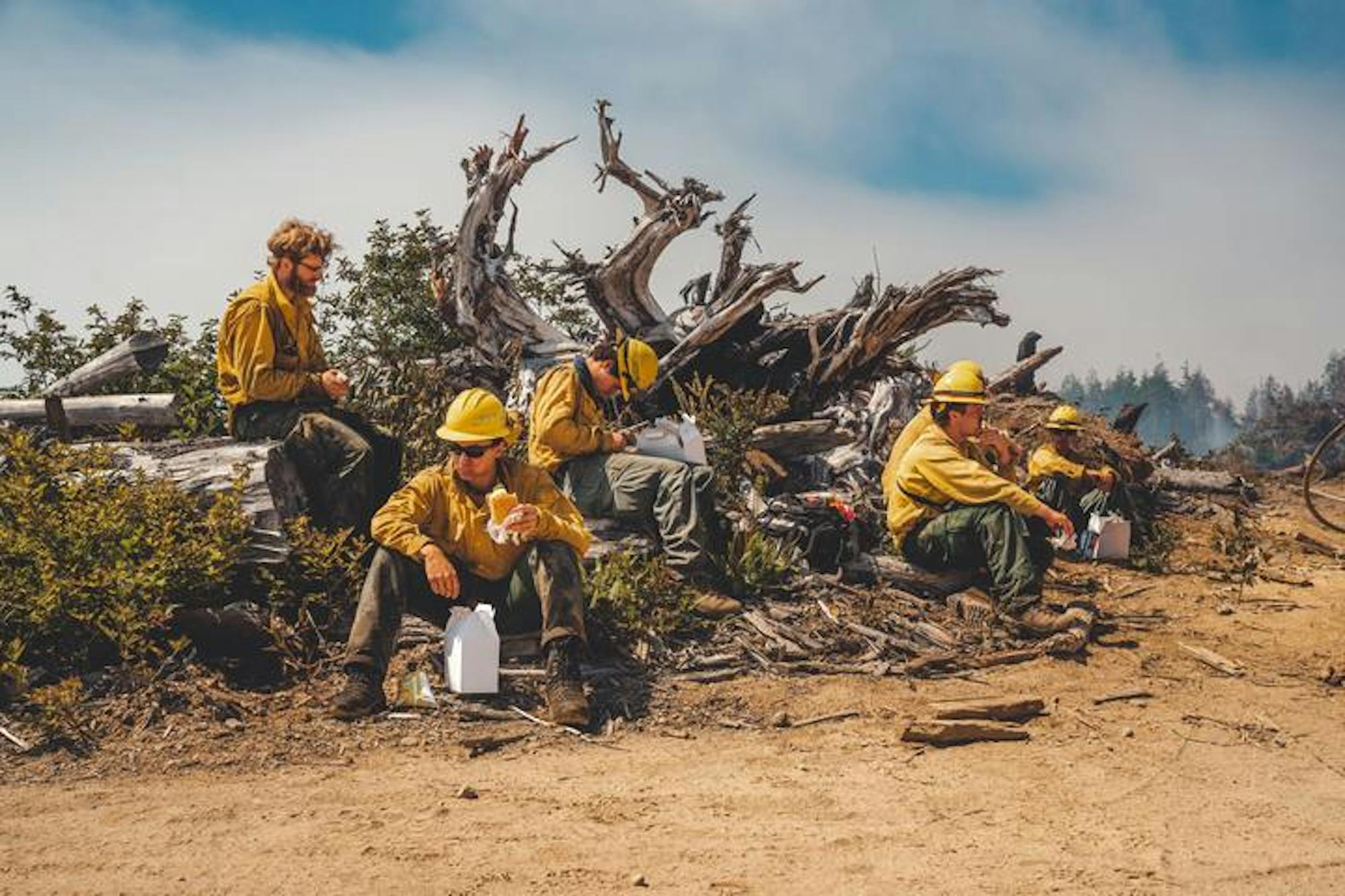
The next summer, I was a wildland firefighter with the Washington State Department of Natural Resources. I was lucky to be hired without experience. Upon arriving, we took a fitness test, then went through a 10-day training academy. Wildland firefighting in a DNR engine crew involved patrolling the district, cleaning the vehicle, running drills and clearing trails. When a fire was reported, we were dispatched. Illegal campfires took only a few hours to clear, while larger, 100-acre fires required coordination between engines, hand crews, bulldozers, tenders and helicopters. During ‘Initial Attack,’ we sprayed water at the flames, dug material out and cut line through foliage to contain the spread. Ninety percent of firefighting, however, was ‘Mop Up,’ when the crew spread out, digging up and down, back and forth for days on end chasing the last hotspots. This part bored me to death, but it taught me fun riddles, ‘would you rather’ questions and other games to play. It was a sober summer, and my crew and I ran, rock climbed on cliffs by the river and worked out at the gym together. The guys we met on fires were hilarious — we still keep in touch. Firefighting is a career with lots of promotions available, and all the newbies I worked with made plans to progress. I loved it, but I knew it was just a fling, so I left with my awesome new boots to keep searching for a career of my own.
I love the sea, so the next summer I took an internship in marine systems near Boston. The technology was cutting-edge, but the stale atmosphere and lack of responsibility made me miss the intensity of seasonal work. The following summer, I decided to work on a ship. I headed back to Alaska to work as a deckhand on a salmon tender in Bristol Bay.
For me, this job was by far the hardest of the three. Red flags appeared immediately when I met the crew, which included three greenhorns like me and one returner who already dreaded being back. At first, I helped repair small components like fuel filters, pipes and bilge pumps, but quickly, my main duty devolved into cleaning. The captain quickly realized that my degree in mechanical engineering taught me nothing about mechanics or engines. After a rocky five-day sea journey from Seward to Bristol Bay, we began tendering — buying salmon from gillnetter boats and selling the fish to the processor. We also sold fuel, water and groceries from the processor to the fishermen. I dumped nets, hosed down the deck, tied up incoming boats and scrubbed fish holds clean. If you didn’t understand instructions the first time, or tried to do something your own way, you got chewed out. I got chewed out a lot. Even though we slept enough, the unpredictability of waking up in the middle of the night to take fish deliveries left me foggy. The captain was uncommunicative and disorganized, fixing the generator and cranes with secondhand parts only for them to immediately break again. When fish deliveries slowed, I chipped rust off the walls with gratingly loud needle guns and planers, inhaling the plastic and metal dust. We went swimming a few times — a breath of fresh air from the stress. In true Soeren fashion, I negotiated to leave my contract early by beating the captain in a game of cribbage. But after a particularly bad day cleaning oil from the bilge while the engine was running, I walked off the ship even earlier. Stranded in Dillingham with nowhere to stay, I bought a tent and tried to sleep behind the local Wells Fargo. At my lowest, a miracle happened: When I left my tent to go on a walk, a fisherman I recognized called my name from his truck. This kid invited me to stay at his house, and for two days we cooked, watched TV, hiked, ran errands and partied. Alaskan summers never fail!
I swore I’d never accept a job off Facebook again, and this article was originally going to be an obituary to seasonal work. “Seasonal work was fun and changed my life, but now I’m ready for the real world.” It’s not true, though. The same feeling that captured me at Brooks Lodge will call me back, and I may work again as a fisherman for a set-net captain I met and really liked. Seasonal work is a real education. It trains the interpersonal skills of a psychologist, the decisiveness of an entrepreneur and the work ethic of an athlete. The money is phenomenal. Listening to your coworkers’ stories will open your eyes, to say the least. Artificial intelligence might transform your field before you even graduate, and who knows where federal funding for humanities and sciences will go. Please give seasonal work a try.
For more details like how to apply to these seasonal jobs and figures on how much I worked and earned, please contact me at soereneuvrard@gmail.com.