
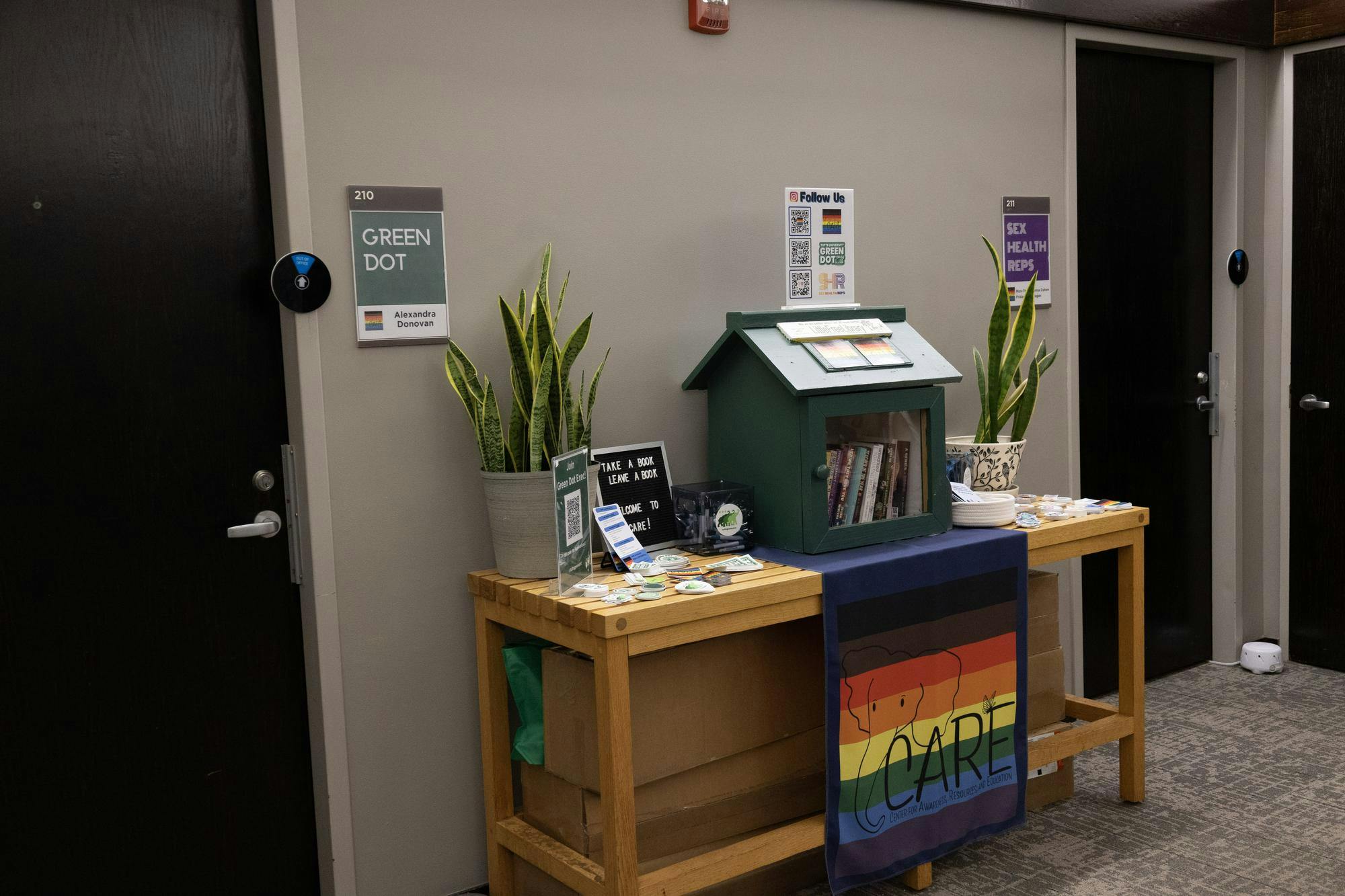
This year, Tufts’ Center for Awareness, Resources and Education is rolling out the CARE Community Integrity Program, an educational initiative geared toward helping students who have caused, or are concerned about causing, harm to another member or group in their community. CCIP is a revised version of the national Science-based Treatment, Accountability and Risk Reduction for Sexual Assault program, which was created for people found in violation of sexual misconduct law, opting for a more personalized approach.
CARE Director Alexandra Donovan was trained for the program last year and currently has 10 students going through it.
“[CCIP] is coming out of this real need that people have [who think]: ‘I’m getting either a vibe that people are thinking I’m weird, or I don’t know how to go to a social [event] or to a party. I don't know what I would do. It’s freaking me out,’” Donovan said. “So it’s not that they are about to commit sexual misconduct, but they’re getting feelings like, ‘I don’t know how to do this.’”
The program is designed for both students who have gone through the Tufts Office of Equal Opportunity programming and are found in violation, as well as self-selecting students who want the educational help of CCIP. These students are being referred to the program either by themselves, peers or possibly a leader in a student organization they are a part of.
“What we’re seeing is that people [who] don’t want to report to OEO but want some education for the person that did what they did, we’re finding that middle ground of here’s something that we can offer,” Donovan said.
Although the CCIP curriculum is based off of a national program, it has been altered significantly to provide a more specialized education that aligns with Tufts’ values.
CARE’s ongoing updates aim to reflect its mission of supporting the Tufts community. This year, CARE worked to lower the cost of the sexual health vending machines items, providing a more affordable option for products such as Plan B, which is now $9, compared to CVS where it is sold for around $50.
“The vending machine, we want that to be the lowest cost it can possibly be,” Donovan said.
Their efforts have seen significant results — with Health Services reporting around a 90% reduction in students seeking Plan B according to Donavan. She said most opt for the accessibility of the vending machines instead.
For senior Kelly Jimenez, a co-lead coordinator of the Sex Health Reps program, this change is about more than convenience.
“I’m really happy that we found a way to be able to bring the prices down,” Jimenez said. “I really hope that it’ll just make it more accessible to more people and help more people get the supplies they need to make sure that they can be safe and have fun.”
CARE has also expanded their outreach initiatives this year. The long-running “Sexy Sips” podcast, created to answer questions about relationships, consent and sexual health, is being expanded to YouTube in order to reach a broader audience.
“We’re all super excited about the move to video,” Jimenez said. “Podcasts [can] do better on YouTube … and I think it would help to give a face to SHR even further than, like, the ‘Hump Days’ and the social media posts that we already do.”
Beyond the recent changes to improve accessibility for students, the center is also developing a new consent training, reshaping its approach to consent education based on the feedback from the SHR.
“The consent training is a new training for the Sex Health Reps,” Donovan explained. “They spent a whole semester thinking it through, focus grouping it and trying to find out what works and what resonates.”
Dom Balise, a senior and social media coordinator for SHR who was part of the review process, believes the new training could make a lasting impact.
“I think it’s really smart,” Balise said. “As much as we try to educate people through our events and social media and podcasts, trainings could definitely be even more impactful.”
For SHR member and sophomore Abheri Basak, the project reflects the larger mission of CARE and her own personal motivation for being part of SHR.
“My biggest thing when I joined Sex Health Reps was, I wanted to raise awareness about consent,” Basak said. “People know that consent is really important, but still it gets lost when you’re actually in those situations. So I feel like having more formal training for students might be more helpful.”
Together, the new initiatives reflect CARE’s commitment to abiding by its student-centered mission. Donovan emphasized that CARE is always adapting to meet students’ needs, staying true to the student call from which it was founded in 2014, in response to the advocacy for improved sex education and resources that would be able to support the students.
“We are here to serve students,” Donovan said. “And if we’re not serving students, that’s so very important for us to know.”



