Exhale, yinz — the 2025 Major League Baseball season is finally over for us. The Pittsburgh Pirates finished 71–91, five games worse than their 2024 campaign, which fans a year ago were calling ‘rock-bottom.’
This year marked a bleak milestone for the Buccos: a decade since their last postseason appearance. During this drought in Pittsburgh, every other division rival in the National League Central has made at least two trips to October. The Pirates have not reached an NL Championship Series since 1992 — the longest active streak in Major League Baseball — when Barry Bonds hit cleanup for the Pirates.
I have not seen the Pirates contend since I was 10 years old. And as a (regrettably) keen observer of the last decade of Pirates history, I can say with confidence that, absent major changes, the team should expect nothing less than to continue watching October baseball from their living room couches — or, more realistically, Cancún cabanas. Unfortunately for fans, evidence and precedent alike suggest that such changes are not on the horizon.
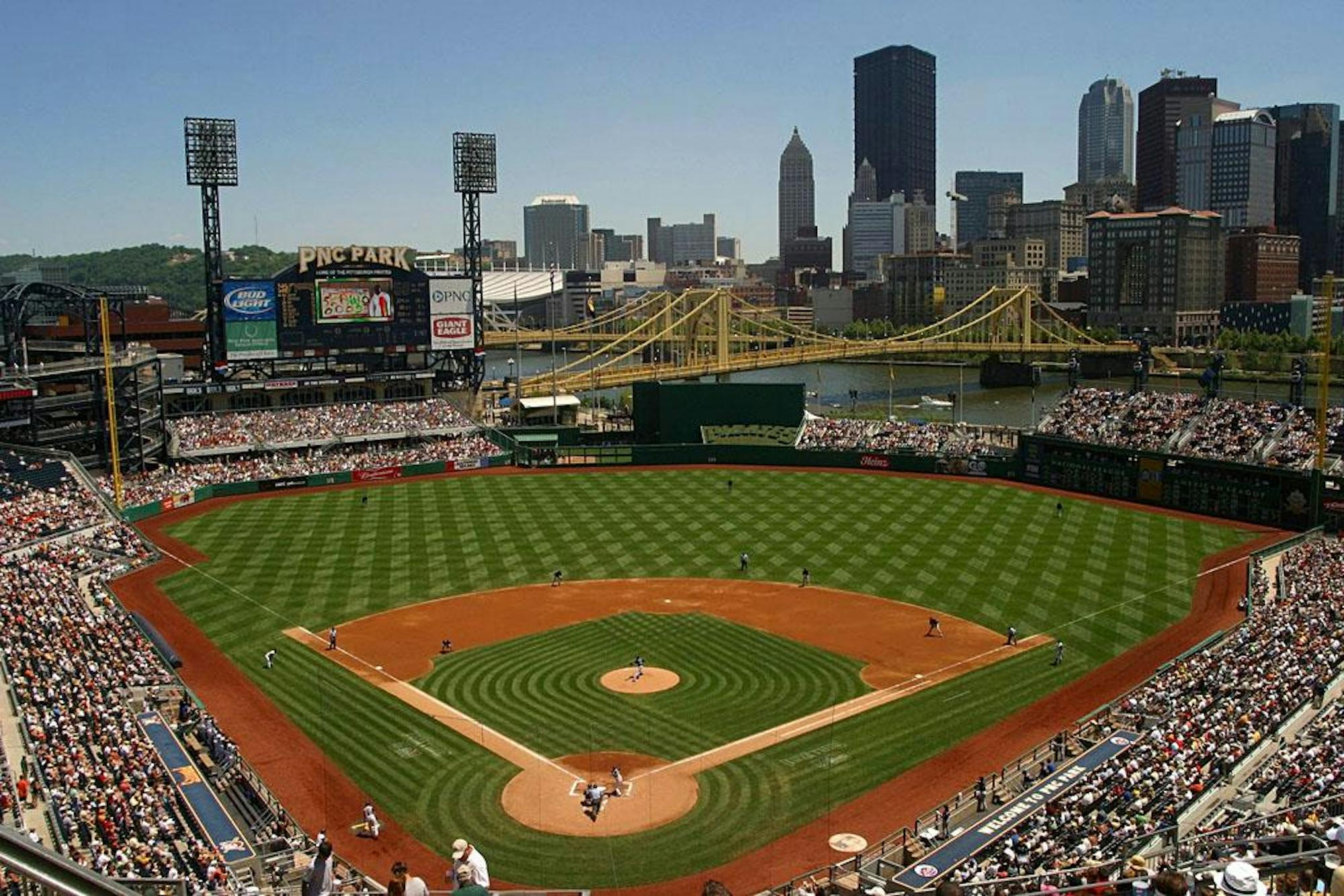
Chief among the problems plaguing Pittsburgh is ownership. Pirates owner Bob Nutting is widely recognized as one of the worst in professional sports. “Do Nutting, spend Nutting, know Nutting” has become a catchphrase you’ll almost assuredly hear from drunken yinzers shuffling toward the exits at PNC Park. Crude, yes, but equally astute.
In a recent press release, Nutting said of the 2025 season, “It has been unacceptable. Our focus must shift to execution, to delivering wins.” ‘Shift’ to winning? What has the focus been, Bob? A Freudian slip, perhaps.
A shift toward being a genuinely winning-concerned franchise could look like, for one, expanding the payroll. Another clear sign of such a shift would be making changes to a front office that has repeatedly proven its ineptitude at acquiring offensive talent. But naturally, in keeping with his affinity for vacuous promises, Nutting has done neither. Instead, immediately following the 2025 season, it was announced that Pirates general manager Ben Cherington will keep his position in 2026.
Cherington, once beloved in Beantown for his work as Red Sox general manager during their 2013 World Series Championship, has fallen from grace in the Steel City. In his nearly six-year tenure, he has failed to construct a roster capable of winning more than 76 games in a season.
There have, however, been bright spots — namely in drafting pitching talent. Paul Skenes, a predicted 2025 National League Cy Young award winner, was a layup at No. 1 overall in the 2023 draft, which Cherington, credit where it’s due, made. He also drafted Jared Jones, Bubba Chandler, Thomas Harrington and Hunter Barco — all young pitchers who seem to have promising big-league careers ahead. Konnor Griffin, the Pirates’ first-round pick in 2024, currently stands as the No. 1 prospect in all of MLB. So there is definitely some good happening.
The rest is overwhelmingly bad. Henry Davis was a bust, the trade deadline feels mismanaged year after year, and we’ve dealt away players — many who have gone on to find success elsewhere — for underwhelming returns. Case in point: Quinn Priester vs. Jameson Taillon was the starting pitching matchup in Wednesday’s Game 3 of the NL Division Series between the Chicago Cubs and Milwaukee Brewers — both former Pirates pitchers traded away by Cherington.
The glaring issue is the offense — or more pointedly, the lack of it. In 2025, eight years into this so-called rebuild, the Pirates’ offense posted a dismal team Weighted Runs Created Plus of 82, second worst in baseball — worse than the 60–102 Chicago White Sox. For context, a wRC+ of 100 is considered exactly league average. Only two players on the Pirates’ 2025 roster, Spencer Horowitz and Joey Bart, managed to eclipse this mark and earn the esteemed distinction of being average.
In spite of this, the Pirates may not be too far away in 2026. Their division rival — the similarly small-market and low-payroll Cincinnati Reds — had a team wRC+ of 92 this season (still well below league average), comparable pitching talent to the Pirates and made the playoffs. With the aforementioned young arms in Jones, Chandler, Harrington and Barco — plus Skenes’ generational talent and veterans like Mitch Keller — the Pirates are simply a below-average offense away from making the playoffs in 2026. That’s right I’m not greedily asking for the offense to be good, or even average. As long as it isn’t bottom five in the league, this team, with its pitching, is capable of snapping the decade-long playoff drought next season.
But as a lifelong fan, I know far too well this almost assuredly won’t happen. Why? Because in the twisted economics of professional baseball, profits are indifferent to the quality of the product on the field, enabling owners like Nutting to line their pockets regardless of whether the Pirates win 60 games or 100.
According to Bob Nightengale of USA Today Sports, “The Pittsburgh Pirates … are one of the most profitable teams in all of baseball, stashing a huge chunk of their revenue sharing monies instead of investing in their team year after year.” MLB’s revenue-sharing model, outlined in the Collective Bargaining Agreement, involves teams contributing 48% of their local revenue to a collective pool, which is subsequently redistributed evenly amongst all 30 teams. In theory, the system narrows the gap between small and big-market teams, making the league more equitable and competitive. However, as Nightengale reports, Nutting isn’t putting this money toward payroll — he is stowing it deep in his pockets where wins can’t touch it.
The Pirates generated $326 million of revenue in 2024. Of that, they reinvested $84 million into their 2025 payroll, making their payroll-to-revenue ratio around 26%. By comparison, the New York Mets had a 2024 revenue of $444 million and spent $342 million (not factoring in estimated luxury tax) on their 2025 payroll, making their ratio about 77%. How does this glaring disparity translate to differences in on-field talent? Well, the Pirates’ most expensive free-agent signing in team history was Francisco Liriano in 2014 for three years and $39 million. Juan Soto signed with the Mets last year for 15 years and $765 million. The system is broken. The Los Angeles Dodgers will pay an estimated $168 million in luxury tax alone in 2025 — double what the Pirates spend on their entire roster.
Small-market teams like the Pirates are not victims in the way conventional dialogue about “competitive balance” makes them out to be. Pirates fans are victims, most definitely, but owners like Bob Nutting are the beneficiaries of a system with perverse incentives that rewards mediocrity. Major League Baseball must do something to change this. Whether it is mandating a floor on the percent of revenue invested in payroll or something as radical as forcing ownership groups to sell if their team doesn’t meet a certain competitive standard for long enough. As a Pirates fan, I am pro all of these reforms and any similar ones.
Until such reform, like Sisyphus condemned to helplessly toil ad infinitum, to be a Pirates fan in the Bob Nutting era is to suffer sans reprieve. There are just barely enough bright spots that it doesn’t feel completely irrational to believe, but far too few for that belief to ever materialize. Glimmers of hope, blissful naivete to the trappings of the cycle and memories of brighter days constitute an (increasingly fleeting) Opening Day optimism — always dead and buried come September. It is an evil machine. Nonetheless, we hope and we invest emotional energy … and that’s sports! The day Paul Skenes signs with the New York Yankees, I will cry.