Traditional Chinese instruments paired with original electronic melodies, more than six cellos covering Coldplay’s “Viva la Vida” (2008) and Lorde’s “Green Light” (2017) are just a few highlights from the Boston Symphony Orchestra’s Sept. 18 event: “Music’s Next Generation — A College Showcase.”
This is the first year the Boston Symphony Orchestra has held this college showcase. In a statement to the Daily, the orchestra’s vice president of artistic planning, Anthony Fogg, noted that the event aimed to open the doors of the Symphony Hall to all, free of charge.
“As an organization with a long history of supporting emerging artists and a deep commitment to education and community engagement, we saw an opportunity to showcase some of the many talented young performers at all levels studying in Boston’s plethora of colleges and conservatories,” Fogg wrote.
While the performance solely highlighted collegiate music groups in the Boston area, the audience was reflective of all ages. Isaac Lee of Medford and Anna Gurvich, a Somerville native, did not have specific connections to any one college group, but the two attended anyway.
“My mom’s visiting, so I wanted to bring her here and then look at the symphony hall and listen to some great music,” Lee said.
Gurvich, down for the adventure, added that she loves music and “supporting local musicians.”
Lee was appreciative of the far-reaching range of music that the students showcased.
“I was actually telling them in the middle of it feels like we’re on a world tour of all kinds of music, from India to China — I loved all of it,” he said. “It’s very interesting to see how they actually go from tradition to pop to fusion [it’s] very innovative [and] something that I wasn’t exactly used to, but loved it.”
Gurvich praised the dedication of all of the student groups from the evening.
“I want to commend all of these universities and these students that dedicate time in addition to their actual school obligations to being part of these groups to do something new, something different, and go out into the community and share their creative inspiration and talent with everyone,” she said.
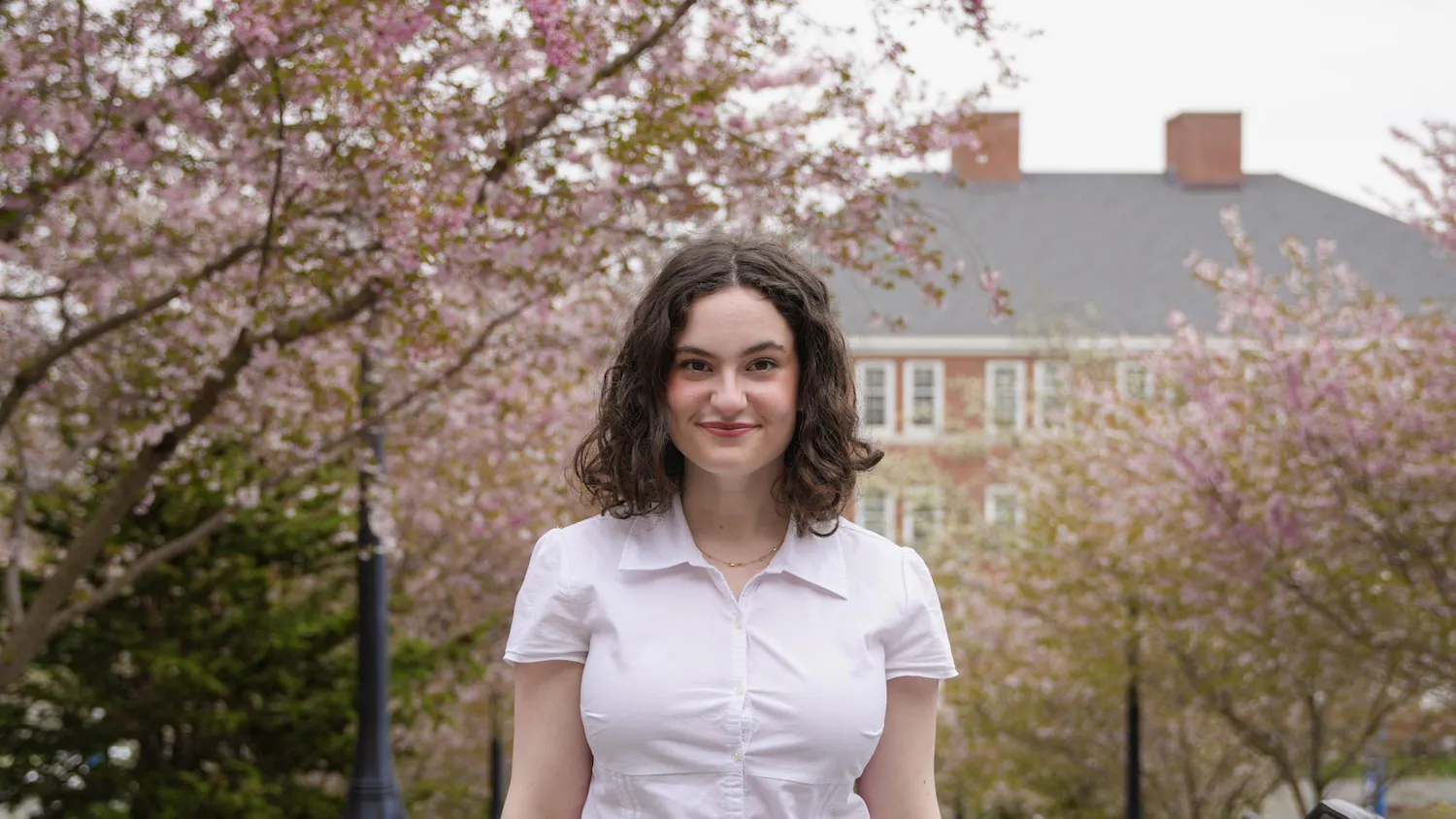
According to Nora Murphy, a sophomore in the Jackson Jills, the group was very excited to receive an offer to perform at Symphony Hall and accepted the chance quickly.
“We hadn’t gotten this opportunity before, and it’s very prestigious,” she said. “Being at the BSO, it’s a great venue. So it’s just awesome.”
Murphy, who joined the Jills in the fall of her first year, immediately felt welcomed by the friendly group and settled into their “cozy” rehearsal room. For Murphy, the Jills provide a very special and supportive community.
“I think it’s so important — and I didn’t realize the importance of it until I had it — having a female space, just like an all-female space, is really, really nice … and it’s another level of comfort that we don’t get in daily life,” she said.
Fortunately for Murphy, she gets to spend a lot of quality time with the Jills. The a cappella group rehearses seven hours a week and performs both on and off campus on the weekends. For the BSO show, the Jills gathered new and old songs from their repertoire.
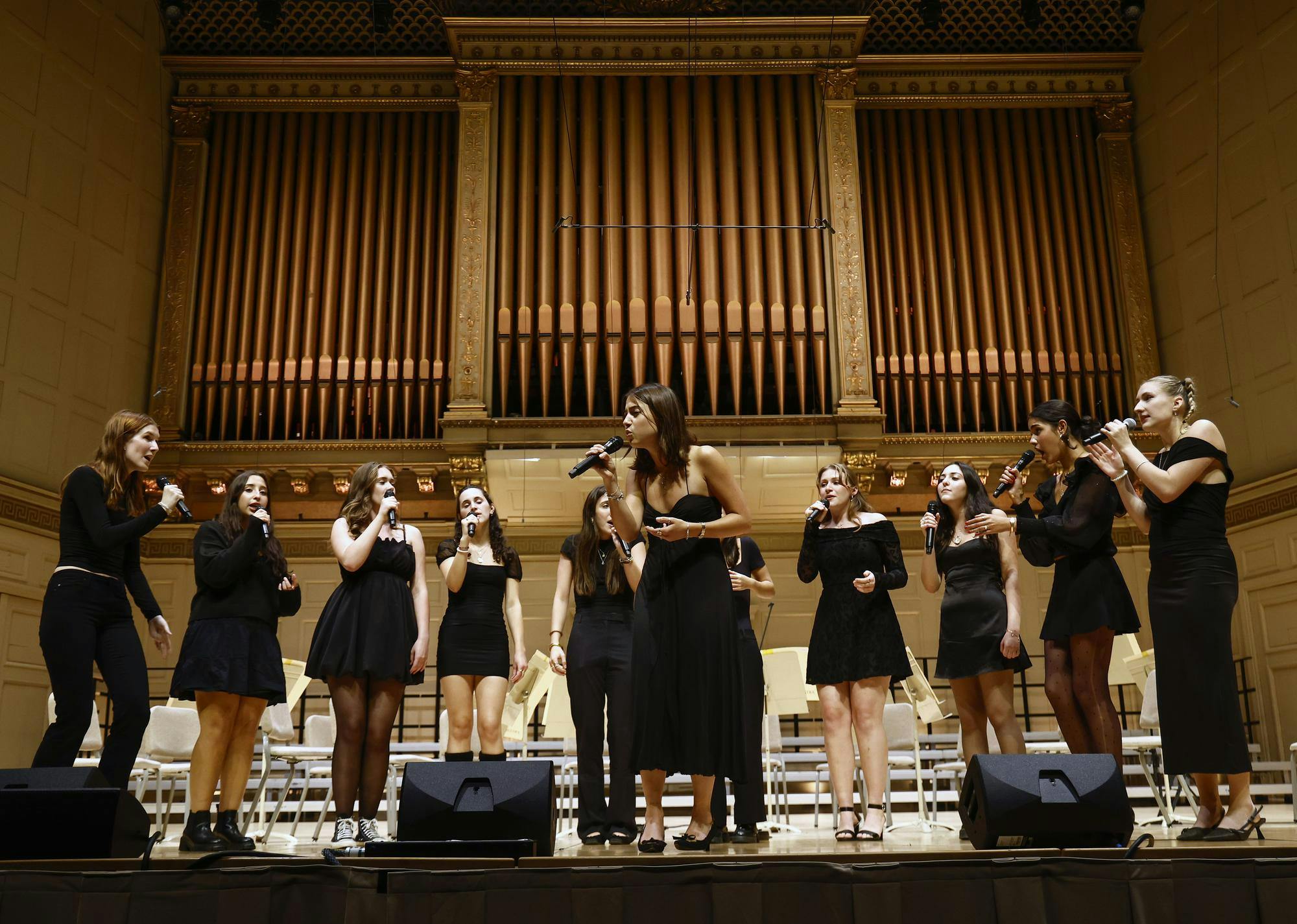
Their performance incorporated many harmonies throughout many of their songs — harmonies that do not exist in the original versions of these works. Their arrangements of Lorde’s “Green Light” (2017), Britney Spears’ “...Baby One More Time” (1999), Guns N’ Roses’ “Sweet Child O’ Mine” (1987) and Coldplay’s “The Scientist” (2002) featured countless layers that combined themselves into a full-bodied sound.
“We make our own arrangements, so we have a music director. And then, honestly, anyone who wants to be involved in arranging music can be,” Murphy explained. “As we’re rehearsing, we kind of go over dynamic stuff and [say], ‘Oh, we should add this,’ or, ‘We should do this.’”
Murphy does not lead the arrangement process, but she said that her friends who do make arrangements love to add their own personal element to a song.
“People can get really creative with it,” she said. “They listen to the song a million times, so it’s wired in their brain, and then put it in note by note. … I guess that’s where the creativity really sets in … you have to find a way to mimic the instruments or add your own thing. We [might] have a lot of echoing going on, or we have a lot of cascades happening that aren’t in the song.”
Moments of this creativity shone through during each song. Every little sound, beat, melody or effect was accessible to the audience because each Jill sang into their own microphone. For Murphy, this was a highlight.
“We haven’t, or at least I haven’t, sung at a place that gives us all individual microphones. And so that was kind of special,” she said.
A surprising element of the show was the seating arrangement in the hall — rather than rows of theater chairs, there were small tables and chairs covering the floor. Murphy thought it made the environment “feel more special … [and] more personal.”
On stage, the Jills danced and swayed to the music as they sang. This was part of an intentional effort to stray away from their usual low-key energy, according to Murphy.
“I think this performance especially was super fun because … we’ve been trying to amp up the energy so the crowd feels more excited,” she said. “‘Sweet Child of Mine’ is especially fun. We can get silly there. And I think it was fun to do that in such a beautiful hall.”