
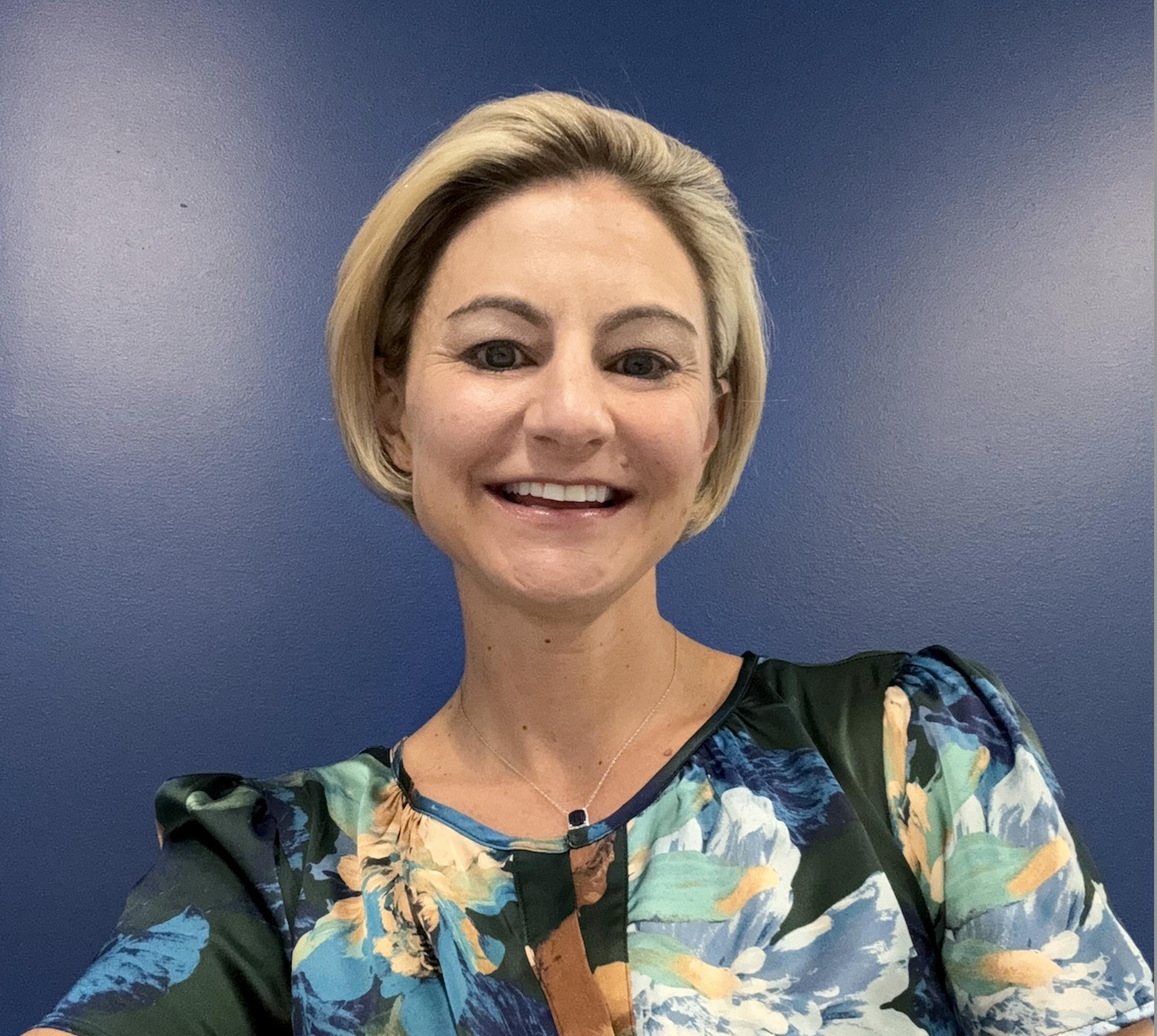
Nothing is more fundamentally human than death — yet it remains one of the most uncomfortable topics to discuss. Trained in medical sociology, Professor Caitlin Slodden strives to ask the tough questions and explore why something so evident in everyday life remains taboo. At Tufts, she teaches the course “Death & Dying” in which students examine death as a social and cultural process.
Sociology is a subject that many undergraduate students are not exposed to prior to beginning their college journeys. Psychology, English and history are often offered in high school, but for most students, their first sociology course takes place in college. Slodden appreciates that most sociology classes do not require any prerequisites, allowing students from all academic backgrounds to engage with the discipline.
“It’s my obligation, my passion, to introduce the discipline and show … how we can look at the social world using our methods [and] our theories,” she said.
Slodden completed her Ph.D. at Brandeis University in 2015 where she studied what it means to live and die young with colorectal cancer, both for patients and their families.
“Brandeis is a small, boutique department, and [it has] a really long, rich history of studying medical sociology, gender and work,” she said. “My three areas of interest [were] absolutely nurtured and fostered at Brandeis.”
Slodden’s time at Brandeis allowed her to question how people face mortality and what that process reveals about society. “Death & Dying” invites students to ask similar questions, encouraging them to approach death analytically.
“A lot of the students on the first day [are] like, ‘What is this? What are we doing? What are we going to study?’ … It’s my job … to show them … where and how sociology has approached the study of death and dying,” she said.
Through the course, students learn to adopt a new mindset that encourages them to think about both how people die and how they live.
“[Sociology offers] a way of looking at the world differently. It’s a way of looking at hospitals, or hospice or the businesses around managing funeral rights,” she said. “If we can do that … in a way that’s focused on … institutions, then it feels less emotive and more analytical.”
While the class zooms out from individual experiences to examine the sociological patterns of how we understand and handle death, Slodden acknowledges that these topics may not be appropriate for everyone.
“I am clear that this is a fabulous class, but it’s not always a fabulous fit, depending [on] what’s going on in someone’s life,” she said. “If you’re mourning, if you're grieving, if you’re managing some tough stuff, it’s probably not the best time to take a class like this.”
That said, the course is grounded in organic discussion, with Slodden prioritizing a classroom environment in which students feel comfortable sharing their ideas. Rather than relying heavily on lectures, she uses reading notes to give students agency in guiding discussions in ways that resonate with them.
“I tell my students right on the first day [that] I’m really rigorous. I expect you to be engaged, I expect you to work hard, but I also use a lot of humor. We have fun, and I don’t think that that should be a dichotomy,” she said. “I don’t do a lot of lectures. I use slides when I need to, but I’d much rather have a pointed, organized, organic discussion.”
In fact, Slodden noted that her approach to teaching “Death & Dying” shifted after the COVID-19 pandemic. In addition to introducing new material, the pandemic influenced the course’s structure, prompting a move toward flexible modules rather than a syllabus outlining all readings at the start of the semester.
“I built in some flexibility based on what … students are responding to,” Slodden said. “I’m able to pivot in ways post-COVID that were harder prior, when we used to literally print out readings in January that we’d be doing in May.”
For Slodden, if there is one thing she hopes her students take away from her class, it is the desire to sign up for another sociology class.
“I can’t expose them to … our entire discipline in one semester,” she said. “I can’t even really do an excellent job of teaching all of the sociology of death and dying in a semester, never mind all of sociology.”
Above all else, Slodden holds a deep passion for teaching and a strong belief in the power of asking questions. She finds it most rewarding when students pose challenging questions that connect the course readings to society at large.
“If nothing else, I want them to start to see the world differently, and that takes time. I want them to learn how to think critically about their place in the world,” she said. “You’re going to have questions, and you should have questions. I want my students to walk away saying, ‘I want more.’”



