
Across the United States, Asian American communities come together to celebrate the Mid-Autumn Festival. This past year, Philadelphia’s Chinatown marked its 30th Mid-Autumn Festival with a full day of festivities, including Cantonese opera performances, mooncake eating contests and a lantern parade.
On Oct. 6, Tufts hosted a Mid-Autumn Festival Reception in Breed Memorial Hall. The Mid-Autumn Festival, with over 3,000 years of history, is celebrated on the 15th day of the 8th lunar month. Traditionally, it is a time for people to come together to worship the moon, pray for longevity and good health, and express gratitude for a bountiful harvest — activities guided by the lunar phases. Today, it remains a time for families to come together and enjoy the full moon.
Tufts University has a long-standing tradition of celebrating the Mid-Autumn Festival, hosting receptions for decades. What began as a modest event in Laminan Lounge has evolved into large gatherings of over 100 people in Alumnae Lounge and Breed Memorial Hall. Among the most remarkable celebrations was the 2024 Mid-Autumn Festival, when the Chinese Program with the Tufts Chinese Students and Scholars Association hosted a student art troupe from Beijing Normal University. The performance took place in Distler Performance Hall at the Granoff Music Center and drew many attendees. The event also featured hands-on workshops in traditional Chinese music, Beijing opera, calligraphy, face painting and martial arts.
This year’s celebration included a performance by Zhu Yuan, a graduate student from Beijing Normal University and visiting scholar with the Chinese Program at Tufts. She played the jinghu: a small, high-pitched, two-stringed bowed instrument prominent in Peking opera. Zhu performed “Deep Night,” a virtuosic and dramatic piece associated with pieces in the Beijing opera “Farewell My Concubine” (“霸王別姬”). Additionally, Tufts student Eric Zhang performed “Love Me or Him” (“愛我還是他”), a classic Mandopop ballad by David Tao that explores the emotional turmoil within a love triangle.
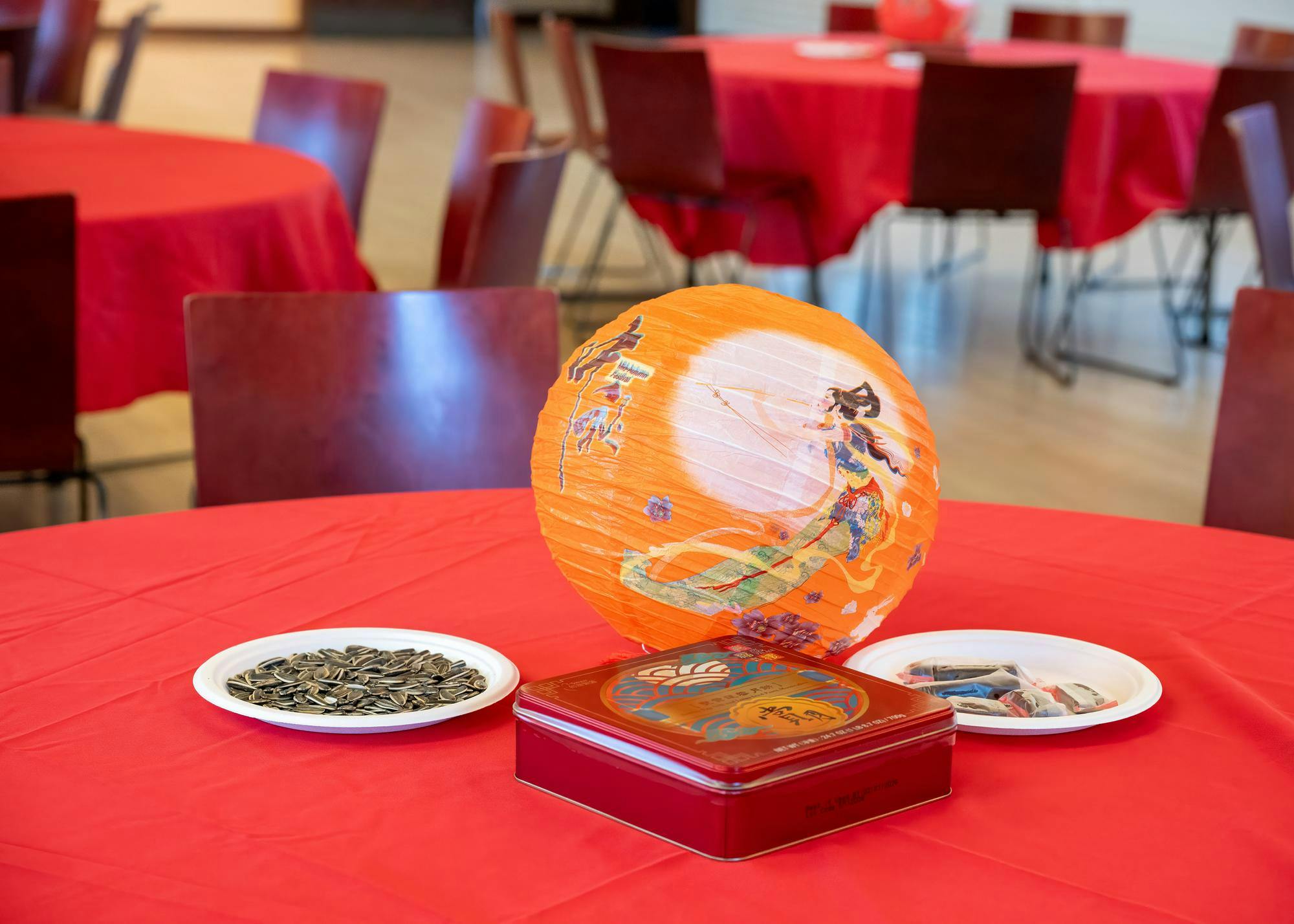
The event was complemented by a generous buffet featuring Chinese delicacies; no crumbs were left behind. All the tables also displayed mooncakes, or yue bing (月饼), for students to share. These round treats, filled with sweet fillings and sometimes an egg at the center, represent family togetherness, a full life and unity.
One element notably absent from this year’s celebrations was lantern-making — a tradition dating back to the Han and Tang dynasties. Lanterns symbolize familial unity, with their shape similar to the full moon and their light serving as a prayer for an auspicious future.
The Mid-Autumn Festival is most famously associated with the legend of Chang’e (嫦娥). The legend takes place during the early years of Earth with 10 suns, leaving China to face extreme heat and poor harvests. The legendary archer Hou Yi, the husband of Chang’e, shot down 9 out of the 10 scorching suns in the sky, saving humanity. As a reward, the Queen Mother of the West bestowed upon Hou Yi an elixir of immortality. However, Hou Yi originally did not wish to become immortal and leave his wife, Chang’e, behind, so he saved the elixir. While different sources give different rationales behind the decision, Chang’e eventually drank the elixir herself (willingly or less willingly) and ascended to the moon, becoming the Moon Goddess. Heartbroken, Hou Yi mourned and presented fruits and cakes to the moon that Chang’e liked. Touched, the Mother of the Moon let Chang’e and Hou Yi reunite on the full moon of the 8th lunar month, and as a result, on the 15th day of the 8th lunar month, we now celebrate the Mid-Autumn Festival — worshiping the moon, sharing mooncakes and reuniting with family.
Another popular anecdote regarding the origins of the festival dates back to the Mongol occupation in the 14th century. People secretly baked messages into mooncakes to coordinate rebellions, as large gatherings were forbidden — acts of resistance that contributed to the overthrow of the Mongols and Yuan Dynasty.
The Mid-Autumn Festival, with its rich legends, symbolic foods and communal celebrations, fosters a sense of unity and deepens appreciation for Chinese culture. It has helped bring together the Tufts community — students, faculty, staff and their families — creating a special time for cross-cultural connection among Chinese and American students alike. The Chinese Program will, in the same spirit, host its Lunar New Year reception in February, celebrating the Lunar Year of the Horse.



