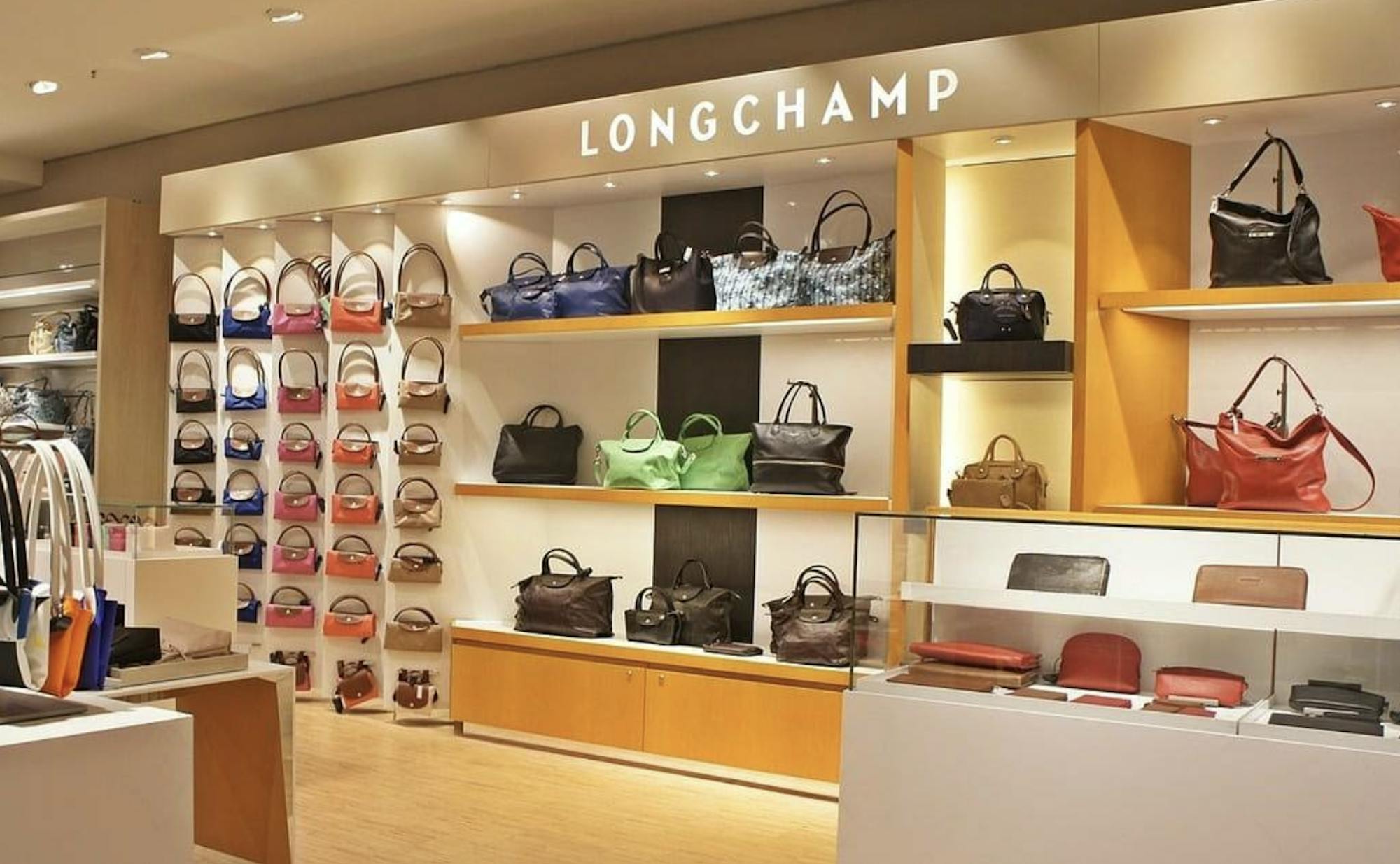
Step out onto the grounds of a college campus and there’s a high chance you’ll encounter at least one of these bags swinging off the shoulders of a student: the Goyard Saint Louis or the Longchamp Le Pliage. Hailing from Paris, France, these bags have become the latest microtrend that’s taken control of young adults.
Founded in 1792 by Pierre-François Martin, Maison Goyard has curated an image of exclusivity, emphasizing its close ties with famous personnel and how special its Goyardian canvas is while repackaging ordinary items as opulent wealth signalers for their clientele. A scroll through their website would lead one to think their products are made of some magical, everlasting canvas curated by only the brightest Parisian artisans. And yet, despite the almost $2,000 price tag, countless complaints have been made about the poor quality of the Goyard Saint Louis. Furthermore, although their website boasts about “Goyard’s unique ability to build long term relationships with its customers, whether they are famous or anonymous,” customers have complained about the poor customer service when reaching out about issues with their bags. It’s not as if Goyard is unaware of this issue. Instead of directly addressing manufacturing issues, they attribute them to “the natural aging process” — part of “Maison Goyard’s mystique.” Apparently, the price of mystical melting straps and sub-par customer service is $2,000 — so why are people buying these bags? With an easily recognizable triple chevron signature pattern, Goyard bags serve as status symbols and an example of conspicuous consumption — the act of consuming goods with the sole purpose to display wealth. The boost in societal standing gained by owning one of these bags due to the exclusivity factor Maison Goyard has curated alone is enough to sell, no matter that a Goyard bag’s functionality is no different than other, cheaper bags. The real product isn’t the bag, it’s what the bag represents.
Founded in 1948 by Jean Cassegrain, Maison Longchamp is far younger than Maison Goyard. And in stark contrast to Goyard, their signature bag, the Le Pliage, fetches for $180. Despite the price differences between the Saint Louis and Le Pliage, they do possess a common factor: The quality of the Le Pliage leaves a lot to be desired. Though Maison Longchamp hides it behind the term “polyamide fabric,” that’s just a fancy way of saying “nylon and nylon-adjacent fabric.” Nylon is not a particularly desirable material for a bag; it easily absorbs moisture and is at risk of degrading in water. Naturally, then, it’s not shocking that the Le Pliages are highly susceptible to fraying around the corners when used frequently. So, why are people spending almost $200 on these bags? Though $180 is no small price tag, a bag of that price is not nearly as expensive as the $2,000 Goyard. Further, Maison Longchamp doesn’t hold nearly as much prestige as Maison Goyard. Part of the explanation could still be due in part to this idea of conspicuous consumption, as Maison Longchamp fits under the umbrella of designer and is significantly more accessible than Maison Goyard. However, this doesn’t quite explain its popularity, as there are plenty of designer bags within this price range that are made with higher quality material. The Le Pliage’s virality on TikTok could provide a basis for why the bag has become so desirable. The research paper “The Influence of Social Media Intensity and EWOM on Conspicuous Consumption” discusses how electronic word of mouth “concerning the purchase of luxurious products from people who are connected to the same [social] network increases the motivation of the network users to commit more expenditures on the conspicuous goods.” Aspirational viewers who witnessed their favorite influencers carrying the Le Pliage on TikTok may have seen the relatively affordable designer bag as a means to form a social connection and association with someone they view favorably.
Next time you’re in need of a new bag, before you reach deep into your pockets to keep up with the latest trend, consider why you are buying this specific bag. Do you truly like the bag? Or, do you like what this bag will say about you? Do you really think this is a good quality bag, or do you just see everyone else using it? Do you even need a new bag? It’s not a crime to derive pleasure from boosting one’s social status or from associating with certain social groups, but there’s more substantial sources of self-identity than the brief ego-boost from carrying a deteriorating designer bag on your shoulder.