Printmaking dates back to the Tang Dynasty in China, where it was primarily used for Buddhist texts and illustrations. It then spread widely throughout Asia, notably reaching Japan in the seventh century. Traditionally, Japanese printmakers used mokuhanga, a woodblock printing technique — “moku” meaning wood and “hanga” meaning print. In mokuhanga, a traditional bamboo hand tool called a baren is used to press the ink onto the paper.
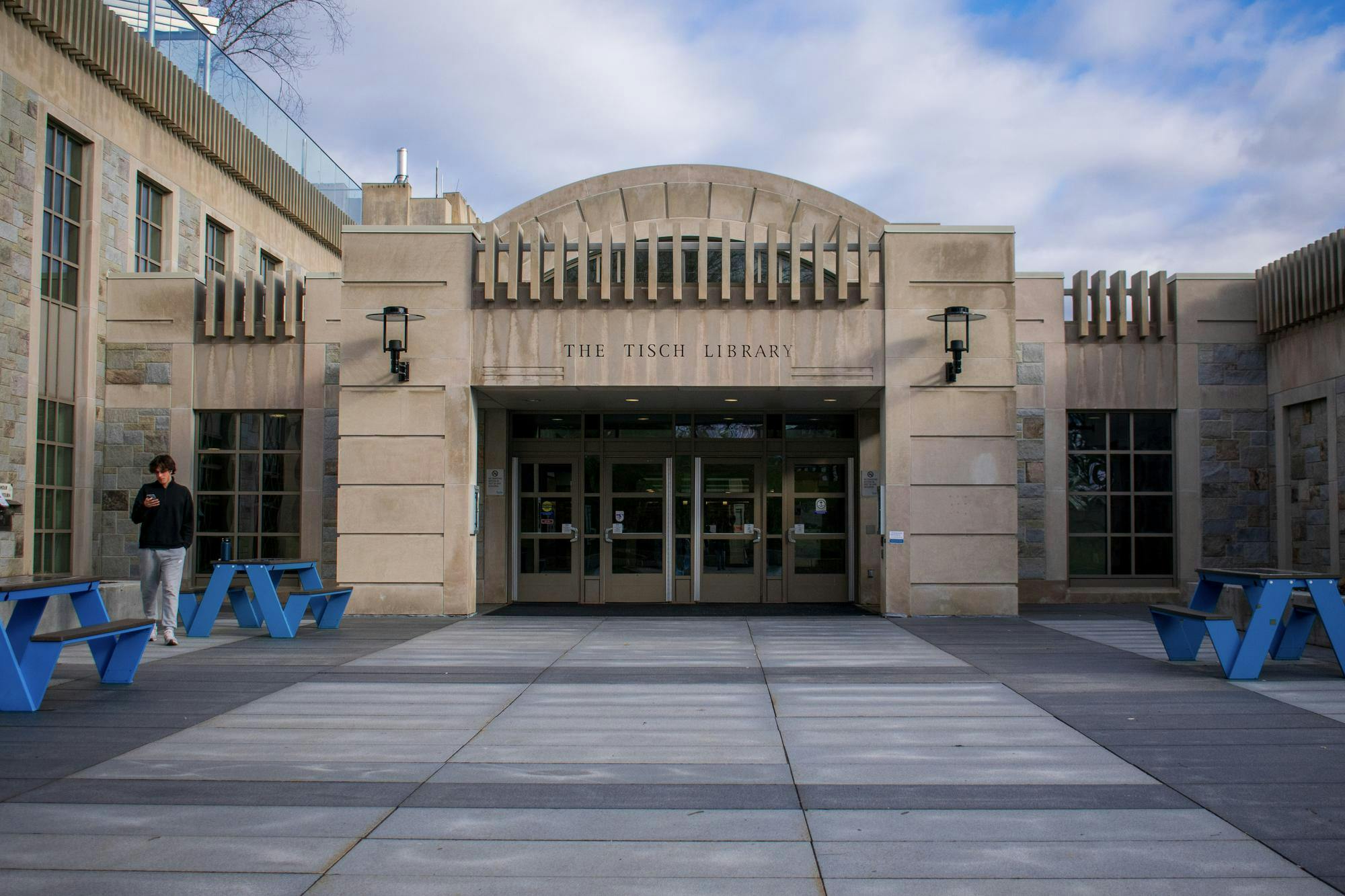
The legacies of Asian printmaking, including mokuhanga, continue to inspire artists worldwide today, particularly at the Tisch Library’s Special Collections, which houses the rare books program for the School of Arts and Sciences.
Christopher Barbour, head of special collections, became interested in establishing a printmaking program in October 2022 and, in the process, learned about traditional Asian printmaking techniques, specifically mokuhanga. He discovered all you truly need for printmaking is a small, handheld tool, like a baren. During the COVID-19 pandemic, many artists had the same realization and adoptedAsian printmaking techniques, working at home and sometimes even replacing a traditional bamboo baren with a wooden spoon.
In 2023, during first-year orientation, Special Collections introduced a printmaking program, which proved to be widely popular. Building on this success, the department offered printmaking during Parents and Family Weekend the following two years, titled “Wayzgoose! Print Fair.” Dating back to the 1500s, wayzgoose is an annual gathering at the end of summer before the printing season begins. At Tufts’ wayzgoose event, families came in and out, some staying for hours to create intricate designs. They shared admiration for each other’s work and took home prints of each other's designs. During open hours on Tuesdays and Thursdays from 1–4 p.m., students can also come into Special Collections to work on printmaking projects. Many students have become weekly visitors after orientation and Parents Weekend.
Over the years, working with prints at Special Collections, Barbour has come to realize that printmaking is not about perfection or creating identical images. Instead, the variability and imperfections create interest and beauty. “I would lose my job if I was working in a professional print shop 50 years ago,” Barbour said jokingly.
Currently, Special Collections does not have a faculty member specializing in Asian art history, but it does possess pieces such as a Japanese woodblock print illustrating a city scene and a Chinese woodblock used in temples, depicting prayers or inspirational sayings.
Special Collections also teaches a course called “Parchment to Print: Special Collections Workshop,” which will be offered this spring. This coming semester the course will be run in collaboration with artist John Lehman, whose exhibition “In the Well of the Wind-Up Bird” is currently on display in Tisch. The exhibition features visual critical readings of Haruki Murakami’s novel, “The Wind-Up Bird Chronicle”.
Serving as an educational resource, Special Collections presents printmaking not only as a craft but also alongside exhibitions of related art styles. The main floor of Tisch Library currently features “Pop in Dialogue: Andy Warhol and Edgardo Giménez,” an exhibition showcasing the early works of the respective American and Argentinean pop artists who both explored printmaking.
The exhibition, curated by Deniz Bora, who earned her M.A. in Art History and Museum Studies from Tufts last May, aims to highlight diverse voices and demonstrate how printmaking and pop art are truly international phenomena. By placing Warhol’s prints alongside Giménez’s, Bora aims to draw meaningful connections between the two artists and highlight the works of Giménez, who is lesser known to American audiences yet widely popular in Latin America.
Although both are pop artists exploring printmaking, they have very different intentions. Giménez uses his prints for advertising, handing out his prints on the streets of Buenos Aires, while Warhol’s works were sold privately and not distributed in public spaces. Bora also highlighted some visual links between the two artists’ works, including pieces featuring cats from both artists, though their depictions differ significantly. Warhol’s “25 Cats Name Sam and One Blue Pussy” features prints of real cats owned by him and his mother, hand-painted by friends, at coloring parties he’d host at cafes. Although each work is a print, each is unique — just as Barbour said, it is this variability that creates interest. Giménez’s “Que 1979 esté lleno de paz, color y alegría,” on the other hand, is a photo montage — merging a cat with a human body — symbolizing his interest in this technique and promoting his skills as an artist, whereas Warhol’s cats were incorporated as part of a children’s book.
Although pop art is cheery, fun and lighthearted, both artists explore deeper themes related to gender and sexual identity, as both men identify as queer. Giménez’s “Love (Butterfly)” alludes to the 1960s and ’70s free love movement, placing a man — likely himself — in the center of the piece with butterfly wings on either side of his naked frame, symbolizing transformation, rebirth and liberation. Warhol’s “Crazy Golden Slippers: Famous People Inspire Fanciful Footwear” includes a shoe inspired by Truman Capote, an openly gay author, with flowers coming out of the shoe also as a symbol of queerness and gender fluidity.
The works of Warhol and Giménez, along with the lasting interest in printmaking among Tufts students, reflect the enduring influence of Asian printmaking in the modern world. It highlights the importance of cultural preservation across time and space and demonstrates how printmaking has evolved to include contemporary themes, such as pop culture and queer identities, illustrating its ongoing relevance in modern art.