On Oct. 10, book lovers filled Distler Performance Hall for “An Evening With R.F. Kuang,” hosted by Tufts’ Asian American Center. There, the award-winning author spoke about world-building in her fantasy books, her own writing processes and her role in Asian American literature.
The event drew a diverse audience from across the Tufts community. Senior Kazi Begum, an intern at the AAC, recalled not only seeing students but also staff, faculty and alumni at the event.
“The turnout was great. We had sold out the event right after tickets were released,” Begum said. “It was just so nice to see not just how many people showed up, but the variety of people within our community that showed up.”
This is not the first time the AAC has hosted a high-profile speaker. Back in 2023, Vietnamese American novelist Ocean Vuong visited Tufts as a part of the AAC’s APIDA Heritage Month kickoff event and spoke to a packed Cohen Auditorium.
Events like these have come to define the AAC’s growing presence on campus and its ability to connect students with leading voices in the Asian American community. Sophomore Olivia Kass, another AAC intern, described the importance of these big-name events.
“I think being able to spotlight young Asian American voices is very important, and I think it might help a lot of students … be more confident in themselves,” Kass said.
To understand how the group’s presence on campus developed, it helps to look back at the center’s origins.
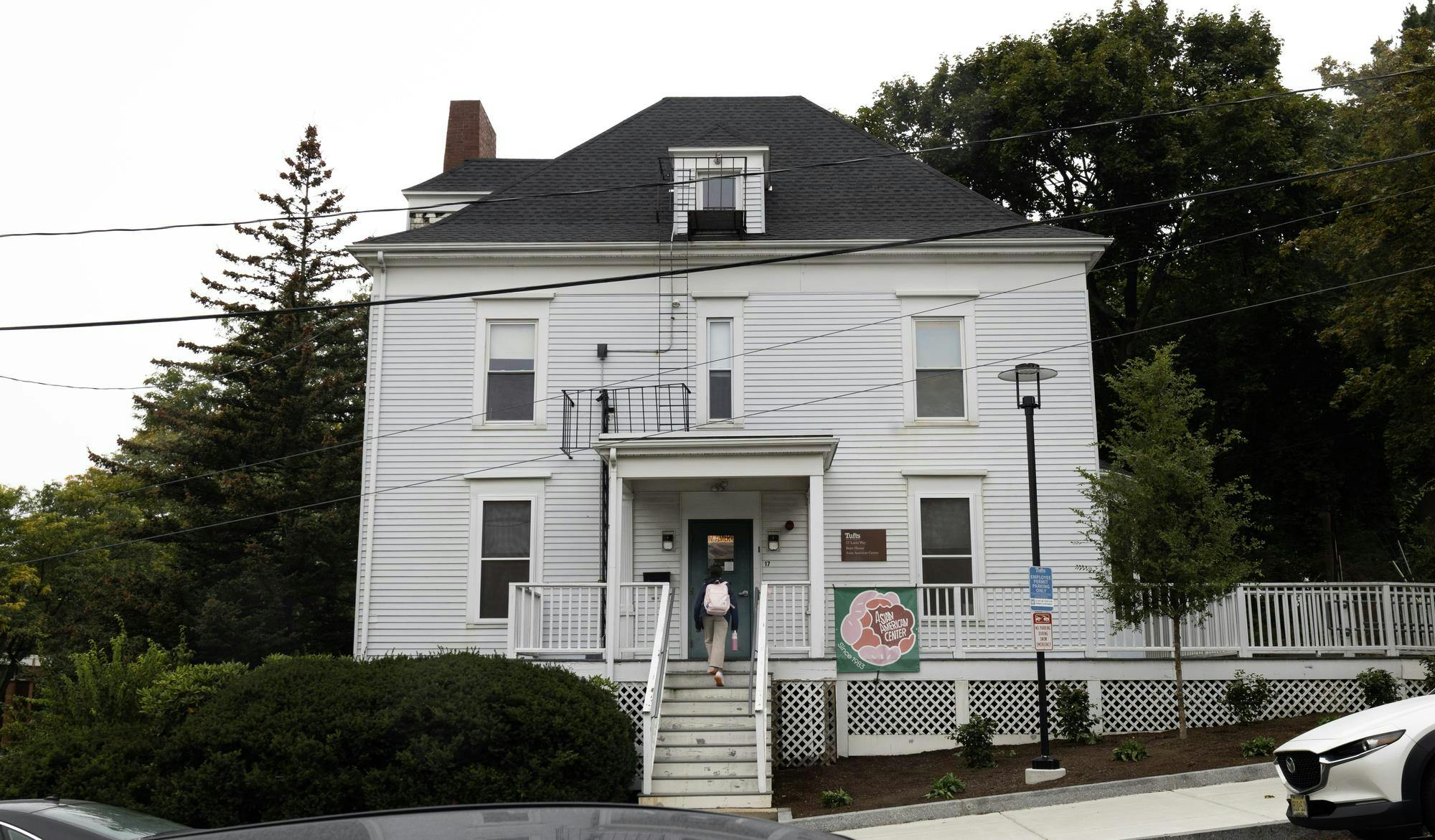
The Asian American Center traces its roots back to 1973, when a women’s dormitory, the Start House, became the Asian Culture House. The house was initially a small residential community.
In 1982, an incident, in which members of the Zeta Psi fraternity yelled racist remarks outside of the Asian Culture House, sparked widespread unrest within the Tufts community. Following this, students and faculty advocated for institutional support, leading to the creation of the Asian Student Center — on the first floor of the Asian Culture House — the following year.
By 1988, the center had its first full-time director and became known as the Asian American Center. Over time, the center expanded from a single floor to occupying all three floors of the Asian Culture House, providing students with greater access to the center and establishing community spaces like the beloved Mural Room.
Today, with three full-time staff members and an over 40-year legacy of activism and community building, the Asian American Center has transformed into a cornerstone of campus life.
“The Asian American Center is mainly a space for me to be a part of a community,” Kass said. “[It] allowed me to navigate my Asian American identity at Tufts … [while] connecting with other Asian Americans at Tufts through education and other extracurricular activities.”
The AAC’s success would not have been possible without the dedication of the staff members, current Interim Director Kali Guise and the center’s student interns.
Since stepping into the role of program administrator in 2022, Guise has been instrumental in expanding the AAC’s programming and bringing celebrated speakers to campus.
As Begum describes, Guise and former Director Aaron Parayno, current associate dean of student inclusive excellence, have been “working on [the RF Kuang visit] since last year, arranging [and] picking a speaker.”
Guise additionally manages the Peer Leader program, matching first-year and transfer students with Peer Leaders who serve as mentors and points of support for the students. Through the program, mentees learn about Asian American identity and connect with other Asian and Asian American students.
Sophomore Ryan Yoo, a peer leader, emphasized the importance of the mentorship program.
“It’s had a super positive impact,” Yoo said. “[It’s] a great way to meet new people, meet upperclassmen … [while] learning about each other and also having fun at the same time.”
Guise also plays a crucial role in leading the AAC interns in the center’s day-to-day outreach and in event coordination.
“[Guise is] at all of the intern meetings and she checks in with everybody to make sure that they’re on track for the goals that they want to achieve within the center, as well as [provide] any support that people need,” Kass said.
From events like Queer Desis socials — which are a collaboration between the AAC and the Women’s Center and LGBT Center — to Matcha con Leche, a collaboration with the Latinx Center, the interns have worked diligently to foster a welcoming community for Asian and Asian American students and connect with the rest of campus.
“The very cool thing about the Asian American Center is that almost all of the events are student-driven and student-led,” Begum said. “We come up with all the ideas as interns, we create the graphics for it, we get all the materials … and we facilitate it.”
The interns also facilitate the day-to-day operations of the center, making sure everything runs smoothly. This includes marketing, inventory and greeting people at the front desk.
Overall, Guise’s leadership and the AAC’s interns’ hard work have strengthened the center’s role on campus. Through weekly events, the Peer Leader Program and high-profile speaker events, the AAC has continued to broaden its reach within the Tufts community.
So, what’s next for the Asian American Center?
The center strives to bring major signature events — such as the R.F. Kuang visit — to campus every couple of years, recognizing the substantial time and resources that go into making them possible. In the meantime, be sure to check out the center’s Instagram (@tuftsasianamerican) for weekly updates about events happening at the center as well as partnerships with other Division of Student Diversity and Inclusion centers.
As for the next big-name speaker, no one knows yet — but Begum is crossing her fingers for comedian and actor Hasan Minhaj.
“He’s so funny, and I feel like it would be a blast to have him.”