JumboVote and Tufts’ Center for Information & Research on Civic Learning and Engagement recently reported on trends in participation in this year’s elections, both here in Medford and Somerville, as well as around the country in state and local elections.
With Tufts students, participation greatly varies by year. Last year, JumboVote had an influx of attention due to the presidential election, but engagement this year was lower, according to junior Teagan Mustone, co-president of JumboVote.
JumboVote, alongside Tufts Democrats, Tufts Republicans and the Jonathan M. Tisch College of Civic Life, held an election watch party on Nov. 4 to follow the local and state elections around the country. They had around 150 people in attendance at the watch party, a downturn from last year’s attendance at the debate between former Vice President Kamala Harris and President Donald Trump and at the election night watch party.
Overall, local elections tend to have less voter turnout, which correlates to the decreased attention given to the political clubs at Tufts in the national election off-years. However, Mustone, who grew up in Medford and has been involved in politics in her community, believes that Tufts students are not as engaged in local politics as they should be.
“You definitely see the lack of awareness around what’s happening around Tufts and in the community,” Mustone said.
College students, since they become residents of the town where their school is located, are able to vote in local elections by changing their voter registration. However, in doing so, they can no longer vote in their hometown elections.
“I think there’s a lot of pros and cons to voting where your home is,” Mustone said. “Maybe you’re from a swing state, and you think that’s more important. But, I think whether you vote here or not, you should have an awareness of what’s happening.”
Mustone cited Tufts’ community impact in both Medford and Somerville and in Boston’s Chinatown, where Tufts Medical Center is based, as a reason to be invested in local politics.
Many Tufts students engage with politics on their own terms. First-year Eden Grossman, a Massachusetts native, shared how she has been able to stay connected with politics at home while at Tufts.
“I think being so close to my hometown definitely helps me a lot. I can take the T back home,” Grossman said. “I went to a protest in my hometown a few weeks ago, which I thought was a cool experience, getting to connect politically with my hometown like I was doing when I was in high school.”
Attendance at protests across the country has had a notable lack of Generation Z participation. Many feel that there is little time for protesting or political engagement due to school commitments, while others are fearful of the repercussions of simply being caught attending a protest.
In August, Grossman attended Brookline’s “Rally for Democracy” in response to the presidency of Trump. She admits, though, that her knowledge of politics does not include local politics.
“I think I was pretty knowledgeable in the Brookline elections in high school,” she said. “I definitely would benefit from looking more at local politics and local news in Medford as well as Brookline.”
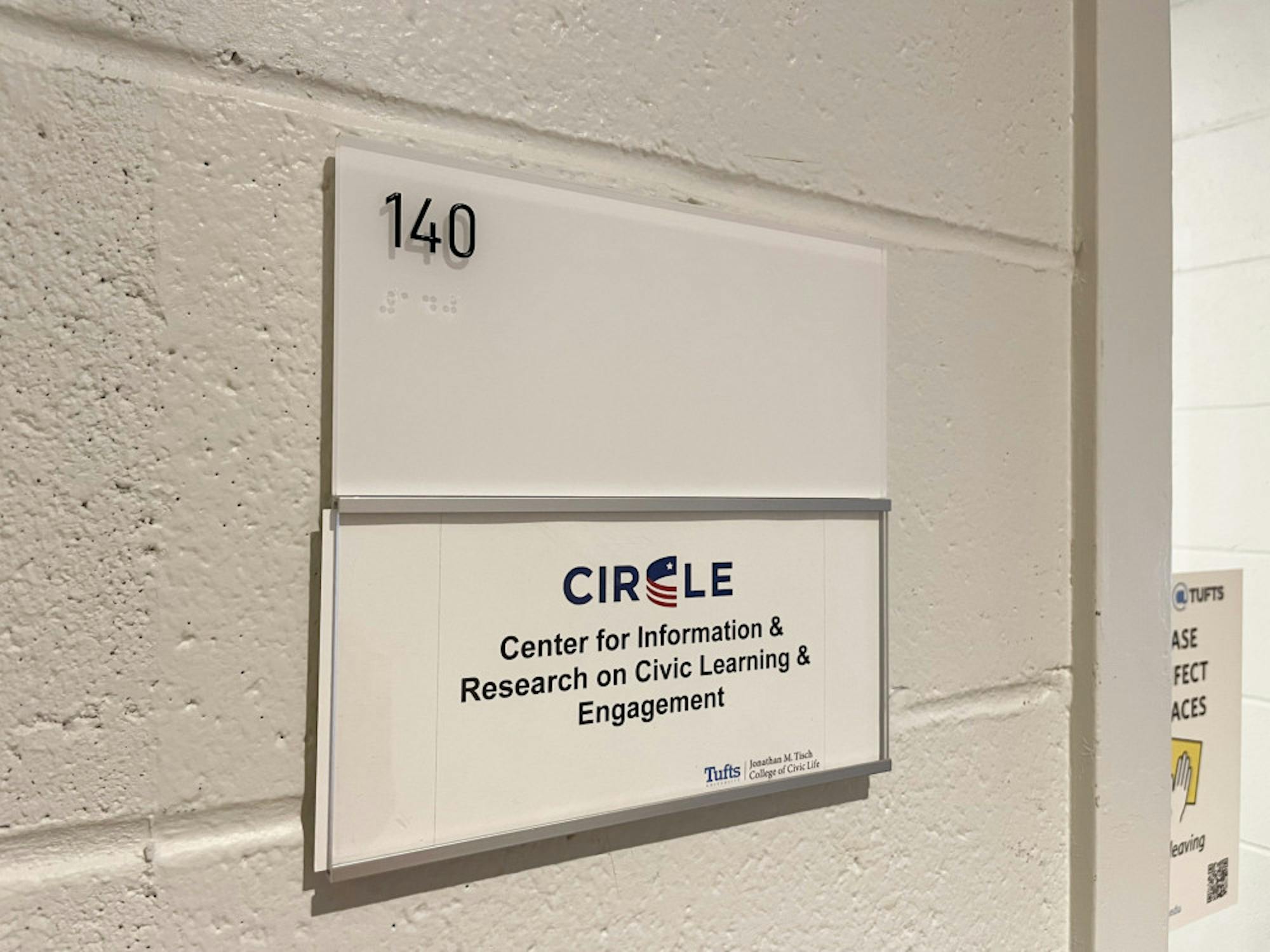
While the Center for Information & Research on Civic Learning and Engagement started at the University of Maryland, Alberto Medina, communications manager for CIRCLE, shared how the organization’s mission statement has remained stable.
“[CIRCLE] was really founded to try to understand, to study and to do something about a lot of the barriers and inequities that prevent young people from fully participating in civic life,” Medina said.
Medina added that CIRCLE looks for support from young people to refine and better understand what the center should be asking.
“Sometimes, instead of us supporting youth, we really sort of ask for help and for support from young people and for insights on, for example, some of the questions we should be asking,” he said. “For our 2024 post-election survey, we convened a group of young people to serve as sort of a Youth Advisory Group for that survey, and they had direct input on the kinds of questions we asked, [and] how we asked those questions.”