At this point, Chinese filmmaker Bi Gan’s career can largely be described as an anomaly. He’s 36, yet his films display a maturity that most fail to reach even in their later years. He comes from mainland China, infamous for its artistic censorship, but his work is some of the most innovative and expressive in world cinema today. His first two feature films, “Kaili Blues” (2015) and “Long Day’s Journey Into Night” (2018), were hypnotic in style and personal in philosophy, following protagonists as they ventured through Gan’s native Guizhou province in southwest China.
“Resurrection” (2025) finds Gan operating in his most formally maximalist mode yet. Best described as the auteur’s attempt to capture the entire history of cinema as only he knows how, Gan’s evocative filmcraft and singular vision allow him to deliver a mesmerizing — if chronologically impermeable — odyssey through a century of moviemaking.
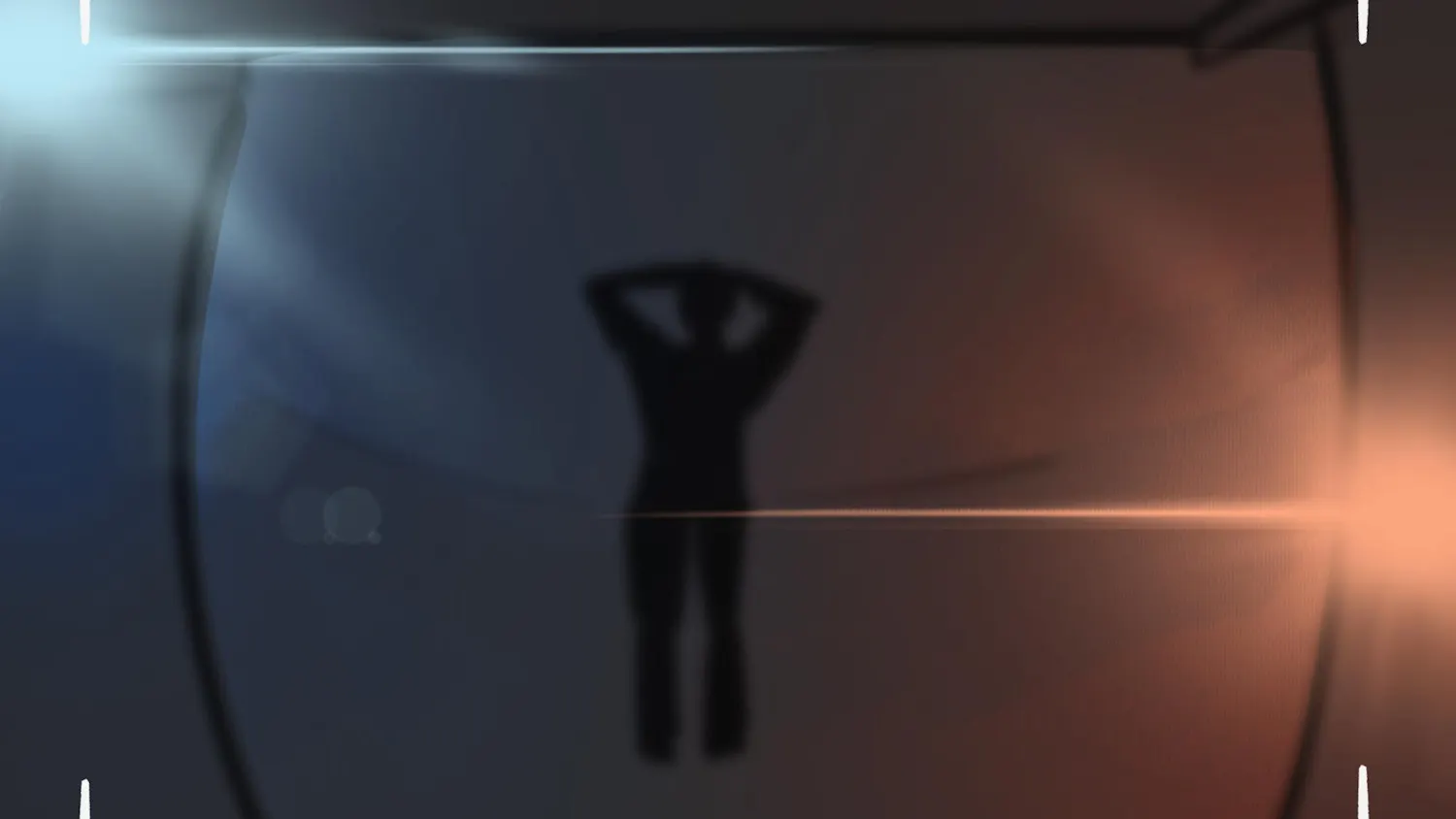
One would be foolish to even attempt a synopsis of this structurally perplexing picture, but its overall premise goes something like this: In a not-so-distant alternate reality, humans can attain immortality if they refrain from dreaming. In this world, the small group of mavericks who continue to dream — at risk of “[sending] time into spasms” — are the Deliriants, and they are pursued by the Big Others, who possess the ability to maintain order by disrupting the Delirants’ mirages.
The film begins in the style of early cinema, silent and driven by title cards and orchestral score, as one of the Big Others (Shu Qi) discovers that her targeted Deliriant (pop idol Jackson Yee) is shacked up somewhere deep inside an opium den. As she traverses the lavish-yet-cavernous space in search of the dreamer who will come to represent the cinematic medium itself, the audience begins to understand what they’re in for: Gan spares no reference to early motion pictures, lacing the set with easter eggs to film-school essentials like Georges Méliès’ “A Trip to the Moon” (1902) and Louis Lumière’s “The Waterer Watered” (1895). Finally, Qi’s character discovers the Deliriant — himself bearing a close resemblance to Max Schreck’s monster in “Nosferatu” (1922) — and decides to send him on a 100-year voyage through humanity’s time on the silver screen.
After the opening sequence come four distinct vignettes, all highly stylized and tied together by the emblems that have become characteristic of Gan’s filmmaking: clocks, flames and mirrors. One even features an enigmatic woman named Tai Zhaomei (Li Gengxi), uncoincidentally also the name of a crucial character in “Long Day’s Journey.” It’s held together by loose associations, including Qi’s intervening narrations that serve as quasi-title cards and the fact that each short is vaguely based on one of the five senses. But on the whole, “Resurrection” is most successful when experience supersedes analysis. Each section is intriguing in its own right — though the latter two certainly have more going for them in terms of plot — and Gan, alongside “Long Day’s Journey” Cinematographer Dong Jingsong, crafts imagery the audience will not dare look away from. The phrase ‘every frame a painting’ has rarely applied so fittingly.
There are more theoretical musings contained within Gan’s film than one could count on both hands, but perhaps the most important is the question of how cinema has defined reality — and vice versa — throughout the medium’s relatively short existence. The world of “Resurrection” is not the hyperrealistic landscape of “Kaili Blues,” but rather a setting defined by the genre stylizations characteristic of cinema’s past century. It’s unclear why exactly Gan opts for these four specific stories — beyond their shared patterns and their focus on morally opposed characters forced into collaboration — yet it remains evident that the cineaste can reconstruct a Criterion classic just as easily as he can quote one. From the shadow-tinged noir of the first vignette to the neon-lit thriller reminiscent of Wong Kar-Wai’s “2046” (2004), Gan displays an impressive ability to cross genres without sacrificing tone or intention.
“Resurrection” is a film full of bold cinematic swings, and none is greater than an epic long take in its fourth section. Gan has defined himself as a filmmaker who views Hollywood-style cross-cutting the way a butcher views vegetarians — and his first two features included similar oners lasting 41 and 59 minutes, respectively — so the 30-minute shot that snakes through shady streets on New Year’s Eve 1999 is far from a surprise. Still, it serves as a climactic crescendo that filmmakers aspire to but few achieve.
If you’re searching for a crowd-pleaser or light viewing, you’d be well advised to look elsewhere (after all, “One Battle After Another” (2025) is streaming now). However, for those in search of a singular cinematic experience — dreamers, film buffs and everyone in between — “Resurrection” may be the film for you. It looks to cinema’s past not as a postmortem examination, but as a way to envision a brave future.